
Bought for £40, sold for 25p - the glorious career of a Hurricane motor
Post-war motor was a joy to drive but loved to visit petrol pumps
Definitely a Hurricane, but not of the Hawker variety. Although if Armstrong Siddeley's post-war car did share anything in common with the famous aircraft, it would be a prodigious thirst.
Paul France of Madeley has come forward with a positive identification of the magnificent motor featured in the background in a picture showing an Austin motoring along Town Walls in Shrewsbury, perhaps around the late 1940s.
We knew it was an Armstrong Siddeley which belonged to Shrewsbury's Dr Lawson Stote, but there was a question mark over which model it was.
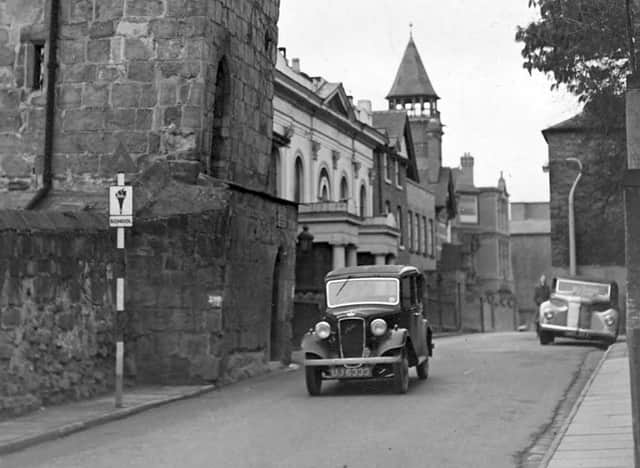

Paul, who knows a Hurricane when he sees one, got in touch to put us on the right track. The Hurricane was a significant car because it was one of the first British cars to hit the market in the immediate post-war period, as car manufacturers which had been exclusively doing war work began to switch back to peacetime production.
"Your piece in the Star brought back many happy memories. My brother Roger had a Hurricane in the 1960s for which he paid the princely sum of £40," said Paul, who helpfully sent us a photo.
"This photo was taken at the Headland campsite in Tintagel in the early 1960s. Left to right, John Fidler, me, Mike Collings and Graham Rich. The phrase, 'it'll pass anything except a petrol pump' springs to mind! Note the Irish plate."
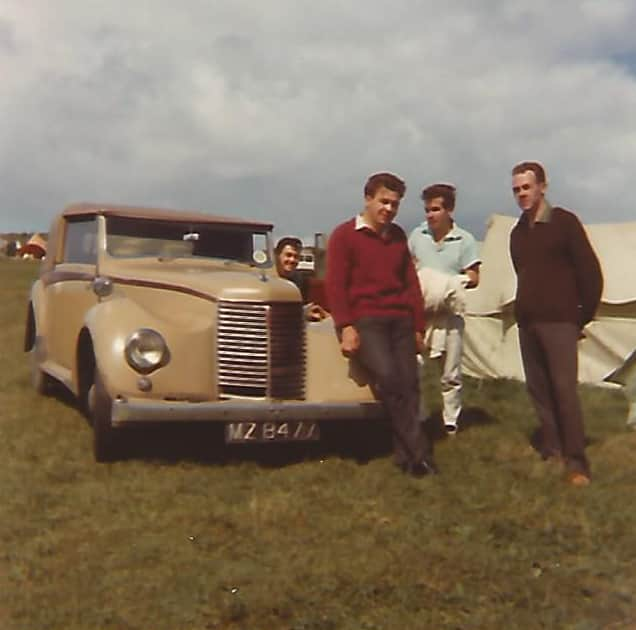
Paul, who grew up in Jackfield, added: "It had a soft top, straight six engine and preselector gearbox and was a joy to drive when compared to other post-war cars available at the time.
"I've spoken to Roger and he says the car was a 1949 manufacture. He had it for less than a year. He was competing in a car rally when a valve head dropped into the cylinder and hammered round for a while until it was shaped like a threepenny bit by which time the valve stem had also fallen into the cylinder and was transformed into a coat hook!
"The car was sold to a scrap dealer for five bob."
That's just 25p in modern money.
"He then bought a 1952 Daimler Consort for £90 from Powells of Newport. This also had a preselector gearbox and the following year we travelled to the same campsite in Tintagel.
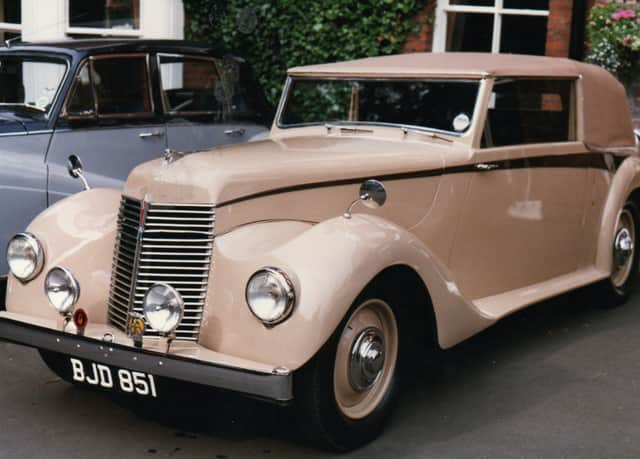
"The only thing of note about the Daimler was that we managed to get 14 people and a dog in it to avoid a rainy walk back to the campsite from the pub."
We also heard from Dr Stote's daughter, Sally Stote.
"I remember the wonderful Armstrong Siddeley. It was wonderful driving with the hood down but, as you mentioned, as it got older it leaked and we had to use cups to catch the drips. Thank you for bringing back some memories," she said.
Sally also provided some information about the picture of her parents with their earlier car, a Humber Snipe.
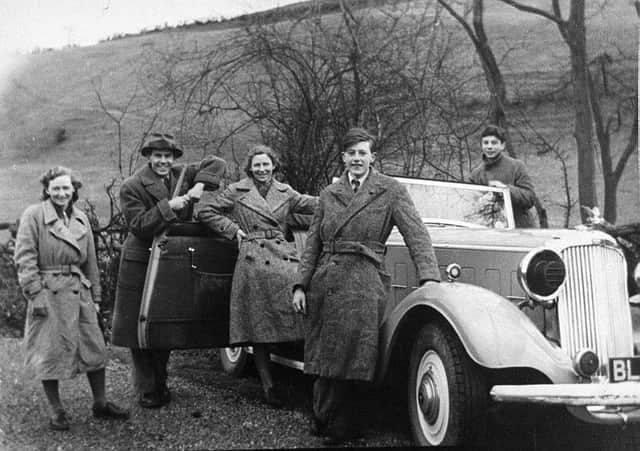
"It is my father Dr Stote in the photograph with my mother in the middle. The woman on the left is Joan Whitley, the wife of John (Jack) Whitley, who I think was the Clerk of the council.
"The two boys are from Cheltenham College which was evacuated to Shrewsbury School for a term in, I think, 1940. My parents put up two of the boys."
The college had been requisitioned by the authorities in September 1939, and the Shrewsbury School head, H H Hardy, who had previously been Cheltenham's head, offered the Cheltenham school a temporary new home, with the boys put up by people in the Shrewsbury area.
One of the boys in the picture, probably the one in the foreground, was Ranulph Norman, who died near New York in 2013.
Comment Guidelines
Iconic Media encourages reader discussion on our stories. User feedback, insights and back-and-forth exchanges add a rich layer of context to reporting. Please review our Community Guidelines before commenting.