
Bosses of new direct London train outline timetable, passenger service and route plans
Two-and-a-half-hour journey times and local produce are some of the pledges made by those behind a new train firm hoping to link Shropshire with London.
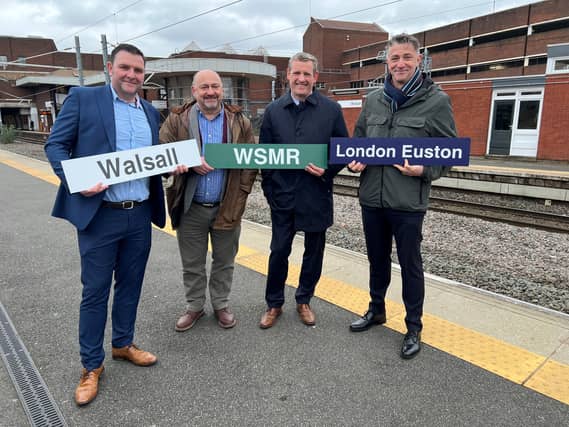


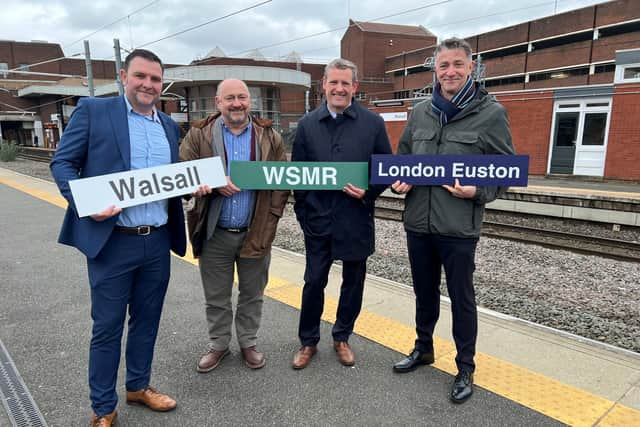
Five trains a day, Monday to Saturday, are planned by the new Wrexham Shropshire & Midlands Railway (WSMR), which submitted its application to start running trains to regulators at the Office of Rail and Road (ORR) in early March.
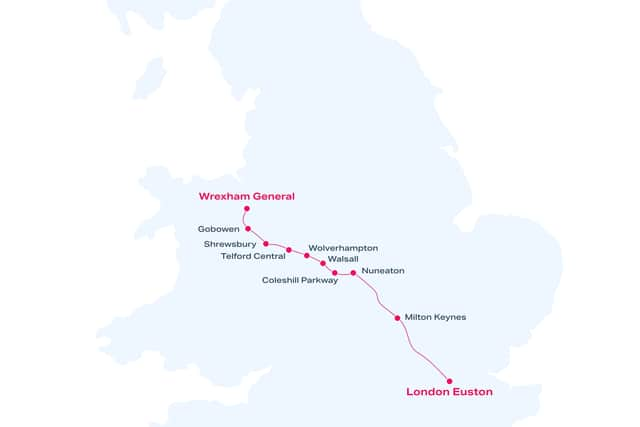
Running between the newly recognised Welsh city and London Euston, the company has earmarked stops at Gobowen, Shrewsbury and Telford Central, as well as calling at Wolverhampton, Walsall, Coleshill Parkway, Nuneaton and Milton Keynes.
MPs have backed the scheme, particularly with the existing Avanti West Coast service from Shrewsbury to London ending in early June.
The route means trains will avoid Birmingham. Speaking to the Shropshire Star, Darren Horley, mobilisation director for WSMR explained that the route will be quicker, with trains joining the West Coast Main Line at Nuneaton, where they will then able to travel at up to 125mph.
"Why not serve Birmingham? It's congested and busy," explains Mr Horley. "It's already served heavily by Avanti and Chiltern. We want to be working with them," rather than taking customers away.
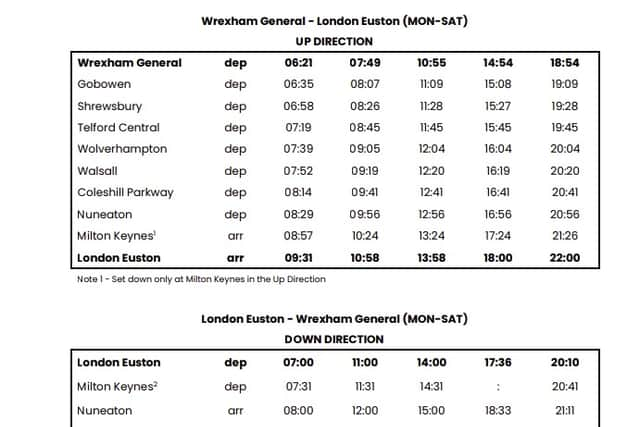
A draft timetable shows trains taking a little over two-and-a-half hours to travel between Shrewsbury and Euston, with Telford 20 minutes closer and Gobowen 20 minutes further. The journey time between Wolverhampton and London is a little under two hours. Three morning departures, an afternoon service and evening train are proposed, with return journeys pencilled in to leave London twice in the morning (one early, one late), mid-afternoon, early evening and late evening.
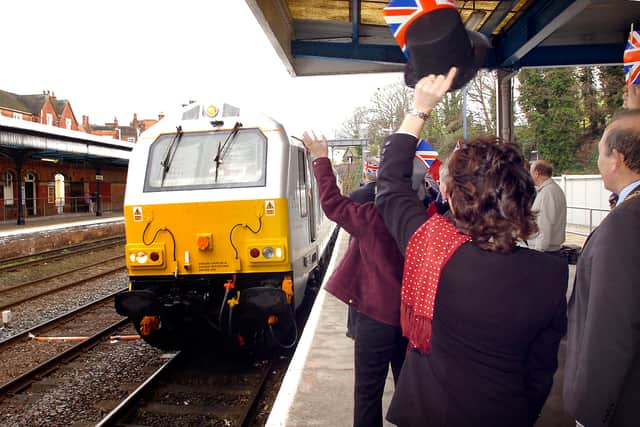
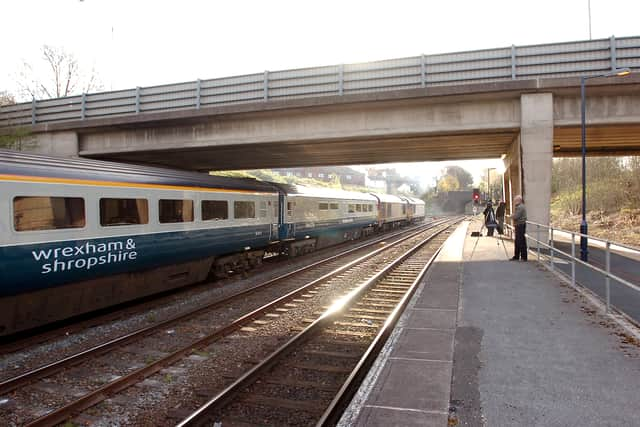
The new service won't be the first running from the area to London; the similarly named Wrexham & Shropshire Railway (WSR) operated five trains a day from 2008-2011, while Virgin West Coast, latterly Avanti, has run a two-train service, which was reduced to one during the pandemic.
Director Ian Walters, who worked on the previous WSR operation, said those services often got "snarled up" going through Birmingham and took people to Marylebone, a station that is not as well connected as Euston.
To give an idea as to how the journey times compare, the WSR service took three-and-a-half hours to travel between Shrewsbury and London, while Avanti's service takes more than two-and-three-quarters. Journey times between Wolverhampton and Euston are set to be about par with the current offering, even slightly quicker at times.
Mr Horley said the research shows the demand will be there, with markets changing since Covid as leisure travel grows.
One such area is taking football fans to Wrexham, as the club's worldwide fanbase grows thanks to its Hollywood owners.
Mr Horley said that while that's happening at the club has "not driven" them, it's an "opportunity at the end of the route", so it's unsurprising trains are planned that will allow supporters to get to and from a typical Saturday 3pm kick-off.
The new company says it's not just about going to and from London. Mr Walters says that while the new service will give stations London links they've never had before, it will also connect stations which have never had direct services between one another.
One example is Wolverhampton and Walsall with a journey time of 15-20 minutes. The current West Midlands Railway service goes via Birmingham New Street, and takes an hour.
"The post-Covid passenger wants to get on a train, they don't want to connect so much," he said, explaining why these stations have been picked.
Passenger experience
And while leisure travel is likely to make up a large share of passengers, a market which Mr Horley says has bounced back "quicker and stronger" since Covid, there remains a promise that "people will be able too work on the train comfortably".
Mr Horley promised "competitive fares" which will also reflect the service customers get, saying: "The passenger experience starts from the second they think about travelling to when they reach their destination. We will make sure the passenger gets the best deal, that's whhat the previous firm was about."
The old WSR was praised for its customer service, with customers liking the big windows and extra leg room, along with freshly cooked food on board. It was often at the top of passenger satisfaction surveys as commentators revelled in the opportunity to link the service to those enjoyed in a bygone age.
The new firm wants to reach those standards too, and is promising locally sourced produce for its services, something which it also says will reduce its carbon footprint.
This includes a meal offering to First Class passengers on all journeys over 55 minutes and a buffet for Standard Class passenger using "high-quality products that are locally sourced from businesses along the route", with onboard staff helping passengers alighting and boarding to ensure prompt turnaround times at stations, and help those with luggage or accessibility needs.
Technology such as the ability to reserve a seat within minutes of boarding is also in the pipeline.
"We want people to choose the railway," added Mr Walters. "We want to create a customer satisfaction experience the previous company had."
WSMR is an open access operator, meaning it receives no government subsidy, unlike others such Avanti West Coast or West Midlands Railway, which hold contracts with the Department for Transport.
In the past, passengers using open access operators have been unable to get a 'through ticket' if their journey continues beyond the length of the route covered by the that firm's service. WSMR says this won't be the case on their operation.
Sustainability and trains
Apart from Wrexham to Wolverhampton and Walsall to Nuneaton, most of the journey will be under electric wires. Before the Avanti service was axed, the operator was planning to introduce bi-mode trains on the Shrewsbury to London route, which would run on electric power between the capital and Wolverhampton before using diesel engines for the rest of the journey.
Avanti isn't alone, as inter-city operators look to reduce the amount of trains operating on diesel power when travelling long distances under electric wires in a bid to reduce their carbon footprint. Similar bi-mode trains go from London to the Highlands of Scotland and the West Country where they split their time between using electric and diesel propulsion.
So far the type of train that will be used by WSMR has not been decided, with bosses in discussions with rolling stock owners. However, the trains will definitely be diesel - certainly to start with - as the operation gets up and running. The reason being it takes years to order, build and test new trains, and more expensive, which would delay the start of the service.
But there are plans to power them using hydrotreated vegetable oil, a diesel-like fuel that can be produced without using fossil resources.
Further down the track, WSMR has said it will review options for battery power in a bid to reduce emissions and consume less fossil fuel, while an intelligent engine start/stop technology - the same principle as when a car engine switches off when the driver stops at a set of traffic lights, only more advanced - to save fuel and cut emissions even further.
Wellington and other stations
When WSMR's plans were first announced, there was an outcry in Wellington when it became apparent the town was not included. That's still the case, as a stop was not included in the submission to the ORR, something that can't be changed.
"It's not the only station we have been asked to look at calling at," said Mr Horley. "We have to be pragmatic about journey times," suggesting that adding more stops would have made it too long.
"We will work with Network Rail to allow for other station calls that don't impact the length of journey time."
But he added that Wellington had not been forgotten even though it's not part of of the plans at this stage, and meetings with local stakeholders are planned.
Once completed, Darlaston will be added to the list of stations served by WSMR.
The company has also suggested it will back schemes for new stations if there's a market for a service. Research includes looking at modelling passenger growth, road congestion and housing developments. One example is a potential Shrewsbury Parkway on the eastern side of Shropshire's county town.
When will services start?
The company's bid to launch the service is currently with the ORR.
Bosses are hoping they'll get a verdict in late October or early November. If it's a green light, WSMR will have to 'bid' for train paths so it can run its trains to the schedule it wants. Train timetables change twice a year, at the start of December and June, which is when operators make alterations to services or introduce new ones.
Even if WSMR is not in a position to start running a service on the day a new timetable comes in, it can have the paths reserved for when it is in a position to start a few weeks later.
All being well, the aim is to start services in June or July 2025.
Comment Guidelines
Iconic Media encourages reader discussion on our stories. User feedback, insights and back-and-forth exchanges add a rich layer of context to reporting. Please review our Community Guidelines before commenting.