
Bus figures showing West Midlands have lost out come as little surprise for Shropshire campaigners
New figures showing the West Midlands has been the hardest-hit region for lost bus routes since 2011 come as little surprise to Shropshire campaigners.
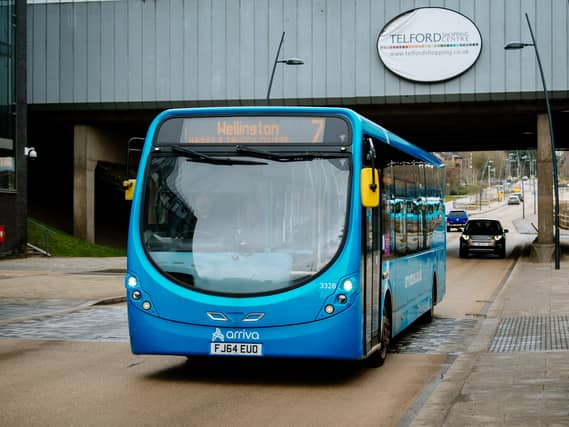


More than two-thirds of routes have been lost in the region, according to analysis by the Labour party, which says the number of local bus routes in England has halved since 2011.
The party's analysis found there were 8,781 routes in operation across the UK during the year to the end of March, compared with 17,394 in 2010/11.
The figures, published in annual reports by Traffic Commissioners, show more than 2,000 routes have been cut since 2021/22 alone.
Christine Lawrie, chairman of the Breton Park Residents Association, in Muxton, has been campaigning for more buses after seeing services reduced from four an hour to two an hour.
"All we have achieved in two years is getting an earlier bus at 9.15am," said Mrs Lawrie. "Despite this at term-time we have pictures of people standing up on the buses that we do have on."
She said there are problems with timetabling, communication and awareness when services change.
Councillor Alex Wagner has campaigned in Shrewsbury to enhance the number 11 service to the town's hospital but seen the number 20 route to the south of the town merged in with other bus service reductions.
He said: "Shropshire has some of the worst bus services in the country, and even fighting for hugely important services like the 11 to Royal Shrewsbury Hospital can be difficult at times.
"More worrying still is that we are potentially weeks away from the new 'On-Demand' service replacing the 20, 544 and 546. The thousands of residents who live around Radbrook, Bayston Hill, Lyth Hill and Pulverbatch have good reason to be worried that their whole area's service is going to rely on an unproven and experimental scheme that is being put together in a rush.
"We absolutely need national change, but also local work can be done - it is no shock that people don't use buses when Shrewsbury Bus Station is damp, cold and ill taken care of, when the Park and Ride is scarcely promoted."
Helen Morgan MP, who has campaigned on rural routes and presented her 'Bus Bill' to Parliament, said: "Market Drayton and Whitchurch are among the worst towns of their size in the whole country when it comes to bus provision, in the bottom tenth in England. Residents shouldn't be forced to shell out for a taxi to get to medical appointments in nearby towns that have been on a bus route for most of the last fifty years.
"Nearly three-thousand North Shropshire residents signed our petition on better bus routes between major towns and through villages, it is a clear priority of local people that comes up on the doorstep constantly."
The Government has continued its '£2 per single trip' initiative to run through the summer.
Earlier this year Arriva said it has had to “reshape” its services because fewer people are using its buses.
A spokesperson earlier this year said: “The bus industry is going through a significant period of change, and we have had to reshape our services to reflect our customers’ requirements in difficult and challenging circumstances. The Covid pandemic has changed our customers’ travel patterns.
“There are fewer people travelling on our services and those that are, appear to be making fewer journeys. This is most noticeable during the off-peak where concessions account for a high proportion of our customers.”
The spokesman added that its costs are rising as it faces the “challenge of retaining and recruiting staff that are required to maintain service levels".
Louise Haigh, Labour's shadow transport secretary, said: "The staggering decline in local bus services under this Government is nothing short of vandalism against our communities.
"Millions of people rely on these essential services, but they are being left without a voice as routes are cut back year after year.
"Labour's plans will put passengers first by allowing communities to take back control over their bus services."
Labour has pledged to give all local transport authorities more powers to choose routes and reduce fares. These are currently only available to metro mayors.
Alice Ridley, of pressure group Campaign for Better Transport, said: "Buses keep people and communities connected and are crucial to the economy.
"To prevent further cuts and grow the network back to the level needed, the Government must change the way buses are funded and replace the multiple and competitive funding sources with a single, long-term funding pot."
A statement from Arriva said: "At Arriva, we’d like to see people choosing to leave their cars at home and use bus services, which are a more sustainable option – that’s why we work well with local authorities and passenger transport authorities to ensure our services are safe, reliable and value for money.
"We’re always thinking about the future: we are aware that nationally the number of bus services has reduced as a result of many factors, which is why we as a bus operator innovate and learn.
"We show on a daily basis that we rise to the number of challenges we deal with because people’s travel habits have changed dramatically, especially since the global Covid-19 pandemic, and we are motivated by doing the right thing by our passengers."
Comment Guidelines
Iconic Media encourages reader discussion on our stories. User feedback, insights and back-and-forth exchanges add a rich layer of context to reporting. Please review our Community Guidelines before commenting.