
Police and crime commissioners: Good or bad?
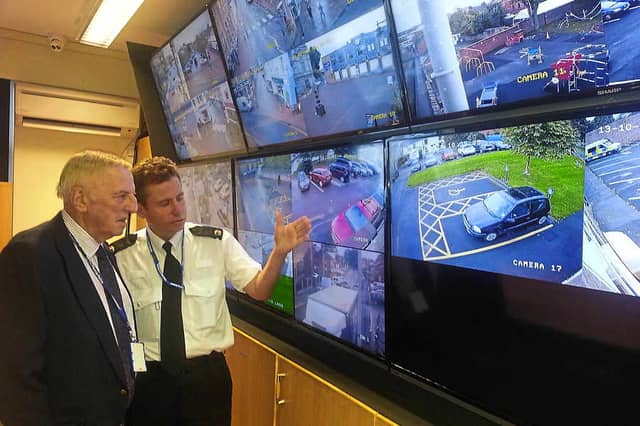

The people have spoken, the votes have all been counted up, and we now know who our new police and crime commissioner will be for the next four years.
But a year from now, how many people will be able to name the crime-fighting chief elected to represent their area?
To many that will be the acid test for the controversial shake-up of police accountability begun by the Coalition four years ago, writes Mark Andrews.
The decision to replace the old police authorities, which were made of local councillors and their appointees, with an elected police commissioner has proved to be one of the most contentious moves of the last government.
Certainly, West Mercia's new commissioner, who takes over from Bill Longmore, is going to find plenty on his plate. One of his first tasks will be to decide whether the force should appoint a new chief constable to replace David Shaw, who retires in the summer, or to merge the role with that of the neighbouring Warwickshire force with which there is already a strategic alliance.
Decisions will also have to be made as to whether the alliance, which has seen the sharing of certain back-office functions, should become a full-blown merger.
Furthermore, in November last year Home Secretary Theresa May launched a consultation which could eventually see the commissioner's role being expanded to oversee the fire and ambulance services as well. The idea of having a visible, accountable face of policing is not going away any time soon.
The idea was born in the run-up to the 2010 General Election, when both the Conservatives and the Liberal Democrats spoke of the need to reform the police authorities in their manifestos, with both parties calling for direct elections to make leading figures more responsive and accountable to the public.
So, it probably did not come as a huge surprise when the Police Reform and Social Responsibility Bill was presented to the House of Commons later that year. The Bill, which received royal assent in 2011, paved the way for the old authorities to be replaced by a directly elected commissioner.
Typically, the old police authorities were made up of 17 members, nine of them local councillors selected to reflect the political make-up of local government in the area.
The other eight were "independents", including three magistrates, who were appointed by the councillors on the committee, and both the Conservatives and the Liberal Democrats argued that there needed to be more accountability.
However, when the first elections were held in November 2012, there were many critics who questioned whether the new commissioners had any more of a democratic mandate than the old police authorities.
Nationally, only 15.1 per cent of those eligible to vote actually bothered to do so, and the figure was even lower in West Mercia at just 14.5 per cent, leading Labour's former home secretary Charles Clarke to question the democratic legitimacy of the results.
The low turnout prompted the Electoral Commission to carry out a review of the way the polls was conducted.
Electoral commission chairman Jenny Watson said the decision to hold the elections in November, a time when people were not used to voting, were likely to have had an impact on the turnout.
"The Government took a number of decisions about how to run these elections that we did not agree with," she added.
Ministers accepted that public unfamiliarity with the role may have contributed to a low turnout in 2012, but the Government has been banking on this improving.
A Home Office spokesman says: "We introduced police and crime commissioners to replace invisible, ineffective and unaccountable police authorities.
"Since 2012, the first generation of directly-elected PCCs have held forces to account and given people a real say in how their communities are policed."
However, recent opinion polls still suggest that the public would struggle to recognise their police and crime commissioner if they bumped into them in the street.
One poll suggested that just 11 per cent of people in England were able to name their commissioner, although it may be argued that the same could be said for most local politicians. And it is hard to imagine that one in 10 people would have been able to name the chairmen of the old police authorities.
On the other hand, it might be argued that many of the commissioners have raised the profile of the post for all the wrong reasons.
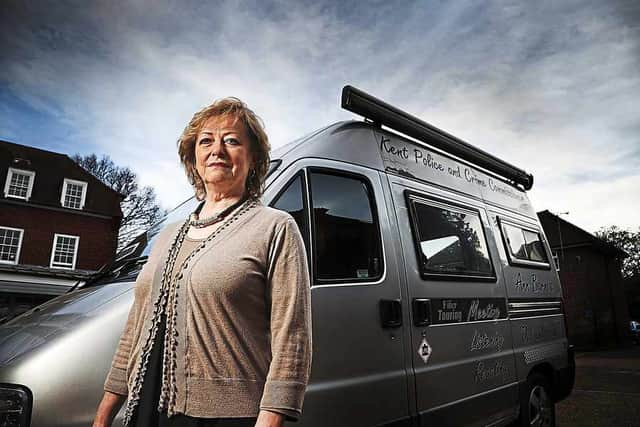
Ann Barnes, the colourful independent commissioner for Kent, was seldom out of the news during her three-and-a-half year term, with her ill-starred appearance in a much-ridiculed television documentary probably being the defining point of her career.
Other controversies, such as the appointment of two teenage youth commissioners, reported rows with staff in restaurants, and her "Ann Force One" battle bus, were meat and drink for the tabloids, and it probably did not come as a big surprise when she announced she would not be seeking re-election.
At least Mrs Barnes managed to serve her full term, though. In 2014, halfway through his term, South Yorkshire's Labour PCC Shaun Wright was forced to resign over the Rotherham child abuse scandal.
Mr Wright had previously served as a member of the South Yorkshire police authority, and as a councillor he had been responsible for children's services in Rotherham.
When a report that found at least 1,400 children were abused in the town from 1997 to 2013, there were demands for him to resign from both his own party and the Conservatives, but Mr Wright refused to budge. He finally quit a month later.
Then deputy prime minister Nick Clegg – who was part of the government which created the posts – refused to vote in the by-election, branding PCCs a "discredited experiment" which should be abolished.
However, for all the controversies, there are many who believe the role has been a success, including those on the Labour side. David Taylor, a former special adviser to Peter Hain in Tony Blair's government, says he believes that the commissioners were one of the few good things to come out of the Coalition government.
"The time has come for Labour to accept the police and crime commissioners are here to stay and to make them work," he says.
West Mercia's outgoing commissioner Bill Longmore says: "I would be the first to admit that some commissioners have been more successful than others, and that there are still some wrinkles to iron out with the PCC system. Despite that though, it seems clear to me that police and crime commissioners have been a success."
However, while Home Secretary Theresa May has praised commissioners of all political persuasions for making policing more responsive to the public, there is another government reform on the horizon which could sound the death knell for the commissioners.
This week, Greater Manchester was one of only two areas of England which did not elect a commissioner, as the role is to be merged with that of a directly elected mayor.