
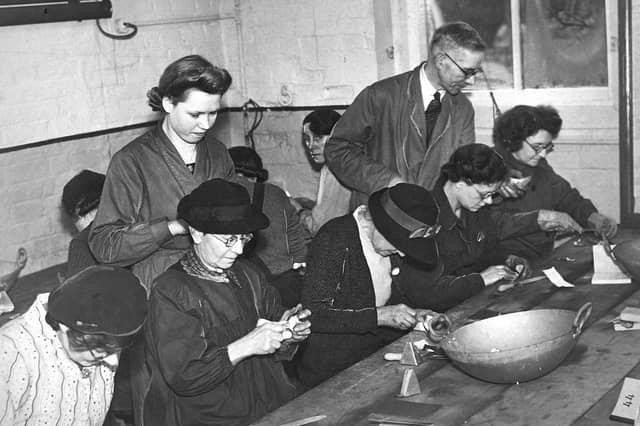

During the Second World War, as hundreds of thousands of men left to serve overseas, women across the West Midlands and Shropshire stepped into vital roles to keep the country moving.
From factory floors and railway sidings to farms, air-raid observation posts and munitions workshops, women took on jobs that had once been largely the preserve of men. They operated heavy machinery, helped build aircraft, transported goods and worked the land, playing a crucial part in the war effort.
This collection of pictures captures the determination, hard work and contribution of local women on the home front, showing how they helped keep industry, agriculture and communities going through some of the most challenging years in the nation's history.
Have stories been passed down through your family about women who played their part in the war effort? We’d love to hear them, so please share your memories in the comments below.
- For anyone curious about where their own family story leads, MyHeritage DNA kits are currently £19.90, excluding shipping. The test can help explore genetic origins and identify DNA matches who may share branches of your family tree.
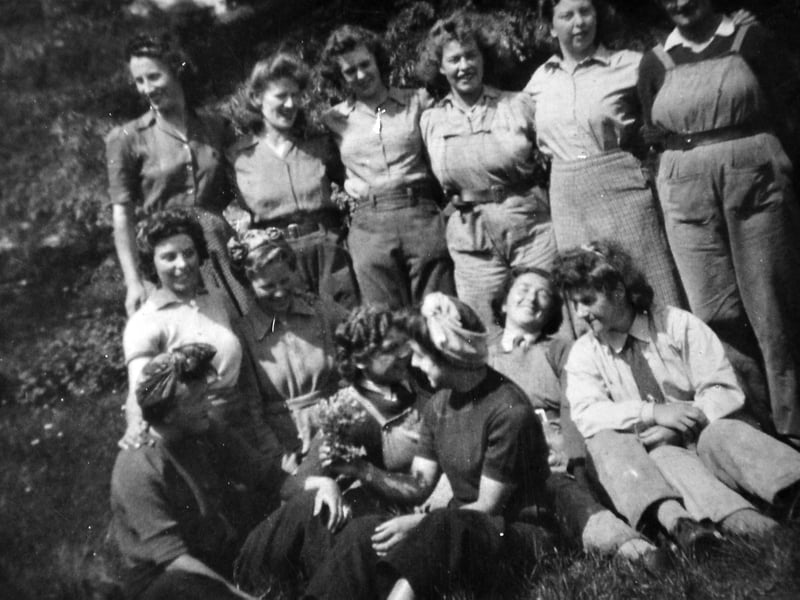
25. Sunlight and camaraderie for the Women’s Land Army at Llanforda Hall, near Oswestry
A sunny afternoon on the grass brings a rare moment of relaxation for a spirited group of Women’s Land Army recruits stationed at Llanforda Hall, near Oswestry. Pictured seated at the bottom right is Barbara Price (later Mrs Barbara Jones), alongside her close friend Mabel Jones of Newtown, seen leaning back in shared laughter. The stately country hall served as a central hostel, dispatching truckloads of workers daily to farms throughout the Shropshire countryside. Swapping urban routines in cities like Liverpool and Manchester for the rigours of milking, muck-spreading, and field harvesting, these young women took up the heavy agricultural duties left vacant by deployed farmhands, sustaining the national food supply through years of strict rationing. | Picture courtesy of Barbara Jones
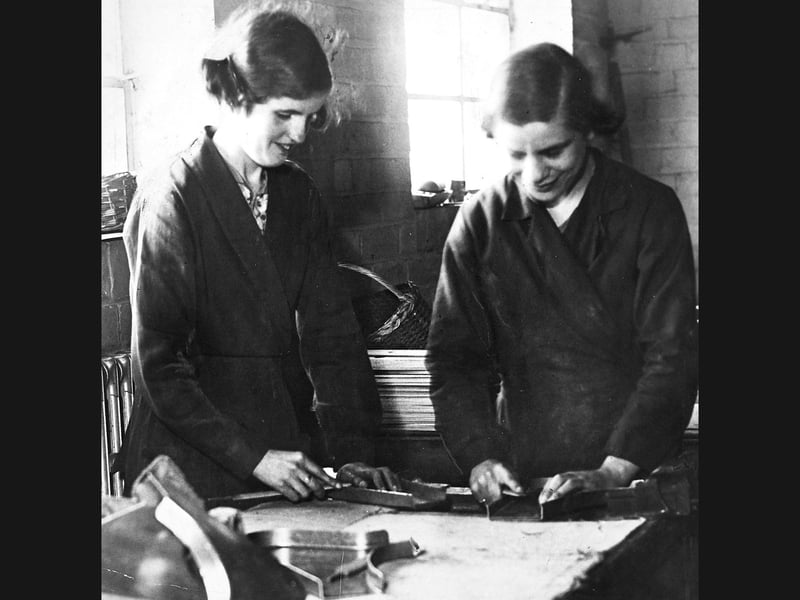
26. Precision filing at the Wolverhampton, Dudley & District Institution for the Blind
A remarkable sense of touch guides the hands of Frances Gough (left) and Lilian Cartwright as they shape metal components on 26 June 1942. Working at the Wolverhampton, Dudley and District Institution for the Blind, the two young women undertook specialised hand-filing on precision aircraft parts, using exceptional tactile skill to meet exacting aeronautical tolerances. With industry facing critical manpower shortages as men served in the armed forces, institutions across the region mobilized every available talent, enabling blind and partially sighted women to play an indispensable part in keeping aircraft production lines moving. | Express & Star archive
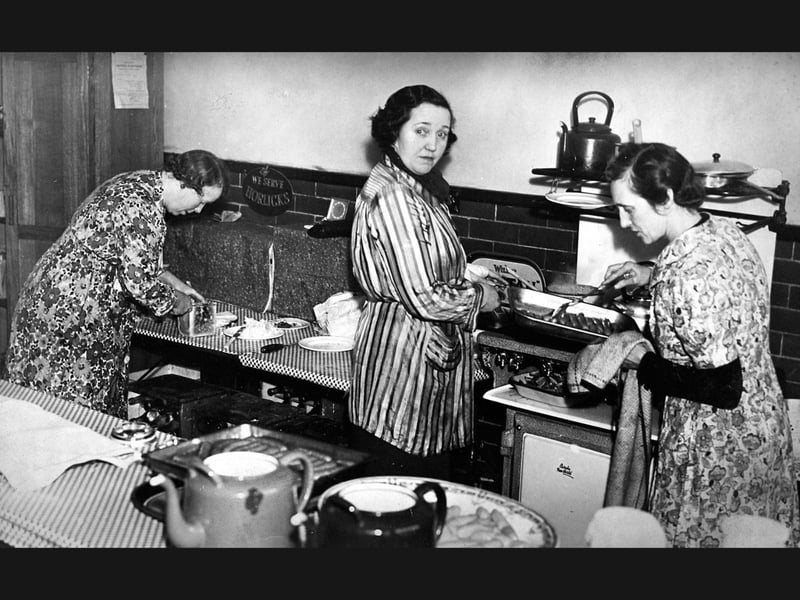
27. Serving hot meals for troops at the Hatherton Road canteen in Walsall
Steam rises from frying pans and heavy stovetop kettles as Mrs J Cliff Tibbits, the Mayoress of Walsall, leads canteen kitchen duties alongside Mrs L Summers and Mrs Wilfred Brown. Giving up their weekends to cook and serve nourishing hot meals in Hatherton Road, the team provided essential hospitality and comfort to servicemen passing through or stationed in the area. While millions of men served on active military fronts, domestic support efforts like these volunteer run canteens kept up troop morale and ensured that visiting soldiers found a warm welcome and home cooking away from the front line. | Express & Star archive
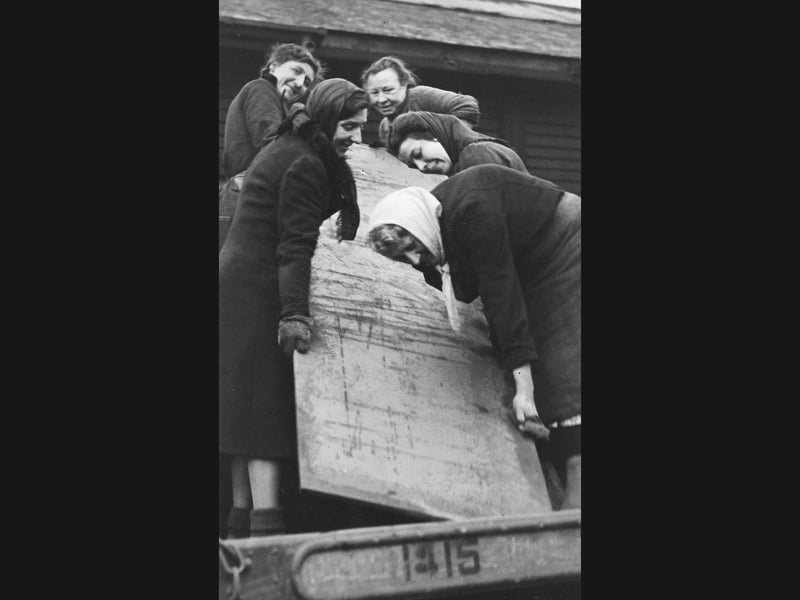
28. Heavy haulage at the Great Western Railway yards in Wolverhampton
Heaving together from an open wagon, a five-woman freight handling team manoeuvres a massive steel plate weighing roughly 4cwt (around 200 kg) on 22 January 1943. Pictured at the Walsall Street goods yard of the Great Western Railway in Wolverhampton are Mrs M Lambeth and Mrs M Phipps (left), alongside Mrs N Crane, Mrs K Smallman, and Mrs Ellen Davies (right). Employed on the sidings for nearly two years to replace railwaymen called up for active service, these women tackled the punishing physical reality of wartime transport logistics, ensuring vital raw materials and heavy industrial freight kept moving across Britain's rail network. | Express & Star archive