
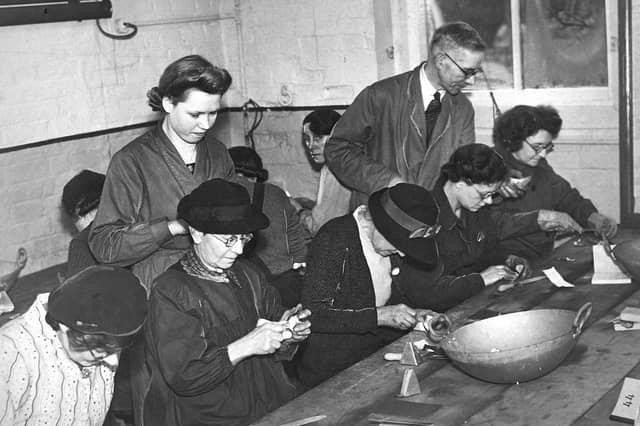

During the Second World War, as hundreds of thousands of men left to serve overseas, women across the West Midlands and Shropshire stepped into vital roles to keep the country moving.
From factory floors and railway sidings to farms, air-raid observation posts and munitions workshops, women took on jobs that had once been largely the preserve of men. They operated heavy machinery, helped build aircraft, transported goods and worked the land, playing a crucial part in the war effort.
This collection of pictures captures the determination, hard work and contribution of local women on the home front, showing how they helped keep industry, agriculture and communities going through some of the most challenging years in the nation's history.
Have stories been passed down through your family about women who played their part in the war effort? We’d love to hear them, so please share your memories in the comments below.
- For anyone curious about where their own family story leads, MyHeritage DNA kits are currently £19.90, excluding shipping. The test can help explore genetic origins and identify DNA matches who may share branches of your family tree.
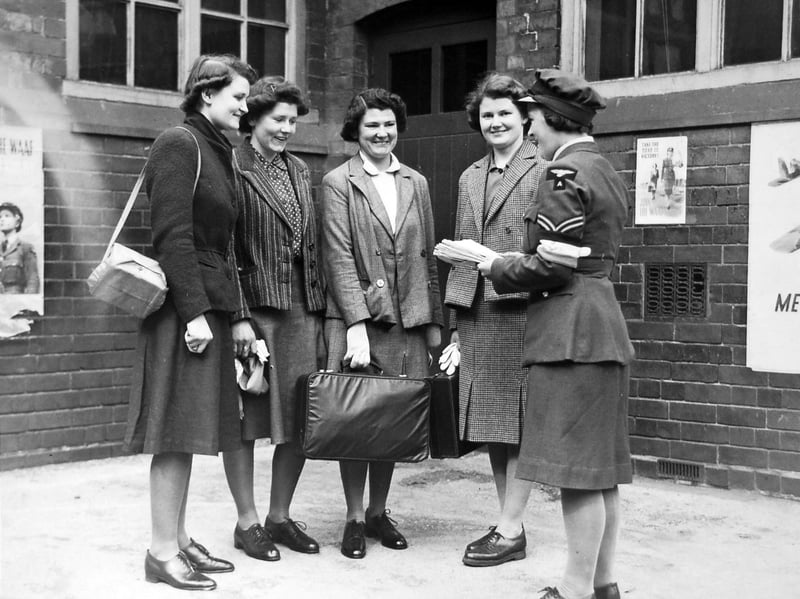
21. Four Shrewsbury sisters enlist together in the WAAF
Suitcase in hand outside the local recruiting office, four sisters from Shrewsbury: Margaret, Olive, Joan, and Ethel Dunn, share a warm, attentive exchange with Corporal Hay in May 1942. With their three brothers already serving in the forces, the siblings chose to volunteer en masse for the Women's Auxiliary Air Force (WAAF), stepping forward to release men for operational combat flying. Across the country, family households gave virtually every adult child to the wartime effort, with sisters like the Dunns taking on vital communications, radar, aircraft maintenance, and airfield logistics across RAF stations nationwide. | Shropshire Star archive
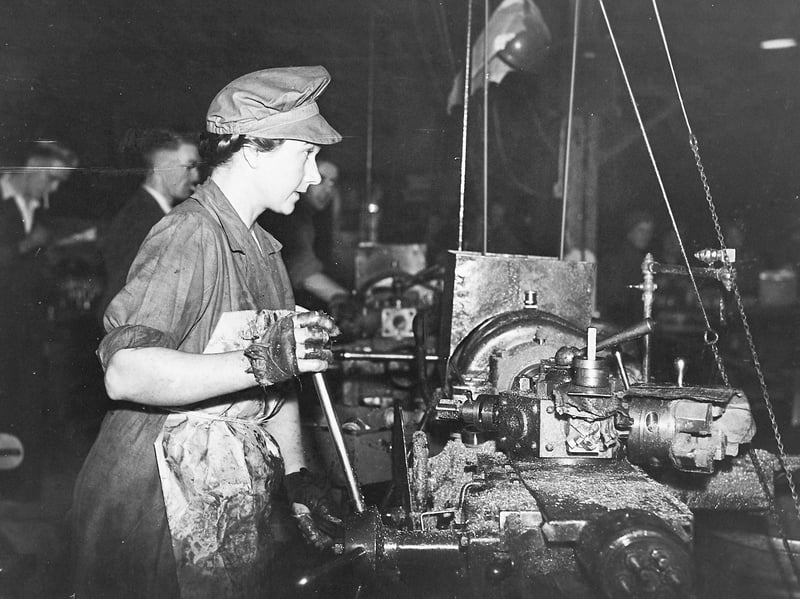
22. Record-breaking shell production at a West Midlands factory
Oil-spattered aprons and relentless focus defined the workday of 28-year-old Elsie Dale from Park Lane, Fallings Park, Wolverhampton, captured here at her heavy lathe in 1941. A former barmaid who swapped hospitality for the factory floor, Dale became known as the chief "go-getter" at a West Midlands munitions plant, famously shattering regional production records by turning out 6,018 anti-aircraft shell components in a single week. With male machinists deployed to battlefields abroad, women like Dale stepped up to operate heavy industrial plant machinery day and night, supplying the crucial munitions needed to protect British skies and drive military campaigns across the globe. | Express & Star archive
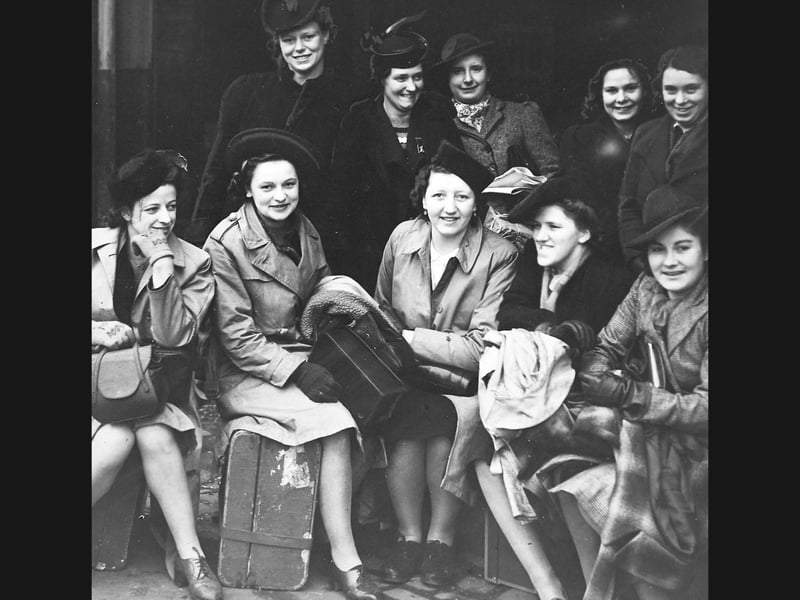
23. Tyneside recruits arrive at Boulton Paul in Wolverhampton
Suitcases rest on the station platform as a group of cheerful young women from Tyneside pose on arrival in Wolverhampton on 10 March 1942. Leaving home to undertake intensive aircraft production training at the Boulton Paul factory in Pendeford, these recruits were drafted in to address severe labour shortages on the assembly lines. With male workers mobilised for military combat across the globe, women travelling to take up specialised roles constructing aircraft, keeping factory hangars running at full capacity during a pivotal year of the war. | Express & Star archive
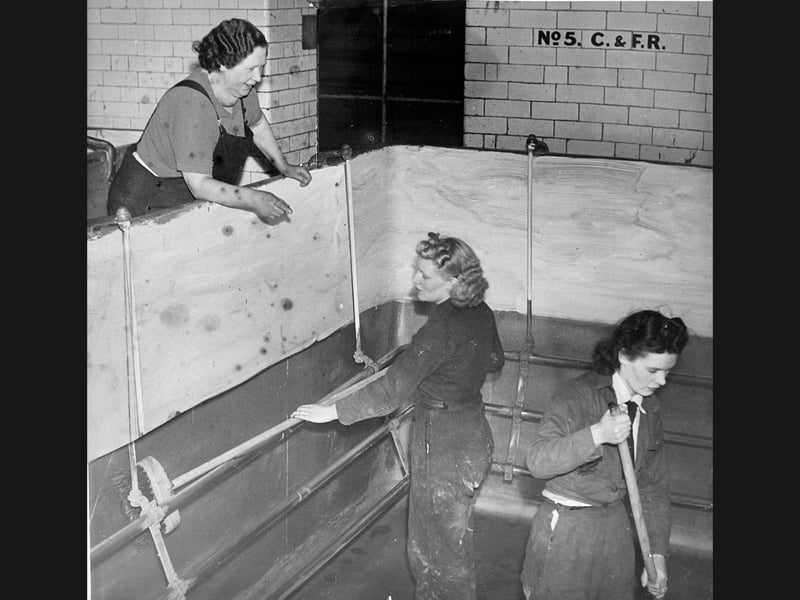
24. Family teamwork inside the fermentation vats at Butler’s Brewery
Long scrubbing brushes in hand, sisters Mrs D Hale and Mrs G Jackson scour the interior of a massive wooden fermenting vessel under the watchful eye of their mother, Mrs Jane Bood, on 24 April 1942. Stepping up to replace men called away to active military service, the trio took on the physically demanding maintenance work at Messrs W Butler & Co.’s Springfield Brewery in Wolverhampton. For Mrs Bood, it was familiar ground, she had previously worked at the brewery during the First World War, and staff manager Mr B Wood praised the recruited women as excellent wartime brewers who showed an eager willingness to master heavy trades once performed exclusively by men. | Express & Star archive