
Prisoner at Shropshire jail told officer ‘I’ve killed my padmate’, trial hears

The trial continues
A prisoner accused of murdering his cellmate allegedly had paranoid thoughts and told the victim, “I’m worried I’m going to strangle you”, before killing him, a court has heard.
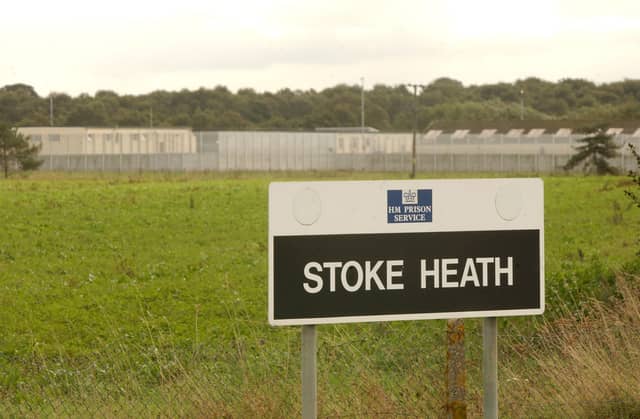
The body of Neil Ashby, 49, was found with the words “They killed us” written on his back on his bed in the cell he shared with Jonathan Alcide, 36, at HMP Stoke Heath in Shropshire in July last year.
Mr Ashby had told fellow prisoners he was worried about Alcide’s mental health in the weeks before he was allegedly strangled to death by him at some point on the evening of June 30 or early hours of July 1, a trial at Stafford Crown Court was told.
Alcide, who was described by a prison officer as “eerily nonchalant” after he alerted staff that Mr Ashby was dead by ringing the buzzer in their cell at 6.12am on July 1 and saying “I’ve killed my padmate”, denies murder.
Prosecution counsel Sally Howes KC told the jury Alcide accepts he killed Mr Ashby by neck compression but asserts he is not guilty by reason of insanity and is instead guilty of manslaughter by diminished responsibility.
But it is the Crown’s case that it was a “cold-blooded, deliberate murder which had been contemplated some days in advance of its ultimate execution”, Ms Howes said on Monday.
Alcide had asked the prison doctor a week before the killing to certify him as sick for employment due to “severe post-traumatic stress disorder and paranoia” and told a forensic psychologist after his arrest that he was an “angel turned into demon”, Ms Howes said.
The court heard fellow Stoke Heath prisoners described Mr Ashby as “quiet and decent” and a “nice lad” who had declined multiple cell moves despite raising concerns about Alcide’s mental health.
Ms Howes said: “It appears that Mr Ashby was happy to stay where he was in order to look after the defendant, provided the defendant had been offered a mental health appointment.
“His decision to decline the offer of an alternative cell was to prove his downfall.”
Mr Ashby, who would collect and bring Alcide meals after he stopped leaving his room, told fellow inmates that Alcide had started to read the Koran, was becoming scared of God and was having suicidal thoughts.
He had complained Alcide was keeping him awake at night and other prisoners noticed the defendant was becoming less sociable and would stay in his cell and not open the curtains.
On June 30 last year, Mr Ashby told another prisoner Alcide had said: “I’m worried I’m going to strangle you, Neil.”
The court heard Mr Ashby had spoken to his mother on the phone at 6.10pm on June 30 and “seemed fine”, however, he did not phone her at 8.30pm to wish her goodnight as he usually did.
Mr Ashby’s body was discovered on his bottom bunk bed after Alcide, who had superficial cuts to his wrist and blood on his white shirt, summoned a prison officer to their cell early on July 1.
There were words daubed on the cell wall in pen and blood, including “I did not slay them” and “they killed us… help”.
The prison officer called for backup after Alcide repeatedly said he had killed Mr Ashby.
Upon entering the cell, another prison officer said Alcide was “really cool and calm” and, when asked what he had done, said: “I’m sorry boss, I’ve killed him.”
A post-mortem examination found Mr Ashby had died due to applied neck pressure, most likely as a result of a neck hold or a “broad, soft ligature”.
Ms Howes said the jury would have to determine what Alcide’s state of mind was at the time of the killing.
She said Alcide had been examined by a consultant forensic psychiatrist instructed by the Crown and two other consultant forensic psychiatrists instructed by the defence.
One of the defence experts said Alcide may have been suffering a severe depressive episode with psychosis, while the other said he may have a delusional disorder, ongoing mental and behavioural disorders due to previous dependence on cannabis and paranoid delusions.
The Crown’s expert said if the jury accepts what the defendant said about his state of mind, then he was experiencing psychosis at the time in the form of paranoid delusions, but that it was up to the jury as to whether they accept that.
“Ultimately it is trial by jury, not trial by expert,” Ms Howes said.
“Your conclusions are to be governed entirely by your view of the facts based on the evidence you will hear.”
The trial continues.
Comment Guidelines
Iconic Media encourages reader discussion on our stories. User feedback, insights and back-and-forth exchanges add a rich layer of context to reporting. Please review our Community Guidelines before commenting.