
Watch: Mid Wales pine marten video hailed as important
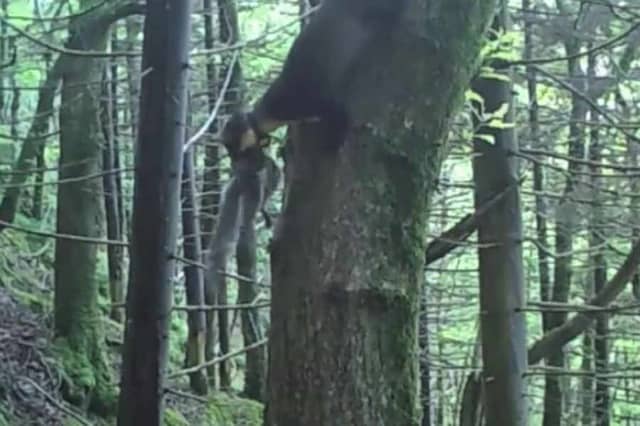

Video footage showing pine martens carrying their young up and down trees in Mid Wales is significant as it shows the first generation of "truly Welsh pine martens", say conservationists.
The video footage is also a stamp of approval that the Welsh environment is able to support pine martens, according to the trust that cares for them.
A total of 20 of the animals from Scotland were released into the wild in Powys and Ceredigion last autumn by the Vincent Wildlife Trust (VWT) and now hidden cameras have confirmed that three of the 10 females have had at least five kits that are now finding their feet.
A further 10 pairs of the animals are due to be relocated to Wales later this year.
David Bavin, pine marten project officer for VWT, said: "The kits are currently approximately eight weeks old and are just beginning to cause their mothers problems by crawling around and making nuisances of themselves.
"We have some footage on the website of a particularly chubby kit that repeatedly falls out of its tree den, to be rescued each time by the harassed mother.
"Amazingly, the third time it falls, it climbs back up (albeit clumsily) of its own accord – you have to learn quickly if you live in the trees.
"We will soon lose regular contact with the 'phase one' martens, as we will be removing their radio collars and preparing for 'phase two' – the second batch of 20 martens – this autumn.
"We have mixed feelings about this; sadness that we will no longer be able to keep a watchful eye on our charges and relief that we have a temporary rest from the daily chase.
"We recently removed the collars from our first three martens and our nagging worries for the animals' welfare melted away; they were all in superb condition. It was a powerful moment when the un-collared animals were released and then sprang off into the undergrowth."
The mammals mate in July and August and give birth the following March or April.
In England, pine martens have recently been recorded in Shropshire and the New Forest and occasional sightings have come from the Lake District, Northumberland and the North York Moors.
Loss of habitat, fur hunting and a cull by gamekeepers in the early 1900s have been blamed for their decline.
This is a pilot project and the animals have been radio-tracked daily by staff and local volunteers to monitor their movements and behaviour patterns. When some of the females' behaviour began to change it was a sign that birth might be imminent.
A further 20 pine martens will be relocated from Scotland in the autumn and this should result in a self-sustaining population that over time will spread to other forests. Without this helping hand, it is likely that this native mammal would simply disappear from the Welsh landscape.
Iolo Williams, naturalist and TV presenter, said: "I am so happy to hear this news. I dream of the day when I will walk the woodlands of Mid Wales and see a pine marten in the wild."