
Weaver remains so grateful to Wrexham and Wolves
Weaver, Wrexham and Wolves. The three Ws. For coach Steve Weaver, now operating in a youth development role at one of Germany’s top clubs, this weekend’s first meeting of the two clubs in nearly 40 years brings back plenty of good memories. As Paul Berry finds out.
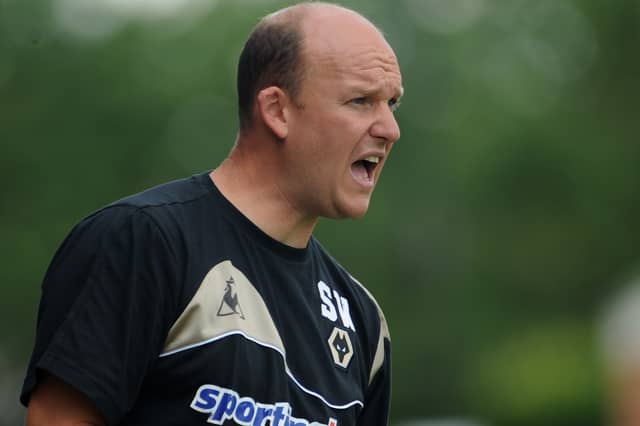

Steve Weaver recently took in a Champions League game at Real Madrid. Last night, he was watching one against Manchester City.
That’s because his current role, as senior development manager with RB Leipzig, has him overseeing the development of young players not only in the upper echelons of the German Bundesliga, but across the highest level of European competition.
Make no mistake, however. Come Saturday afternoon, Weaver will also take time to cast his eye back to British soil, and a game taking place very close to where he still has his family home.
Wrexham against Wolves. A club where he made a career in coaching and spent over 20 years. And another where he stepped up his profile and expertise, leading to even more personal growth and development which paved the way for the job he has today.
For Weaver, there is so much to be grateful for.
“I loved it at Wrexham, I suppose you would say it’s my club,” he says. “It’s changed so much now and is great to see what they have done in the last few years but it was also a brilliant place back then too.
“There were so many coaches of that era who went on from Wrexham to forge careers in the game, and it was a club which gave me the perfect upbringing.
“And then, to go to Wolves with the staff and the players that the club had at that time, and going into the Premier League - that was incredible.
“I learnt so much at Wrexham, and I took all that to Wolves, where I learned even more, about developing players, and doing the right things.
“It was such a good time, I love Wolves, I love Molineux, that whole time was just a brilliant part of my career.”
The superlatives are as accurate as they are well-meant.
Weaver, who rapidly moved through his coaching qualifications up to completing the UEFA Pro Licence, couldn’t have asked for more from his spells with Wrexham and Wolves.
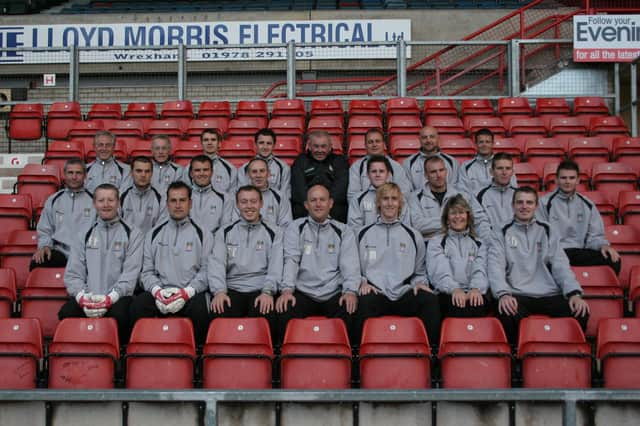
It has led, via a stay at Huddersfield and extensive time as academy manager and director of development at Norwich, to where he is now, at one of Europe’s leading clubs and a key part of the Red Bull footballing family which also includes the New York Red Bulls, Red Bull Salzburg and Omiya Ardija in Japan.
Weaver is now 54, and it’s a year off four decades since his career in football began at 15, when he headed straight to Wrexham as a player upon leaving school.
A promising youngster, he emerged through the youth ranks as a central midfielder to regular reserve team action and the brink of the senior set-up before injury struck.
Wrexham were in the old Fourth Division at the time, boasted Welsh legend Joey Jones in the defence and up-and-coming forwards Chris Armstrong and Andy Preece at the start of their own respective journeys which would take them to the very top.
Weaver had been in the squad without making the 13 for a win at Maidstone, and was hoping to break in for the following away game at Northampton, only to suffer the serious injury in training which was to end his career before it had really got started.
“My claim to fame is that it happened when I read a pass between Chris Armstrong and Andy Preece,” he admits. “The training ground wasn’t the best at the time, and it was wet, and I went one way, my leg didn’t want to go the same way, and I snapped my cruciate and that was that.
“I had about a year or so of trying to get fit, but I was never quite the same, and that was the end.
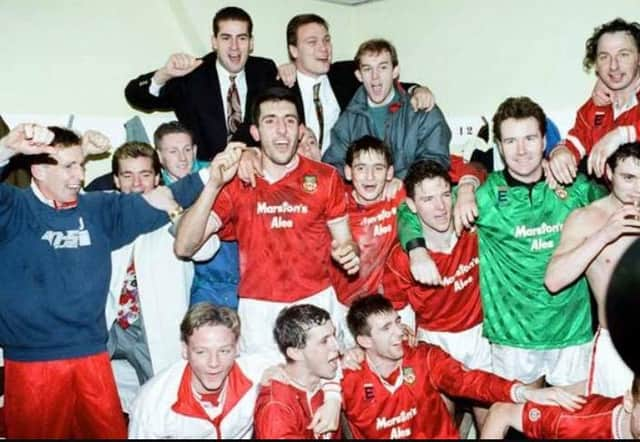
“My football career was probably better because of that day really. Because of what it led to. And of course, I can always tell people that I was a far better player than I actually was!
“I could go on and tell the young lads I worked with that I could have been as good as Messi or Ronaldo – I mean, they will never know, will they?!”
At that time of being forced into hanging up his boots, Weaver was already well accustomed to cycling into Wrexham from the village where he lived five miles away, and would stay on after his own sessions to watch the young players training.
He started helping out in coaching those young players, and so when it was clear that his playing career had been cut so painfully short, boss Brian Flynn asked him to stay on.
At just 19, he was soon embarking on a new direction as a coach, and was always putting himself forward to learn, coaching within the youth ranks, delivering sessions as part of the club’s work in the community.
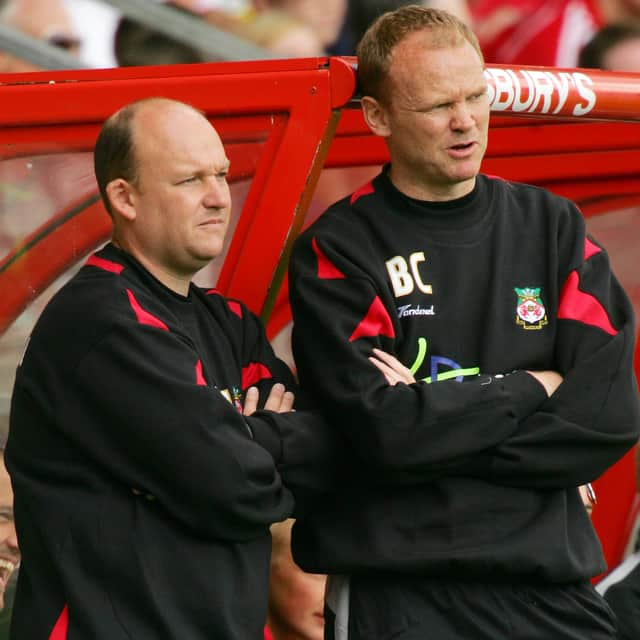
He became Wrexham’s schoolboy development officer, overseeing the progress of the schoolboys through to under-16s, before ultimately progressing to Centre of Excellence director, and then, assistant manager to Brian Carey.
Many other successful coaches and managers came through the club during that period, including not just Carey, who would later become assistant to Dean Saunders at Wolves, but also Steve Cooper and former Molineux midfielder Darren Ferguson.
“I joined the club at 15, left at 35, and did pretty much everything there was to do on the coaching side apart from manage,” Weaver reflects. “And I certainly became a better coach than I was a footballer.
“It was 20 great years, and I still live about 500 yards from the training ground and will always go back and watch a game if I get the chance.
“It’s obviously changed so much since my day, it’s unrecognisable, but what the owners and Phil (Parkinson) have done for the club has been remarkable.
“The promotions, buying players that we could only have dreamt about, getting into the Championship and probably having play-off expectations given the extra places this season.
“There were good times and bad times when I was there, including the administration, when we nearly went under and lost the club completely.
“Then you look at it now, with the progress, and they are building a new stand, and it’s fantastic.
“The people, the fans, they really deserve it. I think 13 years in the Conference they had. So, to get the promotions, and keep riding the wave, has been brilliant.”
Weaver had been assistant to Carey prior to his departure as manager albeit Carey remained as part of the backroom staff. Previous Wolves interim boss Brian Little came in and brought his own first-team coach – Martin Foyle – and so, for Weaver, it was time, after two decades, to seek pastures new.
He combined some scouting work for Mike Rigg at Blackburn with a stint at Manchester City’s academy, at the time they won the FA Youth Cup and included talents such as current Wolves defender Kieran Trippier, Micah Richards and Daniel Sturridge.
And then came Wolves, a club he had already gone close to joining as soon as he left Wrexham a few months earlier.
Weaver recalls: “I first interviewed for the academy manager’s job at Wolves, and I met Jez (CEO Jez Moxey), who to be fair probably wanted to give me 15 minutes, because he was a bit like ‘who’s this bloke from Wrexham’?!
“The two chairmen, Steve Morgan at Wolves and Geoff Moss at Wrexham, know each other well, and so they said they would give me an interview.
“I ended up chatting with Jez and (club secretary) Richard Skirrow for a good hour and a half, and it felt like I made a decent impression.
“The job went to Kev (Kevin Thelwell), but Jez kindly wrote to me to say there might be another job I’d be interested soon afterwards.
“I already knew Kev pretty well, and once he was in position, we spoke more and I was offered the development coach role, which was a new one at Wolves working alongside the first team with the young players as a bridge to the academy.
“It was a brilliant time for me, working alongside Mick (McCarthy) and Terry (Connor), and backroom stuff like Dales (Tony Daley), Pat (Mountain) and Kempy (Steve Kemp).
“Jez was a force to be reckoned with as well, and it was so good for my development, to be working with so many top and driven people who went on to achieve great things in the game.
“Being a young coach, surrounded by all that experience and information, I learned so much.”
Weaver went on to spend six years in total at Wolves, a period encompassing promotion to the Premier League, two years’ survival, a double relegation and then promotion back to the Championship. Never a dull moment.
His remit of supporting young players throughout that time had to be both dynamic and adaptable, but certainly played its part in the successful League One season when so many of the club’s aspiring talents enjoyed a sustained impact at first-team level.
There was also a time when he once again stepped up to become assistant manager, to Connor in the Premier League between the managerial tenures of McCarthy and Stale Solbakken, more invaluable experience to add to the mix.
“I feel I’ve been fortunate to pick up good advice from people through my career, and Wolves was a place where everyone was great about being honest and up front and telling the truth,” he says. “And that extended to the players as well. Standards were very high. It’s very hard to break through as a footballer, but no one was under any illusions or sent down any false paths and it was an approach which worked.
“With the training, both with me and when they were given chances with the first team, and the fixtures, the young players did exactly what was expected of them and all pushed each other on.
“Whether they were lads that came through the academy, or were brought into the under-21s group from outside, so many of them ended up having pretty good careers because of the grounding they received at Wolves.
“It was a great place for young players and an enjoyable place to work, because while it was hard, there was a really strong sense of togetherness throughout the club.
“In terms of being assistant, we’d all seen how Mick worked, seven days a week, and we used to go out on the bikes and chat every morning, so it was a big change when he left.
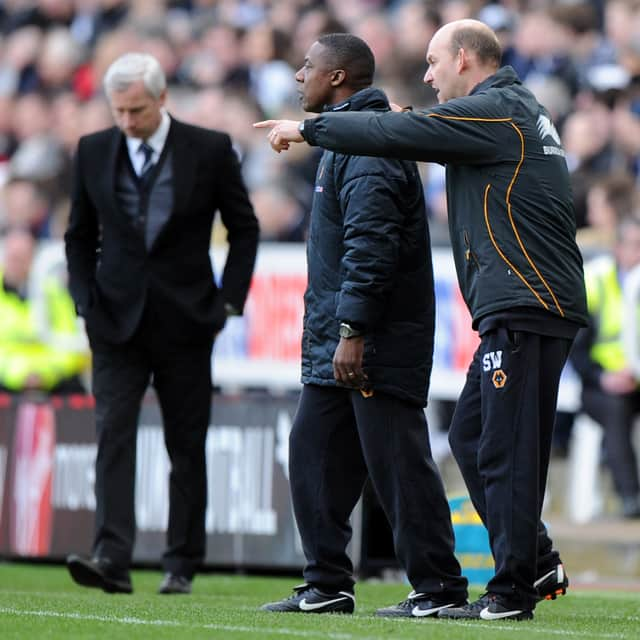
“I don’t think Terry had any intention of staying on and we all thought someone else would come in but then he was asked to take the training and for me to help him out.
“It was the international break before Newcastle away, and it got to the stage where we were going to take that game, and then Terry was told he would be in charge to the end of the season.
“It was a difficult time, because that particular dressing room was probably coming to the end and we had some really tough games with Man City, Arsenal and Manchester United.
“We gave it our best shot and the lads did as well – ultimately we might not have been good enough but Wolves was never a club where you didn’t give 100 per cent.
“There were some games where we got a performance but not a result – which had been happening before as well – and then a couple of games where to be fair we let ourselves down, which happens in a relegation fight.
“Terry worked so hard and had prepared for the next season if they had given him the chance – he had a really clear idea of what he wanted to do and how we would have replaced the three or four top players who were going to leave.
“Things went downhill for the club from there, but at least in my last season there was the promotion back to the Championship when so many young players made a contribution which was really good to see.”
Moving on from Wolves was not Weaver’s choice, but the relationships forged continued to play a part in his ongoing career.
He spent time scouting for Ipswich when McCarthy and Connor were at the helm, before then becoming academy manager at Huddersfield where Stuart Webber was football operations chief.
Webber had been a trainee groundsman at Wrexham during Webber’s spell at the Racecourse, before also progressing through the respective coaching badges and becoming head of recruitment at Wolves.
Webber, who had previously been at Liverpool and QPR, moved on from Huddersfield to become sporting director at Norwich, with Weaver following suit for a hugely successful seven-year stint, firstly as academy manager and then head of football development.
During Weaver’s time as a Canary, no fewer than 24 homegrown senior players made their first-team debuts, but ultimately it came to a time when the intensity and extent of travelling saw him decide to step down for a refresh and a recharge.
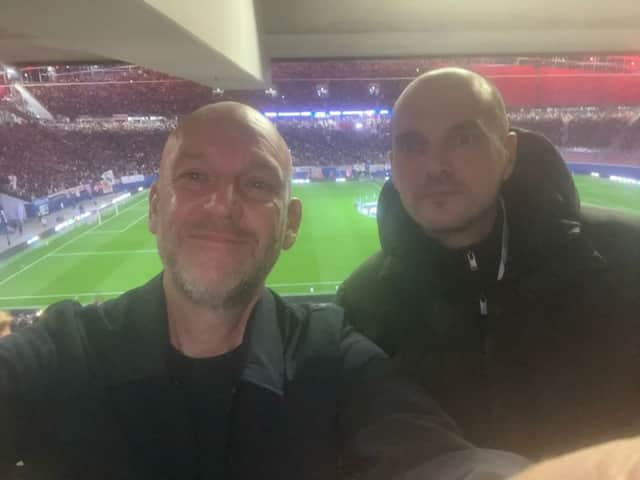
It was during that time, ironically while watching a Wolves Under-21s fixture against RB Leipzig at Telford, that Weaver was reunited with David Wagner, previously manager at Huddersfield and Norwich and now academy manager with the German side.
“It was a case that I’d been out on the grass playing and coaching since I was 15, and just needed a short break,” Weaver explains of the decision to leave Carrow Road. “But then I did start to get itchy feet and wonder if I was ever going to get another job!
“Fortunately, I bumped into David and we were chatting away, talking about all sorts of things but notably the development of players, and I got a phone call not long after that asking if I would consider heading over to Germany.
“I just thought, ‘what a brilliant way to potentially finish everything off’, and it’s been going great so far.
“Working for Red Bull, arguably the biggest sports brand in the world, with Champions League football, and in a new and different culture, I’d recommend it to anyone.
“East Germany’s a lovely place and Leipzig is a lovely city, so it’s not just the football side but the life experience and my family have been able to come out and visit and I get home when I can.
“I’ve also caught up with Stuart a few times, as he’s now head of sport with Red Bull Omiya in Japan, so it’s great to see how we’ve both progressed from those days at Wrexham, which provided both of us with such a good start to our careers.
“I think more and more coaches are now seeing there are opportunities outside of the UK, and are doing well, and it feels like the world is a much smaller place than it used to be!”
Indeed it is, but for Weaver, while relishing and enjoying his current role, there is ultimately still no place like home, be that Wrexham, or all of his previous footballing homes, including Wolves.
“Everything happens for a reason, and I feel I have been very fortunate to go to clubs at the times that I have,” he says. “And Wrexham and Wolves are both a huge part of that. Places where football is ingrained into the community, where the fans expect success, and where both clubs have come through really difficult times.
“It was a privilege for me to work at both, and to work hard, but also to have fun at the right times as well.
“I probably laughed for 20 years at Wrexham, and I didn’t stop laughing until I left Wolves.
“Two special clubs with special people.”
Comment Guidelines
Iconic Media encourages reader discussion on our stories. User feedback, insights and back-and-forth exchanges add a rich layer of context to reporting. Please review our Community Guidelines before commenting.