
Memories of days when Shrewsbury police officers fought fires too
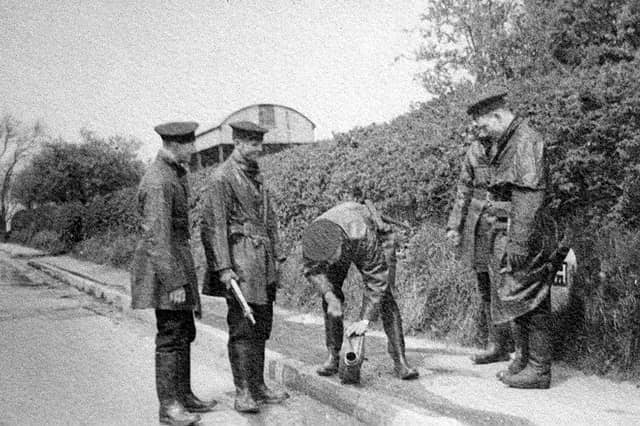

Tom Davies was one of the three last survivors of the old pre-war Shrewsbury Borough police force
The old pre-war Shrewsbury Borough Police were a busy lot. They caught crooks, kept the peace - and fought fires.
One of the last of this long-disappeared police force to tell the story was Tom Davies of Shrewsbury, who had a short but eventful stint as a Shrewsbury policeman in 1937 and 1938.
And he and his wife Sheila shared their memories with the Star in an interview shortly before his 91st birthday in 2002. At the time he was one of only three members of the borough force still living.
Originally from Ludlow, where he worked in a garage, he joined the force at Shrewsbury in March 1937, but had only a brief police career as he was discharged on grounds of ill health in December 1938. Suffering from tuberculosis, he would spend nearly two years in the sanatorium at Shirlett, near Broseley, and made a good recovery.
Police work was in his blood. On his father's side, a grandfather, George Henry Brookes, was a First Constable, the equivalent of Chief Constable, in Ludlow. And his grandfather on his mother’s side was a Superintendent Lear in Bridgwater, Somerset.
It was during his police career in Shrewsbury that Mr Davies met his future wife, then Sheila Thomas.
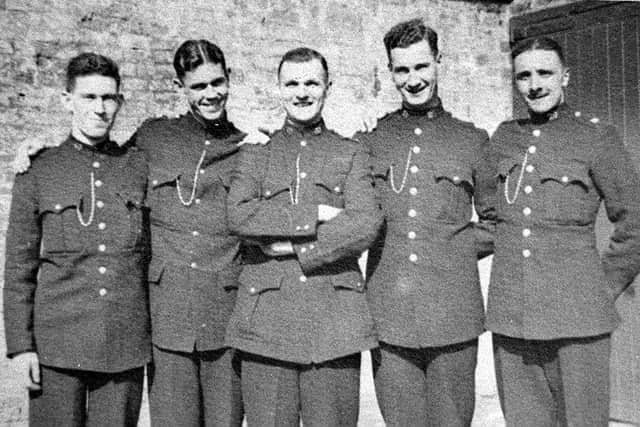
“His digs were at 4 Milk Street, and I lived in Meole. He wanted to meet me because he had noticed me in town when he was on duty," recalled Mrs Davies, who worked in the shoe trade at Wyles Brothers on Castle Gates.
"Everywhere I was on duty, she seemed to turn up," joked Mr Davies.
They actually got together at a Miss Shrewsbury dance at the Music Hall, and married on May 12, 1941, at Meole Brace.
“There were two police stations, the County police station and the Borough, both on Swan Hill. In those days you were not even allowed to leave the Borough on your days off without permission. It was not a large force, having about 45 constables," said Mrs Davies.
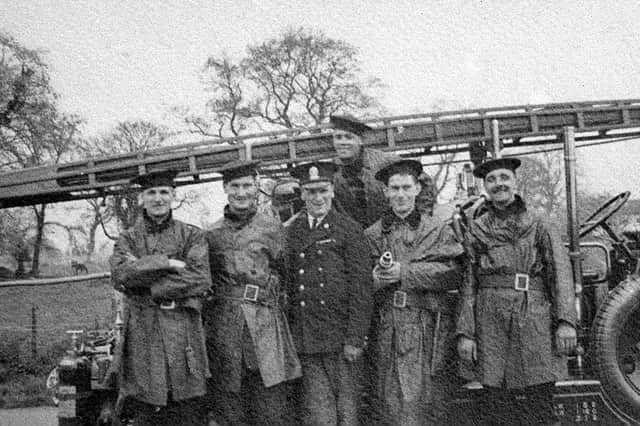
The Borough policemen doubled as firefighters and, returning to his digs after tackling one fire, Constable Davies found that his landlady had thoughtfully filled the bath for him. She assured him "the sun has been on it all day”.
“She had filled the bath with cold water and there was only a little window at the side of the house, and the sun couldn't get through. So I went downstairs and got a kettle of hot water and took it upstairs, and washed where I could. She was a mean old bugger," said Mr Davies.
One tragedy in which he was indirectly involved was the death of Constable Harry Speake, who dived into the River Severn in pursuit of some absconders who were getting away. But the shock of getting into the cold water killed him. Mr Davies managed to recover the body by catching the hook on his trousers, and pulling him up. Later he took part in the funeral parade.
"I remember we did the slow march from St Chad's right up to the cemetery."
Keeping in touch with the station while out and about was achieved by using a police box, in which was a phone.
"You had a 10-minute break. You went in the box and undid your sandwiches and poured your tea out before you rang the station."
Mr Davies had a bicycle for use on police duties, but had his own Sunbeam motorbike for travelling when off duty.

The general image of pre-war policing is that it was a more gentle period, but there were still local toughs who had to be handled carefully.
“I remember that I was at the bottom of Mardol and spoke to some bloke about behaving himself, and told him to clear off, which he did, over the bridge.
“The next minute a police car came down and the officers asked if I had seen this bloke called, I think, Roberts. I told them I had told him to clear off and get over the bridge.
“They replied: ‘You did? Usually he puts two policemen in hospital.'"
Comment Guidelines
Iconic Media encourages reader discussion on our stories. User feedback, insights and back-and-forth exchanges add a rich layer of context to reporting. Please review our Community Guidelines before commenting.