
Silver coins and a gold ring among latest buried treasure unearthed in Shropshire
A gold ring, post-medieval dress fasteners and silver coins were among some of the latest buried treasure which has been discovered in Shropshire.


Several items have been declared treasure by Shropshire, Telford and Wrekin's deputy coroner Heath Westerman at inquests this week.
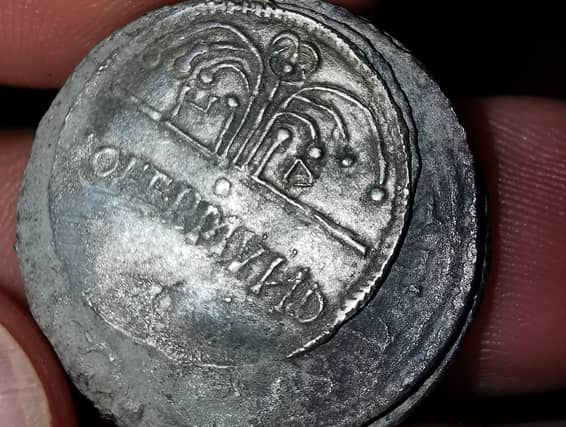
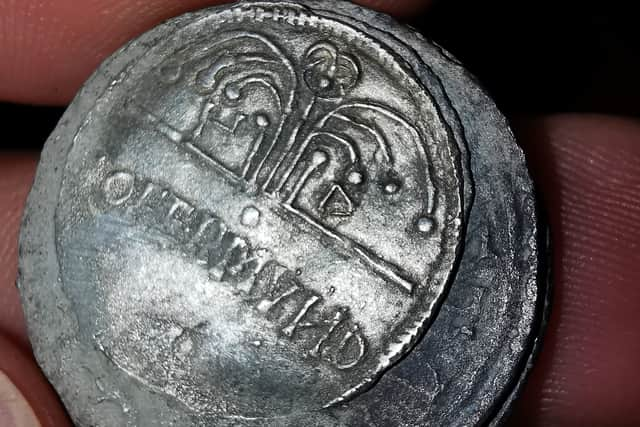
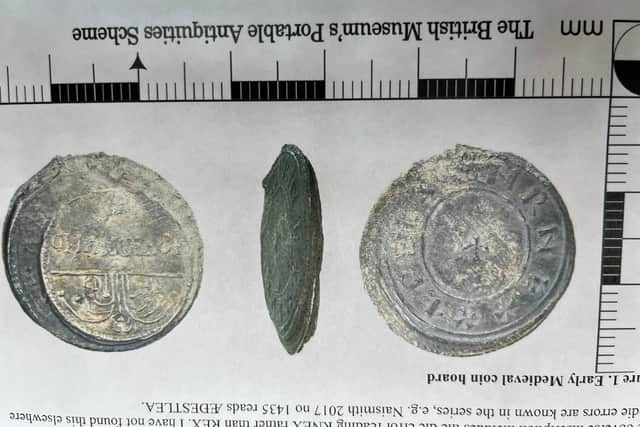
Perhaps the most eye-catching and significant find was a hoard of five silver coins of early 10th century date which have been concreted together.
The coins were discovered five inches deep in ploughed turf in a field in Shawbury by metal detectorist Marc Porter in May 2020.
Mr Porter, along with landowner Andrew Davies, attended the inquest to hear the find declared treasure.
Mr Westerman read a report prepared by expert finds advisor Dr John Naylor, which said: "This may be the first hoard of the late 920s-30s to have been discovered in this region.
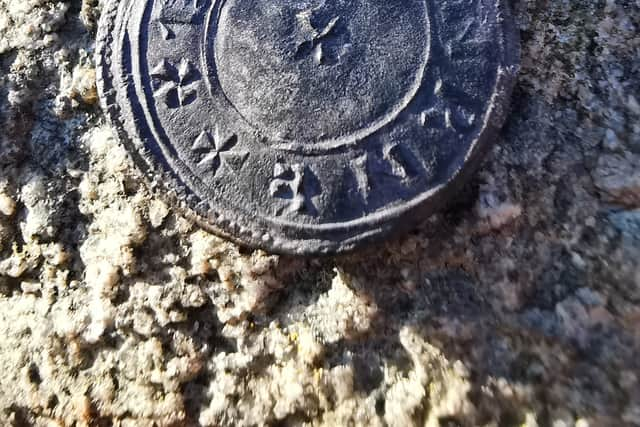
"Likely dating to the period of Ethelstan's reign, assuming that the two unidentifiable coins are as predicted.
"The deposit forms more than two coins, all are older than 300 years and have a precious metal content in excess of 10 per cent. Therefore it falls under the requirements of the Treasure Act 1996."
Mr Porter told the Shropshire Star of the moment he found the hoard.
"I was on my way back to the car. Andrew's son was nearby so I called him over.
"I've been doing it (metal detecting) for 20 years. It's my first treasure that has come to inquest.
"According to the write up I've had the Shropshire Museums have expressed an interest in acquiring the hoard. I would hope they would as it would be nice for it to stay in the community."
He said it needs to go through the process of valuation, so has no indication of how much it might be worth at this stage.
However, Mr Davies said its historical value may be more significant that its monetary value.
Mr Porter added further detail about the coins which was not revealed in the inquest.
"The top (small coin) is a coin of Saxon King Edward the Elder (AD899 - 924) and minted by the Moneyer Eofermund from the West Mercian Mint at Shrewsbury and potentially an unrecorded example of its type," he said.
"The back coin was a Penny of Æthelstan (AD924 - 936), who was Edward the Elder's son. Modern historians regard Æthelstan as the first King of England."
The hamlet of Romsley, near Bridgnorth, has also been a happy hunting ground for detectorists, with a dress fastener, a dress hook and a gold posy ring being discovered in fields in the area.
Mr Andrew Bassett unearthed the dress-related items - first in January 2020 and then in July 2020.
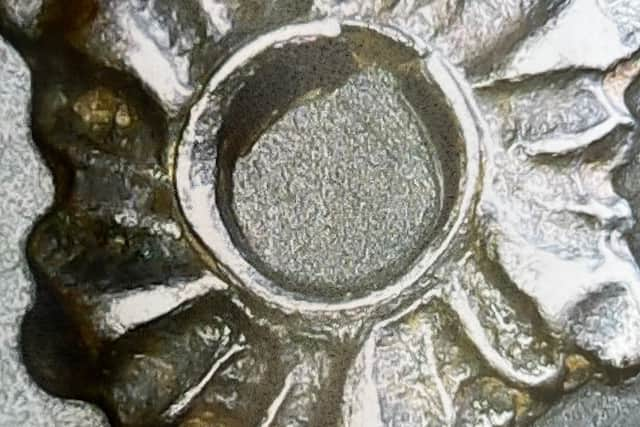
The first is described as a "silver, most-medieval eyelet or dress hook component".
A report prepared by treasure finds liaison assistant Peter Carey said: "The object is roughly circular in plan, with a 5.1mm diameter hole through its centre. Its outer face has been moulded to form a floral motif, with six petals projecting from the centre hole outwards, the edges protruding over the sides of the face.
"These decorative features are moulded onto one side only. The other side is flat and undecorated, with a thin, broken silver burr bending outwards from the central hole."
The report added: "The function of this object isn't immediately obvious, although it is most likely related to clothing, possibly serving as a decorative eyelet for reinforcing holes on straps or items of dress."
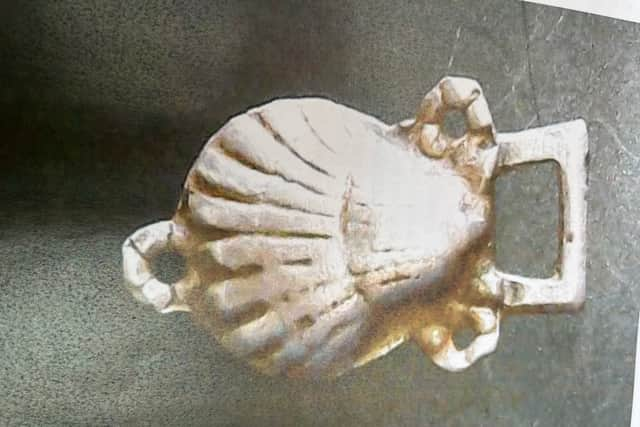
The dress fastener found by Mr Bassett is described as "a single piece with a convex body with moulded relief in the pattern of a scallop shell".
A report, also prepared by Mr Carey, said: "The eye is rectangular in shape. Three attachment holes are present on the body and are decorated with floral motifs, formed from petals around the holes.
"The scallop form is a common form of decoration used on post-medieval dress fasteners of this type."
Also found in Romsley was the ring, which was discovered by Mr Stephen Lewis in August 2020.
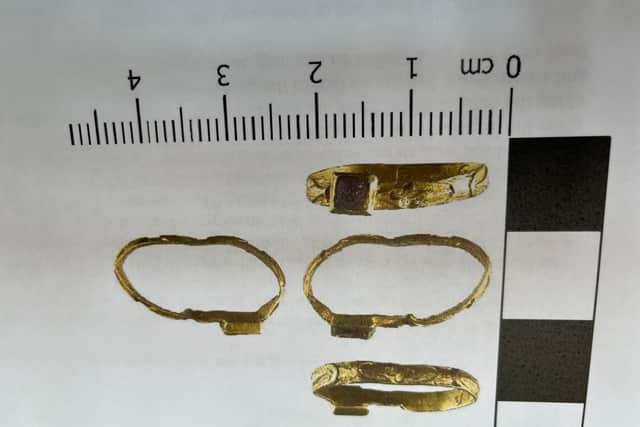
The items is described in a report as "a decorated, distorted medieval to post-medieval gold finger ring, 1600-1700AD, set with a purple coloured glass paste gem or stone, and traces of green enamel.
The report said: "The ring's bezel is rectangular in plan and has been applied to the band. It is 5.1mm long, 4.7mm wide and 1.9mm deep.
"The stone bezel within has been partly broken, with roughly 60 per cent of it remaining.
"It is of amethyst colour and likely a coloured glass paste gem. When new, there would have been very little gold visible on this ring. It would have been brightly coloured.
"The inner surface is inscribed with Italic script with the words 'I live if I no I die' (I live if I know I die), which may be a version of 'love as I or else I die' or 'I live in love until I die'. However the inscription may also relate to Christian thinking, which accepted the soul was immortal and the idea of resurrection.
"Surface wear and scratches can be seen. The band has been bent considerably and consequently is an elongated oval shape in cross section."
The final find was a post-medieval silver vervel, which was discovered in a field in Market Drayton by Cai Anthony in January 2022.
The object is dated to between 1550 and 1700 AD and is described as "a flat annular ring that is rectangular in cross section with narrow sides to wide/flat external and internal faces".
A report said: "Vervels were used in falconry to attach a bird to a leash, and were usually inscribed or emblazoned to enable the bird to be identified with its owner.
"The inscription on this example links to Sir John Talbot (1545-1611) of Grafton, Worcestershire, whose son John Talbot (died 1607) lived at Longford, Market Drayton."