
How Traitors star Michael Sheen became linked to Shropshire’s famous medieval rebel leader

Why Traitors star Michael Sheen is putting Shropshire's Owain Glyndŵr in the spotlight
A new hit play about a Welsh rebel leader has put the spotlight on the Shropshire borders.
Welsh nobleman Owain Glyndŵr was born and ruled over lands between Oswestry and Llangollen in the late 14th century becoming famous for leading a rebellion against English rule.
Glyndŵr's home - at Sycharth, near Oswestry - is given several shout outs during the play Owain and Henry at the Welsh National Theatre and Wales Millennium Centre in Cardiff.
Hollywood actor Michael Sheen - who took part in The Traitors - plays Glyndwr as an initially reluctant rebel in Gary Owen's new play which has been receiving standing ovations.
But with the political and social worlds in turmoil around usurper king Henry IV, Glyndŵr, an experienced military leader, took up the mantle of Prince of Wales.
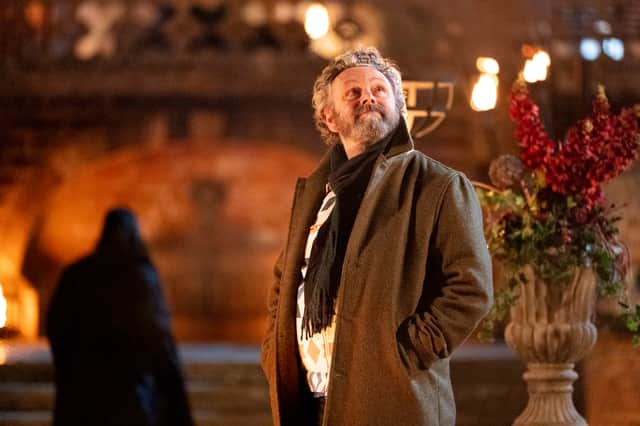

The Lord of Glyndyfrdwy was crowned Prince at Machynlleth, in Powys, and in real life ruled Wales, even setting up a Parliament.
The play depicts the horror of war through striking verbal descriptions as Glyndwr sees victory after victory against the forces of the English king.
There are lines of dialogue in the play which portray Wales as a country that is nearly always losing, has been pushed back again and again, from the Romans to the Saxons but always survives in culture and language.
Glyndŵr is portrayed as a man whose victories brought him within one battle victory of toppling the English crown and changing the course of history.
The Battle of Shrewsbury in July 1403 and remembered in the Shropshire county town by reenactors, gets a mention in the play. Glyndŵr was an ally of Henry 'Hotspur' Percy but did not take part in the battle as he had been leading his forces elsewhere.
The play imagines Glyndŵr as a leader who preferred peace to war. In the play he decides against attacking the English forces at a standoff at Woodbury Hill in Worcestershire in 1405.
Certainly in life Glyndŵr was not captured or killed and he died in 1416 passing into the realms of legend. He has become the spirit of a nation, including as one who fought against oppression at a time where the existence of the Welsh was hanging in the balance.
Owen's play, rapturously received by a packed audience on Friday, November 20, plays its part in the evolving legend of the nobleman turned rebel leader.
A freedom fighter to some, a fierce advocate of Welsh independence to others, he is now, at least in this observer's interpretation of Owen's play an embodiment of modern national values, including that of the songs of plucky underdogs.
All good entertaining stuff and no doubt stirring to those of Welsh DNA in their blood.
But there is not long left to see it if you fancy a Cardiff city break. It's run is set to end on Saturday, November 28.
Tickets available here.
Comment Guidelines
Iconic Media encourages reader discussion on our stories. User feedback, insights and back-and-forth exchanges add a rich layer of context to reporting. Please review our Community Guidelines before commenting.