
Loss of over 200 self-catering holiday units could cost cash-strapped Powys council £400,000 in lost revenue
Loss of over 200 self-catering holiday units could cost cash-strapped Powys council £400,000 in lost revenue
The movement of over 200 self-catering holiday units out of Council Tax to pay business rates could cost cash-strapped Powys County Council £400,000 in lost revenue.
At a meeting of Powys County Council’s Finance Panel, councillors and independent lay members received a technical report on the Council Tax base calculation for the forthcoming 2027/2028 budget.
Next year, the tax base of 65,756.27 sees a growth of just 63.77, which is much lower than this year’s increase of 920.84 Band D equivalent properties.
The report explains that there is a drop in the number of “periodically occupied” properties paying a premium included in the tax base.
These properties are either used as tourist accommodation or second homes and had been moved into Council Tax by the Valuation Office.
This was a consequence of not meeting Welsh Government criteria over the number of days they are available to let during the year.
But next year, 1,271 of these properties will be included in the calculation, a drop of 205 from this year’s 1,476.
Finance Panel chairman Councillor Aled Davies (Conservative – Llanrhaeadr-ym-Mochnant and Llansilin) brought up this issue.
Cllr Davies said: “This is the first building block of next year’s budget.
“I’m concerned about the impact of Council Tax take due to the fluctuations in numbers with long-term empties and periodically occupied premiums. There’s been quite a shift in them.
“The 205 that’s transferred from Council Tax into Business Rates, were they previously in Business Rates and gone into Council Tax because of the Valuation Office decision, or are they new?
“Have you made an analysis of the situation?”
Income and Awards manager Andrew Griffiths said: “Over the last 12 to 18 months we have seen a number of owners (successfully) appeal the decision and move back to Business Rates.
“We saw an all-time low of self-catering units on the Business Rates rating list of 610 last October (2025), which has risen back to 680, so around 70 properties have flipped back.
“There will be other factors within that 205. A number would qualify for premium exemption, or have a planning restriction we would not have known about this time last year.
“We’ve also seen a number of holiday lets now being sold or being used as primary residences, so it’s a combination of reasons.”
Cllr Davies asked: “Are we likely to see churn like that in future years? Is that reflected in the low Council Tax base increase?”
Mr Griffiths answered: “We’re seeing a lot of flipping between the lists, a holiday let that meets the criteria this year, next year they don’t and vice versa.
“It’s expected to be a constant churn. The all-time high three years ago was just under 850, we’re some way below that which is suggesting they are in the Council Tax base.
“But if it doesn’t change weekly, it is fortnightly. We’re constantly reviewing and changing, and it does present a challenge in setting the Council Tax base.”
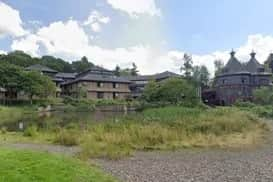

Cllr Davies calculated that the 205 units would be worth around £400,000 if paying Council Tax at a Band D level.
“So, it does impact the budget quite considerably and there’s a risk around it,” said Cllr Davies.
Mr Griffiths agreed.
Cllr Davies asked whether there were still some appeals waiting for a decision.
Mr Griffiths said: “We’re assured that they are coming up to date with the backlog of appeals.”
The report was noted by the panel and will go to a meeting of the Liberal Democrat/Labour Cabinet for a decision on Tuesday, November 24.
Comment Guidelines
Iconic Media encourages reader discussion on our stories. User feedback, insights and back-and-forth exchanges add a rich layer of context to reporting. Please review our Community Guidelines before commenting.