
Welcome wildlife’s heralds of spring - the harbingers of warmer weather we can spot across Shropshire in March
As a naturalist, I am forever telling people that autumn is the best time to spot wildlife across our county., writes Ben Waddams.

But as a wildlife artist and a touch of the fair-weather one at that, I would have to say March through to May is my favourite time to be out, observing wildlife in the Shropshire countryside.
To that end and in preparation for it, I tend to look for the harbingers of not just spring, but of warmer days ahead.
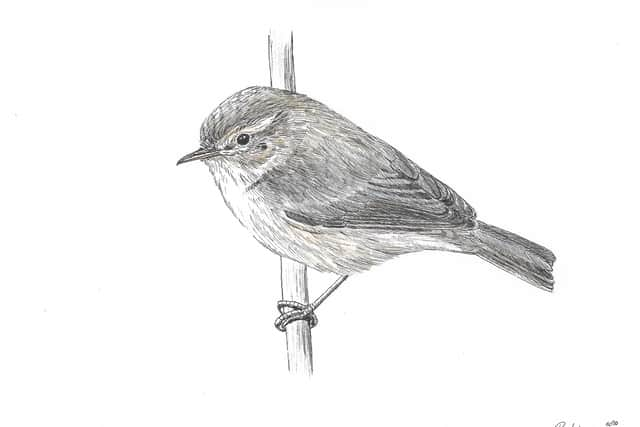
One such herald is surely the tiny chiffchaff, signalling its arrival back to our county after the winter away in Africa. Its onomatopoeic two-note song cuts through early spring hedgerows with a blunt certainty, a metronome marking the turning of the year.
For centuries it has been one of Britain’s most reliable auditory signs that spring is loosening the ground, even when the mornings still bite.
Chiffchaffs are olive-brown leaf warblers, easily overlooked until they speak. Unlike many migrants it arrives early, often from February onward, and in recent decades a growing number now overwinter in southern Britain, sustained by milder winters and urban insect life.
Even so, the sudden multiplication of singing males in March still feels like a collective arrival, as if the countryside has flicked a switch.
Their early presence matters ecologically; they are among the first insectivorous migrants to exert pressure on spring invertebrate populations, syncing their breeding with the first flush of larvae.
As with all strategies in nature however, there has to be a balance. Their nests are built low to the ground, domed and concealed, a risky strategy in a landscape where vegetation is still thin and predators are active.
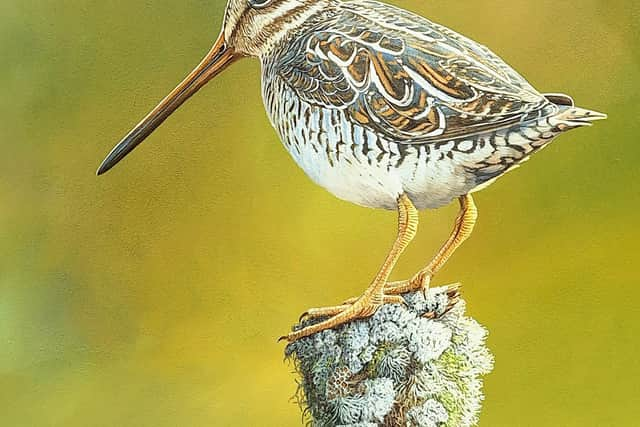
While chiffchaffs vocalise the season, other species announce it more obliquely. The common snipe, becomes conspicuous not through song but sound, a haunting “drumming” produced during aerial displays at dusk and dawn.
As males dive and bank over wet meadows and bogs, air vibrates through their stiff outer tail feathers, creating a tremulous bleating that once inspired folklore about ghostly goats.
In March this sound returns to river valleys and floodplains, coinciding with lengthening days and softening ground. Snipe require saturated soils to probe for worms with their long, sensitive bills; their presence is a barometer of intact wetlands.
Where drainage has intensified, the drumming falls silent, and spring feels thinner for it.
The timing is not accidental. March is a hinge month in Britain, when photoperiod rather than temperature triggers hormonal shifts across species.
Snipe displays are an investment in breeding territories that will only be usable if rain continues and pastures are not prematurely dried. Their cryptic plumage keeps them hidden by day and difficult to paint on top of that (!), but at twilight the sky becomes their stage, an example of how reproductive urgency briefly overrides caution.
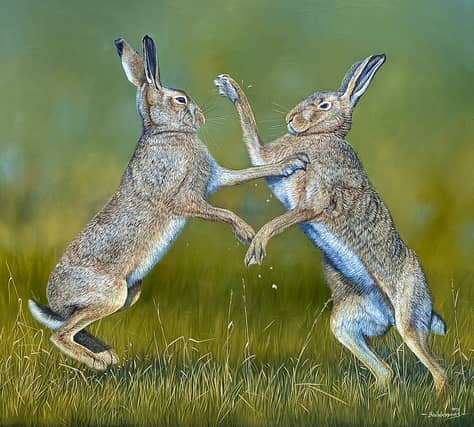
However for a daytime spectacle this month, you’ll have to head for drier ground. If there is one species that is associated with March more than any other, it’s the brown hare. March is the peak month for “boxing,” the upright sparring bouts that have become emblematic of the species.
Contrary to popular belief, these are not primarily male contests; they are often females fending off overzealous suitors.
Hares have a long breeding season, and females can conceive again while already pregnant, a strategy known as superfetation. The cost of this productivity is relentless male attention, and boxing is a way to regulate it. The bouts look theatrical with ears back and paws raised but they are functional, sometimes forceful interactions in open fields where cover is minimal.
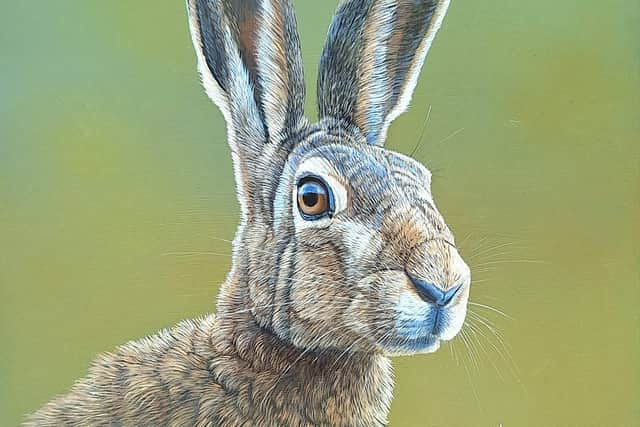
Brown hares favour large, open arable landscapes, relying on speed and vigilance rather than burrows. Their visibility in March reflects both behaviour and agriculture: winter crops are still low, and hares stand out against bare soil.
They are crepuscular by nature, but during the breeding season activity spills into daylight. Population trends have been mixed and regionally variable, with declines linked to agricultural intensification, loss of rough margins and increased mechanisation.
Where spring cereals, fallow patches and wide field edges persist, hares still gather in loose groups, their movements mapping the subtle productivity of the land.
But for all this traditional talk of harbingers and animals linked to specific times of the year here in Shropshire, climate change is already shifting the tempo. Chiffchaffs are singing earlier, snipe displays are compressed by erratic rainfall and hares are breeding into winter.
Yet the old signals remain broadly legible. Migrant birds do begin to arrive en masse this month, the dawn chorus builds, leaf, bud and flower tentatively emerge and the mating game in general is starting to take its wonderful grip on our natural history.
Ben Waddams is a wildlife artist. See his work in Callaghans of Shrewsbury.