How the 4G revolution is going to affect us all
It's the sort of news that could pass some people by. Britain will get its first taste of 4G in September, after Ofcom granted Everything Everywhere permission to launch the next generation of mobile internet from September 11.
Techno-savvy mobile phone users will be rubbing their hands in glee as they prepare to download films to tablets, stream concerts to mobiles and enjoy improved e-mail, mapping services and social networking. But an even greater number of people who will ask this simple question: "4G – what on earth is that?"
When the history books are written, many years from now, the early part of the 21st century will be defined as the Technological Revolution. The era will be viewed as one in which we underwent changes as radical as those experienced by people who lived through the Industrial Revolution.
Every aspect of our lives has been changed by technology and 4G – Fourth Generation – will speed the rate of change. We'll talk less and text more, spend hours glued to our mobiles, change the neural pathways of our brains and develop increasingly muscular thumbs and fingers.
In its simplest terms, 4G is a superfast, ultra modern platform which will allow mobile phone users to receive data faster than ever before. True 4G will deliver speeds of 100 Mbps for mobile applications and 1 Gigabit per second for fixed networks, which will make current broadband speeds look paltry in comparison. 1gb per second is the equivalent of 300 songs, or a two-hour movie. Imagine that: downloading a movie in the time it takes to say elephant.
To explain how much quicker connections will be: the standard Virgin Broadband speed is presently only 8Mbps – or 0.0078125Gb. That means you'd need to say elephant, slowly, 128 times to download the same film. Most mobile phone users presently use either 3G or 2G networks. When 4G is launched, those connections will seem like a vintage milk float against the gleaming Ferrari – that is 4G.
The economic implications of 4G are enormous. An additional £5.5 billion is expected to pour into the economy and 125,000 UK jobs will be created or protected. By the end of the decade, the introduction of 4G networks is expected to add up to 0.5 per cent to the UK's Gross Domestic Product, the equivalent of £75 billion.
But 4G won't be welcomed by everyone. Almost two million UK homes are likely to face disruption to their digital television signal due to interference from forthcoming 4G mobile signals. Approximately 1.9 million homes that presently receive digital terrestrial television will suffer when 4G LTE services are launched in the UK. The cost of putting things right will be at least £180 million, a bill that the Government will have to fund. Many homes will need to fit a filter to their Freeview TV sets and there will be free support for support for over-75s and people who are registered disabled.
The households that are worst affected could each be offered up to £10,000 each to "find a solution", although no more than 500 homes are expected to fall into that category. Problems caused by 4G interference could lead more people to SKY, which could lead to a windfall of up to £1 billion for Rupert Murdoch's communications group.
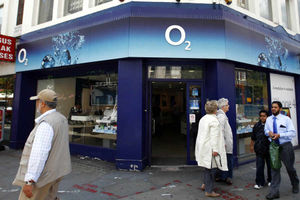
Businesses like Orange and T-Mobile will also reap billions from improved deals with customers, increased advertising revenues and deals with movie houses, book publishers, concert promoters and TV stations. The returns will be absolutely enormous. The Government is expected to receive a windfall of between £2bn and £3bn expected windfall from the 4G auction, which will more than offset the problems caused by TV interference.
The BBC's director of policy and strategy, John Tate, has said: "4G is a great development but should not be allowed to interfere with people's TV reception.There are plans in place that aim to reduce this interference but we believe that sufficient money should be deducted from the 4G auction proceeds to prevent it altogether. This is based on the established principle that the polluter pays."
Freeview managing director Ilse Howling said in a statement: "We remain concerned that there are a number of issues to be resolved in particular that many households are likely to need professional help installing filters to protect their TVs from interference."
Experts say the impact of 4G will be significant. Capital Economics says 4G could provide access to mobile superfast broadband to "at least 10 million people who won't be able to get fixed line superfast broadband by end of the decade.
"The introduction of 4G mobile broadband will create substantial long-term benefits for the economy and consumers, ultimately boosting UK GDP by as much as half a percentage point," said Mark Pragnell of Capital Economics.
4G will be launched on radio frequencies that are able to penetrate deep into buildings. It will operate two bands, the 800MHz freed up by the digital TV switchover and the 2.6GHz frequency.
For most users, however, only one thing will be of any great importance: speed. And 4G will deliver.