CSI: Telford
As DNA technology advances mean detectives are catching more criminals and American crime drama CSI sees a boom in youngsters following their dream to become a forensic scientist, Kirsty Smallman talks to Telford's Senior Forensic Investigator
As DNA technology advances mean detectives are catching more criminals and American crime drama CSI sees a boom in youngsters following their dream to become a forensic scientist, Kirsty Smallman talks to Telford's Senior Forensic Investigator
When Glenn Chard left the military police 19 years ago and joined West Mercia Police's forensic team, he was used to writing reports by hand, using carbon paper and waiting several weeks for results.
This week his staff are enjoying the start of the next step in technology which enables finger prints to be sent electronically straight from the scene to the laboratory and have the results back in less than an hour.
The latest development will see detectives track down the suspect identified through the DNA and hopefully arrest them when they still have any evidence on them — all within hours of the crime taking place.
Mr Chard said it was an exciting development for the team which would save time for the forensic investigators and also for the police officers tracking down the offenders.
"What we are working on at the moment is working on becoming more remote so we are not so tied to the police station.
"Virtually all the processes rely on us coming back to the station to input information but the way we want to work is to be able to go to the scene get finger prints, scan them in and be able to send them straight to the finger print lab.
"The plan is within half an hour we could have an identification and then the officers can be tasked to get the offender and find him with crucial evidence, like property still on him."
He said some of the teams in the force area had seen results within 40 minutes.
The new system was being rolled out across the Telford division this week.
He said the new system would make a huge difference in the hunt for travelling criminals, as they could be identified from the first crime before they commit any more.
Talking about the challenges they face, Mr Chard said: "Every job is a challenge - the rewards for us is finding that evidence which then identifies a suspect and results in them getting sentenced in court - that's where we get our satisfaction from."
The top forensic investigator, who used his expertise as a volunteer in Thailand to help identify the bodies of the Tsunami, said every day was an exciting challenge.
"You don't know what you're coming into. If it is a very serious crime then we know we would have been called out in the night.
"But a number of jobs will be tagged for us and we have to prioritise which ones we go to first depending on the seriousness and the victims," he said.
"Behind every crime there's a victim and we base it on the victims.
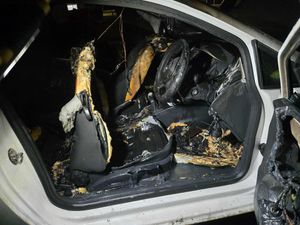
"The majority of our work involves vehicle crime, burglaries and injury photographs."
Although reports of dead bodies, in fact turned out to be dead fish and even a dog.
Mr Chard said that the developments in the industry were huge and very exciting.
Database
"When I started results were very, very slow - it took weeks to get a DNA hit and the database was much smaller then.
"We used to have to have quite a lot of biological material but now we have techniques where we can swab an item and get DNA in the week.
"That's the major scientific breakthrough for me - we are getting results back within a week."
As techniques have developed and become more discriminating, DNA results have become more precise, with profiles including one-in-a-billion chance of it belonging to a suspect, he said.
The top forensic investigator said he was "banned" from watching CSI because he gets too frustrated.
He said although it failed to show a true picture of the extent of their work it had created a boom in the number of people studying forensics.
"People watch too much TV like CSI - people don't see the mundane stuff which we do - our job isn't nearly as glamorous as CSI.
"It's the little victims which we work with and help make a difference," Mr Chard said.
But he said such programmes had sparked a "huge increase" in the number of people studying forensics.
"Virtually every university does some form of forensic degree. I did some work with one university and their science department was on its knees until the CSI programme came along," he said.
"They added a forensic module to the degree and then added more and more forensic courses.
"Now they are some of the most highly subscribed courses in the university."
But sadly there are very few jobs as crime scene investigators as the love of the job sees people staying in their posts for manyyears.
Two investigators have just left Telford police after serving 38 years between them.
More than 300 people often apply for one post with the borough police.
Not only has Mr Chard seen a shift in technology and techniques but also in the gender domination in the industry.
"The vast majority of forensic examiners are now female.
"When I first started there was one female in the office but it has swung completely the other way," he said.
But he said it is not the qualifications which are important in their job but often common-sense and inter-personal skills to communicate with victims and put a scene in context.
He said people taking CSI posts came from a variety of backgrounds including photography and the Forensic Science Service.
Mr Chard said his team's work was extremely varied and included facial reconstructions for e-fit images.
"A third of our work is photography - like the dog bite we have done today.
"The majority is for court purposes to show the court the injuries. When the case comes to court the injuries may have healed but we can show the true extent of those injuries at the time.
"But they can also be used for evidential purposes - especially human bites like ear bites."
And after 19 years has Mr Chard lost his passion? "I wouldn't do anything else in the world.
"I'm certainly as passionate and enthusiastic as I was then but I'm doing a very different job to what I was then. "The basics are the same but it's just moved on so much but there's an awful lot more to come," he said.