
A breakwater of history: How one Shropshire house is protecting the memory of a 7th-century saint
How one Shropshire house is protecting the memory of an important 7th-century saint
A Shropshire family has reached a major legal milestone in their quest to protect the mysterious heritage of one of the county’s most historic houses.
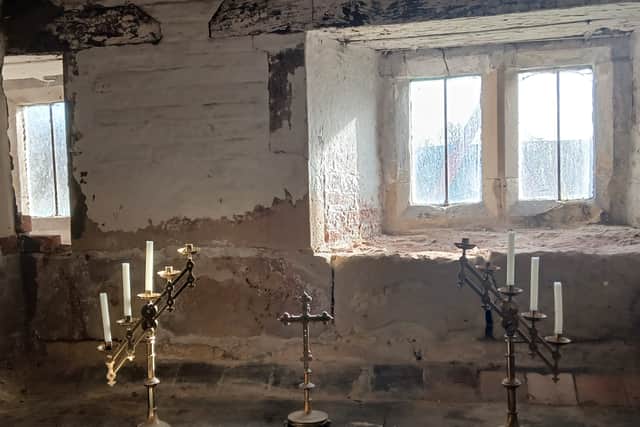

Soulton Hall, near Wem, has officially seen its Prayer Room and Aedicule registered as a place of religious worship under the Places of Worship Registration Act 1855. This registration marks a pivotal moment in a years-long effort by the Ashton family to honour the hall’s complex history—a story that stretches from the 16th century back to the Anglo-Saxon era.
For the Ashton family, the registration is not just about a legal certificate; it is about protecting a breakwater of history. Research suggests that the Tudor-era hall was designed by Sir Rowland Hill as a deliberate, coded effort to safeguard older traditions and physical elements—potentially including an altar and relics—so they could be rediscovered in future times. The family acknowledges that while they are constantly reducing the space for doubt, these matters are intrinsically mysterious. It is not a puzzle to be resolved with a final flourish of proof; rather, it is the profound associations and the affordances of the site—what the space allows people to feel and remember—that truly matter.
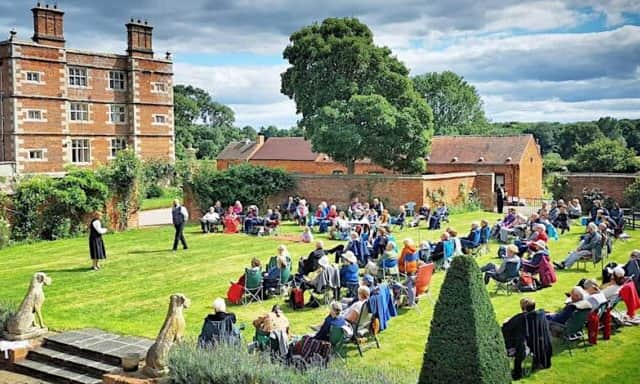
This work is further supported by the scholarly and cultural insights of Byrga Geniht, which have helped to illuminate the deep historical and intellectual layers of the site. The significance of the work at Soulton was recently acknowledged at the highest levels of government. Written questions were submitted in the House of Commons to support the project, making the hall’s status a matter of formal state record for the first time only a short time ago.
The project has also acted as a rare bridge between different traditions. Over the last three years, the hall has hosted Anglican, Catholic, and ecumenical services. The family is now also exploring how to provide a welcome to the Orthodox Church on a basis that is still being discerned. Ongoing dialogue with several leading universities and the Historic Houses Association ensures the material culture is handled with the gravity it requires.
Despite the religious significance of the site, the Ashtons view their role as a secular one. They occupy a position that mirrors the historical function of houses of this status, attending to these spaces in a way that allows them to serve as a protected setting where modern conviction can meet ancient memory. The family maintains that the moral and compassionate path is to avoid gatekeeping such significant heritage. They view their incumbency as a duty to provide hospitality and a neutral, welcoming ground for all traditions.

"When you are entrusted with history of this importance, hospitality is a responsibility, not a choice," says Tim Ashton. By registering the site under the 1855 Act, the family has ensured that the sanctuary within the house is now a matter of public record. This allows the history of St Erkenwald—a 7th-century figure of significance to both London and Shropshire—to be shared respectfully by all.
The newly registered Prayer Room will host its first formal ecumenical service since registration on 14 November, the feast day of St Erkenwald, bringing together representatives from various traditions to witness a history that connects the ancient past with a shared future.