
Germany stops military exports that could be used in Gaza
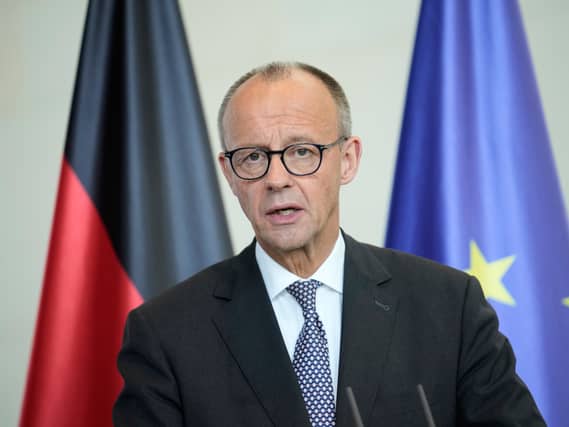

Chancellor Friedrich Merz said the German government remains deeply concerned about the suffering of civilians in the territory.
Germany will not authorise any exports of military equipment that could be used in Gaza “until further notice”, Chancellor Friedrich Merz has announced.
It was a quick response by one of Israel’s strongest international backers to a decision by Prime Minister Benjamin Netanyahu’s cabinet to take over Gaza City.
The move by Germany, which had previously stopped short of tougher lines against Israel’s government taken by some of its European Union allies, appears likely to further isolate Israel over the military takeover plan which has been condemned by the United Nations and supporters of Israeli hostages still held in Gaza.
In a statement, Mr Merz emphasised that Israel “has the right to defend itself against Hamas’s terror” and said the release of Israeli hostages and “purposeful” negotiations towards a ceasefire in the 22-month conflict “are our top priority”.
He added that Hamas must not have a role in the future of Gaza.
“The even harsher military action by the Israeli army in the Gaza Strip, approved by the Israeli cabinet last night, makes it increasingly difficult for the German government to see how these goals will be achieved,” he added.
“Under these circumstances, the German government will not authorise any exports of military equipment that could be used in the Gaza Strip until further notice.”
The German government remains deeply concerned about the suffering of civilians in Gaza, he said, adding: “With the planned offensive, the Israeli government bears even greater responsibility than before for providing for their needs.”
He called on Israel to allow comprehensive access for aid deliveries — including for UN organisations and other non-governmental organisations — and said Israel “must continue to comprehensively and sustainably address the humanitarian situation in Gaza”.
Germany also called on Israel’s government “not to take any further steps toward annexing the West Bank”.
It is not clear which military equipment from Germany will be affected.
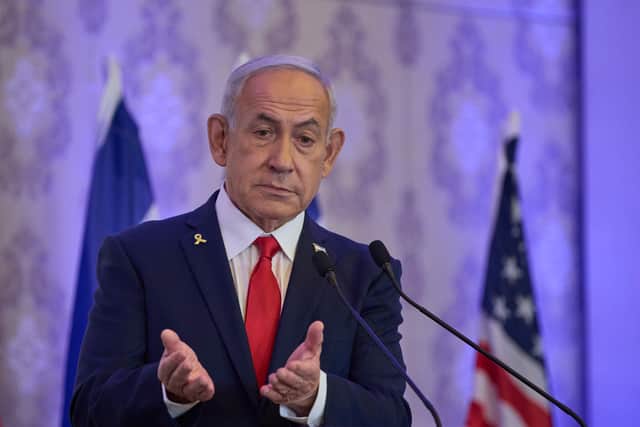
Mr Netanyahu spoke with Mr Merz on Friday and expressed disappointment with the decision, according to an Israeli government statement. Germany is rewarding Hamas and failing to support Israel’s “just war” against the group, the statement said.
Germany has led efforts among the EU’s 27 member nations to block collective criticism of or efforts to stop Israel’s blockade of Gaza and military campaign in the coastal enclave.
Alongside Hungary and the Czech Republic, Germany has argued against calls from Spain, Ireland and the Netherlands to scrap a bilateral agreement with Israel, sanction settlers and enact an arms embargo.
According to the Stockholm International Peace Research Institute (Sipri), Germany was the second largest supplier of arms to Israel last year after the US.
German companies provide 30% of Israel’s defence imports, mostly naval armaments, according to Zain Hussain, an arms transfers researcher at Sipri. He suggested the pullback by Germany will be temporary.
“This is going to be a limited measure,” Mr Hussain said. “Germany has been committed to providing Israel with arms, especially with ships.
“It is a big deal, I suppose, in the sense that Germany — which has been committed to Israel’s security and has stood firmly with it — is openly admitting that it is uncomfortable with Israel’s actions and limiting some arms transfers, and for Germany this is a huge deal. However, I don’t think this alone will stop Israel’s operations in Gaza, and Israel still has the USA as a committed arms supplier.”
Germany, with its history with the Holocaust, has been among the strongest western backers of Israel, no matter which government is in power.
Mr Merz’s government did not join announcements by French President Emmanuel Macron and UK Prime Minister Sir Keir Starmer that they plan to formally recognise a Palestinian state next month.
The reluctance so far of the EU’s biggest economic power to take a tougher line on the actions of Mr Netanyahu’s government clouded the prospects that international pressure might have an impact on Israel’s decisions.
Israel’s air and ground war has already killed tens of thousands of people in Gaza, displaced most of the population, destroyed vast areas and pushed the territory towards famine. The campaign was triggered when Hamas-led militants stormed into Israel on October 7 2023, killing around 1,200 people and abducting 251 people.
European Commission president Ursula von der Leyen said Israel’s extension of military operations in Gaza “must be reconsidered”, in her strongest criticism yet during the war. She also made another call for Israel to let in more aid.
Dutch foreign minister Caspar Veldkamp said Mr Netanyahu’s plan to intensify operations in Gaza “is a wrong move”, adding that “the humanitarian situation is catastrophic and demands immediate improvement. This decision in no way contributes to this and will also not help to get the hostages home”.
Danish foreign minister Lars Lokke Rasmussen was quoted by public broadcaster DR as saying: “The Israeli government’s decision to intensify the military operation in Gaza is wrong. It will only lead to even greater suffering for the civilian population.”
Last week, even before the Gaza City takeover plan, Slovenia announced it would ban the import, export and transit of all weapons to and from Israel, saying it was the first EU member country to do so.
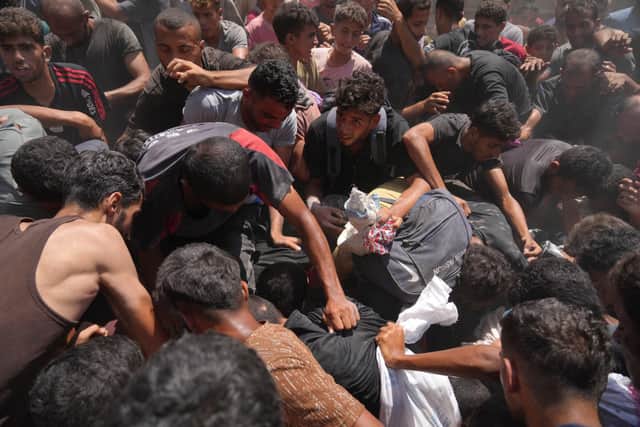
Last month, two dozen mostly European countries condemned Israel’s restrictions on aid shipments into Gaza and the killings of hundreds of Palestinians trying to reach food.
Last year, the UK suspended exports of some weapons to Israel over concerns they could be used to break international law, but it was a move with limited military impact. The decision related to about 30 of 350 existing export licences for equipment that could be used in Gaza, including parts for military planes, helicopters and drones.
Outrage over Israel’s actions in Gaza has grown in Europe as images of suffering Palestinians have driven protests in London, Berlin, Brussels and other capitals. More recently, almost-daily killings of Palestinians while seeking aid have tested the EU’s friendly relationship with Israel like never before.
The Israeli decision, taken after a late-night meeting of senior officials, came despite mounting international calls to end the war and protests by many in Israel who fear for the remaining hostages held by Hamas.
Tens of thousands of Palestinians are bracing to again be forced from their homes, while families of the hostages fear their loved ones will not return.
Most of the hostages have been released in ceasefires or other deals but 50 remain inside Gaza. Israel believes around 20 are alive.
The timing of another major Israeli ground operation remains unclear because it is likely to hinge on mobilising thousands of troops and forcibly evacuating civilians, almost certainly exacerbating the humanitarian catastrophe.