
Amazon deforestation falls to lowest level since 1988, Brazil says


Despite progress on deforestation, the Amazon faces threats from climate change, proposed legislation and a possible change in Brazil’s presidency.
Annual deforestation in the Amazon fell to its lowest level since records began in 1988, Brazil’s government said on Friday.
Official satellite data showed the rainforest lost 3,335 1,300 square miles from August 2025 to July 2026, the period used to calculate the annual rate.
The data underscores the success of Brazil’s renewed efforts under President Luiz Inacio Lula da Silva to curb Amazon deforestation, reversing a surge under his predecessor, far-right president Jair Bolsonaro.
During Mr Bolsonaro’s presidency, from 2019 to 2022, Amazon deforestation surged by about 60%, with more than 17,400 square miles cleared, according to official data.
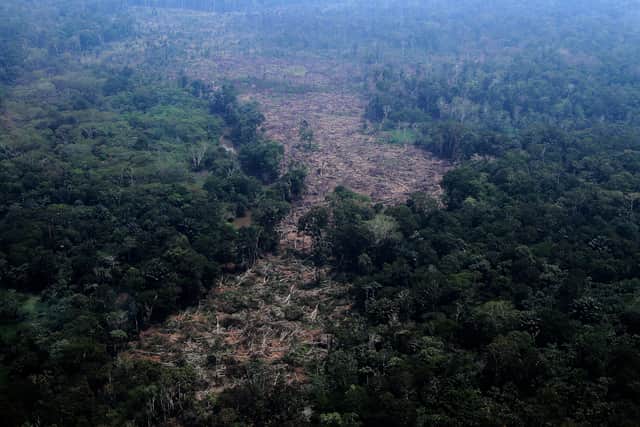
Under Mr Lula, deforestation has fallen 71% since 2023, the government said.
One of Mr Lula’s first moves after taking office in January 2023 for a third, non-consecutive term was to revive the Action Plan for the Prevention and Control of Deforestation in the Legal Amazon, known by its Portuguese acronym, PPCDAm.
Launched in 2004 during his first administration, the plan had been shelved under Mr Bolsonaro.
Mr Lula brought back the environmental officials who developed the blueprint two decades earlier, appointing environmental champion Marina Silva, who led the environment ministry until she resigned in April to run for Congress, and Joao Paulo Capobianco, her former deputy and the current minister, to help carry it out.
The plan has four pillars: strengthening monitoring and enforcement; promoting a sustainable economy; managing protected areas and determining how undesignated public forests should be used; and using regulations and financial incentives to curb deforestation.
Measures included restoring sanctions for illegal forest clearing detected by satellites, a practice seen as the most effective tool to curb deforestation that was halted under Mr Bolsonaro.
The government also proposed barring properties with illegal deforestation from receiving bank loans and allocated more funding to priority Amazon municipalities that demonstrated reductions in forest loss.
It also funded efforts to fight environmental crime and develop subsidised credit for sustainable businesses in the Amazon.
“The formula is always the same, and it works. We saw it work in Brazil years ago and we’re seeing it again now: determination, enforcement on the ground, fighting crime and enforcing the law,” said Marcio Astrini, executive director of the Climate Observatory, a Brazilian network of environmental groups.
Mr Astrini added that the deforestation rates announced on Friday show that Brazil’s pledge to reach zero deforestation by 2030 is achievable without compromising the country’s economy.
Deforestation and other land-use changes are Brazil’s largest sources of greenhouse gas emissions, which drive global warming.
The stakes are especially high in the Amazon, which stores vast amounts of carbon dioxide and generates atmospheric moisture that helps regulate weather far beyond South America.
Despite progress curbing deforestation, the Amazon faces threats from climate change, proposed legislation and a possible change in Brazil’s presidency.
Degradation from wildfires, logging and drought affects about 40% of the Amazon and has outpaced clear-cutting in recent years.
A strong El Nin, a periodic warming of the equatorial Pacific, could intensify those threats in 2026 and 2027 by bringing hotter, drier conditions that fuel wildfires.
Cristiane Mazzetti of Greenpeace Brazil said the record low deforestation rate reflects effective policies that could be at risk depending on who wins the presidential election.
She said: “Congress has worked to weaken, delay and dismantle laws and regulations that help protect the environment.
“The next legislature will be even more hostile to environmental protection, and depending on the next federal administration, the risk of rollbacks and high deforestation rates will rise sharply.”