
Neil Oliver talks ahead of Shrewsbury show
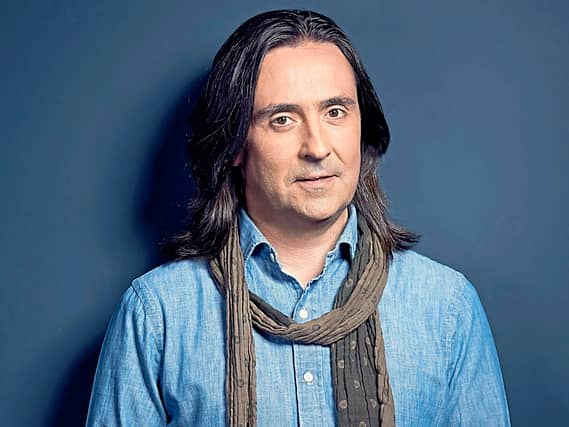

Neil Oliver travelled to all parts of the UK when he made his acclaimed BBC2 show Coast.
The programme ran for 10 years and helped make the archaeologist an unlikely heartthrob.
He has featured in numerous other shows – bringing Vikings into the UK’s living rooms, among other things – while also writing best-selling books.
But one thing he’s never done is visited the UK’s regional theatres – until now.
Oliver is bringing his new show, The Story of the British Isles in 100 Places, to theatres across the UK this autumn. And while he won’t quite visit 100, he won’t be far off.
He was inspired to hit the road after seeing a flyer for a Ray Mears show. “He was going to be playing at the Albert Halls near us in Stirling. My wife said to me, ‘why don’t you do a show like that?’ I’ve done lots of book tours and festivals before, and I began to think that the book that had been commissioned from me, The Story of The British Isles in 100 Places, would lend itself particularly well to a tour of Britain. So I decided to do it, and now I’m really excited about it.”
The show reaches Shrewsbury’s Theatre Severn on November 7 and he’s looking forward to visiting the town that gave the world Charles Darwin. He’s fascinated by Shrewsbury’s history – just as he is that of many other towns and cities.
Unusually, the tour will give him the chance to meet his fans face to face.
“Definitely. People always ask me really interesting questions. They ask me, ‘what’s your favourite place? What period of history would you go back to if you had a time machine? And who would you invite to a dinner party?’ But the great thing is, the questions can be about literally anything. I’m not a specialist – I’m not just talking about the six wives of Henry VIII. In the show, I’ll be talking about anything that has happened in the last million years – quite a big subject.
“People make the assumption that if you’re on television, you’re used to being looked at. I don’t deal with an audience in my TV work. I’m just with a cameraman, a soundman and a director. So the prospect of public speaking always makes me nervous – just as you’d be nervous about making a best man’s speech. The tour is exciting, but nerve-racking. It’s the agony of anticipation, but I know it will ultimately be really enjoyable. I take great pleasure in telling stories, and I can’t wait to share them with people.”
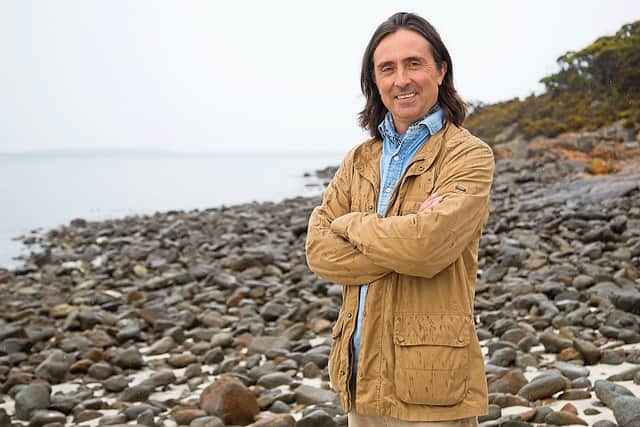
Oliver has been successful for many years but maintains his passion for his subjects. He’s always in the position of finding out that he doesn’t know anything, which makes every day a school day. And he’s keen to pass that passion to his three children.
“As a family, we’re always going to places of historical interest. We live in Stirling, the site of a great deal of history. In Stirling, we had the Jacobite Rebellion, William Wallace, Mary Queen of Scots and James I of England. The kids hear a lot about all that.”
Oliver views history as a universal subject that’s for the rich and poor, educated and uneducated. He believes it’s the stuff that people talk about it and it’s the reason that we are the way we are. It has shaped all aspects of contemporary culture.
“The stuff that happened in Scotland during the mediaeval period was every bit as violent as Game of Thrones. If you think the House of Lannister is bloodthirsty, just take a look at what happened with the Campbells and MacDonalds. My dad was a salesman, not a history teacher, but when we were children he loved taking us to historic sites. He is a great lover of the West Highlands. We went to places like Glencoe and he was the first person to tell me about the Massacre of 1692. My dad’s enthusiasm for those places was infectious. I now have the same love of the West Highlands, probably absorbed from him.
“As animals, we’re curious about each other – hence the popularity of gossip magazines. History is part of that. From a very young age, I was always interested in why things were the way they were. That same instinct draws to science people who want to know why the grass is green. Science deals with the how; history deals with the why and the who. As a child, you think, ‘why do I live here?’ Your parents say, ‘we moved here because of your dad’s work’. Or you hear that both your grandfathers survived the First World War, and you ask, ‘what is the First World War?’ Very soon, it starts to become history.
Oliver will be sharing his thoughts when he arrives in Shrewsbury and hopes people enjoy his evening. “I hope people will go away with the same passion for history that I have. History can sometimes feel like a dry and dusty subject you studied at school. But I find it is as thrilling as any Marvel movie!”
Comment Guidelines
Iconic Media encourages reader discussion on our stories. User feedback, insights and back-and-forth exchanges add a rich layer of context to reporting. Please review our Community Guidelines before commenting.