
The whole Australia team knew – Cameron Bancroft speaks out on sandpaper scandal
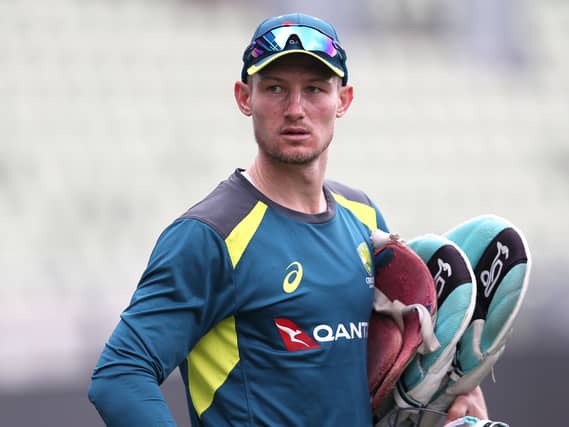

Bancroft – one of a trio of players suspended over the 2018 scandal – cited Pat Cummins’ vehement denials for his decision to break his silence.
Cameron Bancroft has backed up Usman Khawaja’s assertion that the whole Australia team knew about the sandpaper scandal – and cited Pat Cummins’ vehement denials for his decision to break his silence.
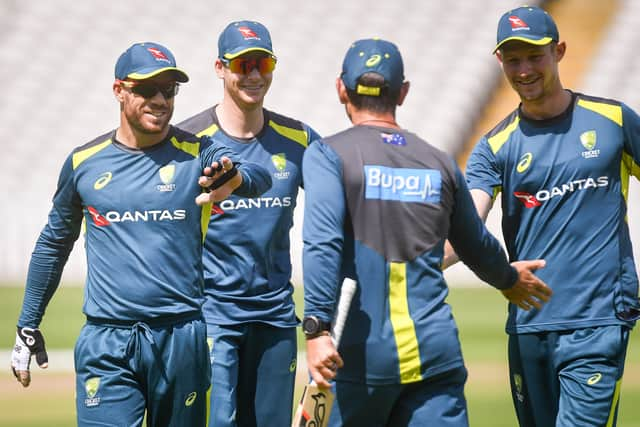
The 2018 scandal saw Bancroft, then captain Steve Smith and David Warner banned after Australia were caught using sandpaper to tamper with the ball during a Test match against South Africa.
Khawaja’s recently published book has put the story back at the top of the news agenda, and Bancroft has now joined the former batter and Warner in claiming the deception was common knowledge among all the team.

He told the West Australian newspaper: “It was not just the three of us – Steve Smith, David Warner and I – who knew about me using sandpaper on the ball in South Africa. It was the whole team.”
Bancroft’s intervention is the most significant yet given his central role, while he reserved some of his strongest words for current captain Cummins, who gave a long press conference last week denying Khawaja’s version of events.
“The final straw for me to write this account was Australian cricket captain Pat Cummins’ press conference,” he said. “It made me feel angry, betrayed and alone.
“What I saw, experienced and lived with – not only him, but everyone else on that tour in South Africa – is not the public account he gave in his press conference and in the years previously when he has spoken on this time.
“My cricket career has been destroyed and I have never been able to play for my country since Justin Langer was coach in 2019.
“But I have reached a point where continuing to protect an incomplete account of events feels more damaging than the truth.”
Bancroft’s account, which runs to more than 4,000 words, details his recollections of joining the Australia team as a young player, the pressure to achieve results and the lengths to which the side went to do so.
He claims sandpaper was first used during the second Test in Port Elizabeth, with Warner suggesting the method of ball manipulation and Bancroft asked to carry it out, before being continued in Cape Town, where he was caught.
“I knew it was wrong,” he said. “I knew that using sandpaper was not simply pushing the boundaries of the laws of cricket. It was cheating.
“But I also saw an opportunity to contribute. I was a youngster playing in his seventh Test match. If you asked me to run through a brick wall at that time, I would have.”
Bancroft recalled conversations with the bowling attack around the success or otherwise of his efforts, adding: “During that period, I regularly spoke to the bowlers about how the ball was behaving. I had to.
“I recall conversations with all the fast bowlers – Pat Cummins, Mitchell Starc, Josh Hazlewood and Mitchell Marsh – about whether it was reverse swinging enough.
“All the bowlers gave me feedback if my work on the ball was working. It was helpful.
“There was even a time I was told to stop out of fear what I was doing was becoming too obvious.
“Everyone would laugh and speak about it sporadically on the field. We were all well aware of the riskiness of my behaviour.”
Bancroft admitted he did not tell the truth to the initial inquiry, saying: “I did this to protect Cricket Australia’s investigation and not implicate others around me.”
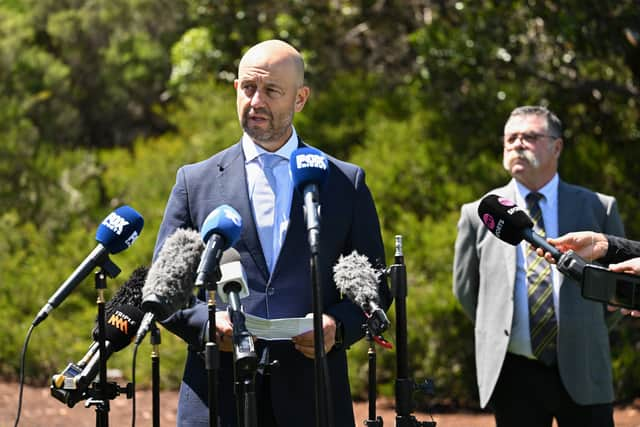
Cricket Australia attempted to take control of the narrative at a press conference earlier on Wednesday but Bancroft’s explosive article creates a huge problem for the governing body.
CA said it would not launch a fresh investigation to determine the truth and instead invited all parties to share their recollections – without fear of reprisals.
Speaking at a hastily convened press conference in Hobart ahead of the third ODI against England, chief executive Todd Greenberg played down expectations of an eventual conclusion and sought to argue that Khawaja and Cummins’ versions of events could coexist.
He said: “I’m not here to tell someone what they believe, nor should they tell me what I believe. My version of events might be different to yours. They can be true to you and they can be true to me. That’s the difficulty.
“I think they both (Cummins and Khawaja) can be true because it’s their version of events and their version of events is their truth.”
Reacting to Bancroft’s words, CA said in a statement: “We respect that Cameron Bancroft has told his story, and we will take time to consider his comments.
“We expect that there will be many dimensions to the events of 2018, which is why we have established the forum for individuals to give their version of events.
“We are finalising the terms of reference and will commence the process as soon as possible.”
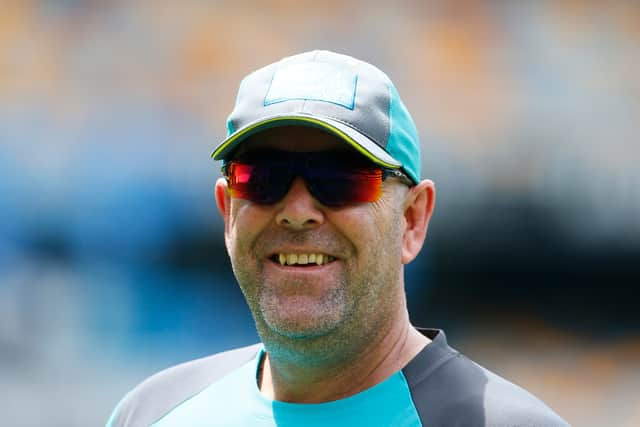
Then head coach Darren Lehmann, who was among those named in Bancroft’s article as being present during the discussions over the use of sandpaper, gave his response on ABC Radio.
“I need to sit back, process it and work through each allegation,” he said as quoted by the BBC.
“That’s what I’ll be doing over the next few days. I need to have a really good read of it. I need to make sure I’m saying what I want to say.”