
Leny Yoro’s red card ban removed – but Howard Webb backs referee’s decision
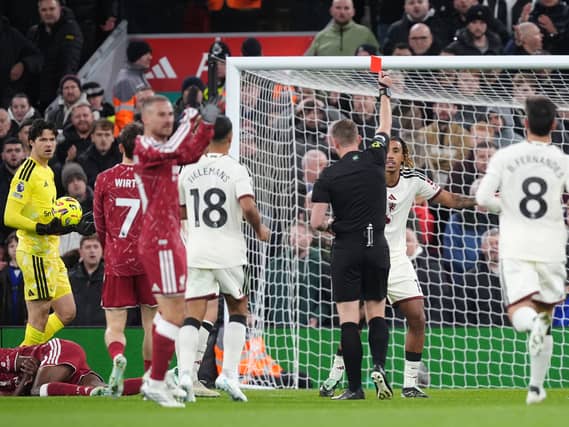

The French defender was dismissed for fouling Reds striker Alexander Isak as he advanced towards goal.
Leny Yoro’s one-match suspension for the red card he was shown in Manchester United’s 4-0 defeat to Liverpool has been removed – despite referees’ chief Howard Webb supporting the decision to send him off.
The French defender was dismissed for fouling Reds striker Alexander Isak as he advanced towards goal, with referee Sam Barrott deciding Yoro had denied an obvious goalscoring opportunity.
Manchester United indicated on Monday they intended to appeal for wrongful dismissal and the suspension has now been removed, the Football Association has confirmed, meaning Yoro is free to play in United’s Premier League meeting with Brentford at Old Trafford on Saturday.
The FA said the written reasons for removing the suspension would be published in due course.
Pro Ref’s chief refereeing officer Webb, however, backed the decision to dismiss the 21-year-old, saying the call was “certainly not clearly wrong”.
Liverpool scored their opening goal directly from the free-kick awarded for Yoro’s challenge, which came just eight minutes into the game at Anfield.
One question raised was whether Isak had the ball sufficiently under control for this to count as denial of an obvious goalscoring opportunity. The Swede’s touch took the ball into the arms of United goalkeeper Senne Lammens.
United captain Bruno Fernandes told the BBC after the match that it was “never a red card”, adding: “I think it’s too many referees on the pitch and too many on VAR, seated, with such a long time to see and put it back, go forward, put it back, do it in slow motion, whatever.
“To make a mistake like this can change a game. But obviously, then, it’s not because of them that we concede the goal from the free-kick, but it changes completely the flow of the game.”
Webb discussed the incident with former Liverpool and United striker Michael Owen in the latest edition of Match Officials: Mic’d Up, which aired on Tuesday evening but was recorded before the FA confirmed Yoro’s suspension had been removed.
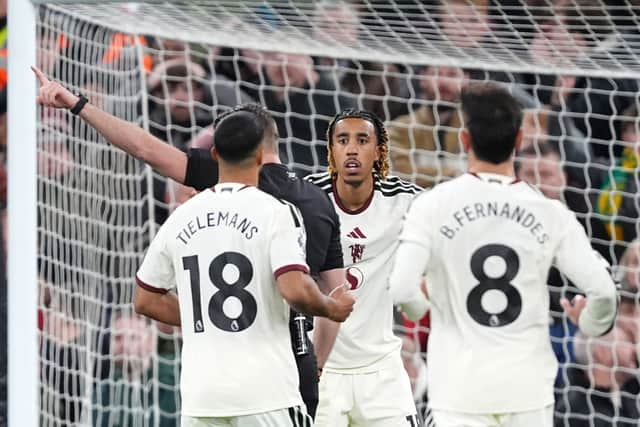
“The reason we’re talking about it is the fourth consideration (in DOGSO decisions), that’s control or likelihood of keeping or gaining control of the ball,” Webb said.
“Isak’s got control of the ball, he’s got possession, he’s got the touch, he knocks it past Yoro. He’s moving at pace at that moment and a crowd comes in and knocks him down.
“There’s a question mark I guess around whether or not he would get onto that ball before Lammens. Now, in the moment, the referee looked at it and felt he would.
“The VAR checks to see whether that decision made on the field was clearly and obviously incorrect, and formed the opinion that it wasn’t.
“I think by and large, most people would see that as a correct decision, with Isak moving quickly on towards that ball. The alternative view is that Lammens might get there first, but I think it’s a little bit debatable. (It’s) certainly not clearly wrong.”