
Ludlow doctor goes the extra mile to win one of Britain's most brutal races
Jenny Hartley won the Montane Summer Spine Race in a time of 104 hours, 55 minutes and 46 seconds.
Ludlow doctor Jenny Hartley defied her own expectations by winning a brutal four-day race over 268 miles, writes Toby Williamson.
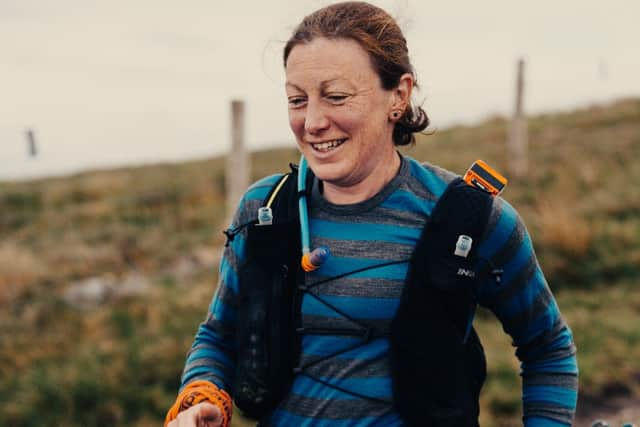

The former soldier, who is now a GP at Portcullis Surgery in Ludlow, triumphed in the Montane Summer Spine Race, which follows the Pennine Way.
It was a race she never intended to enter - only joining the field after another event she had been training for was cancelled - but ended up winning in a time of 104 hours, 55 minutes and 46 seconds.
"I was more proud of finishing it than I was of coming first,” said the 45-year-old. “If one of the women had overtaken me, I genuinely wouldn't have cared because I just wanted to finish it.
"I'd looked at it for years and gone, 'I could never do that. That's ridiculous’. I just wanted to finish it... so when I won it, it almost doesn't compute in my head.”
Despite having watched the race for several years, Hartley had never intended to sign up for the challenge, believing it would be impossible for her to finish.
However, after another event she had been training for was cancelled, she decided to enter almost on impulse.
She said: "I almost clicked the enter button before my brain could tell me, 'No, don't do that’."
Checkpoints, usually based in village halls, were positioned roughly every 50 miles, giving participants the chance to rest, eat and change before continuing the gruelling challenge.
Although competitors were allowed to spend up to six hours at each checkpoint, Hartley typically rested for around three hours before setting off again.
Fatigue was a constant battle for Hartley, who often resorted to taking 10-minute naps on the grass between checkpoints to get what little recovery she could.
"I literally lay on the grass, set my alarm for 10 minutes, slept, and then I'd run until I was physically falling asleep,” she said. “Once I actually woke up as I hit the ground after falling over.”
Fortunately, the race took place between the two heatwaves that struck the UK in June, meaning competitors avoided the extreme temperatures that had affected other endurance events.
Although the weather was favourable, the terrain presented a challenge of its own.
"It was almost perfect weather... but the Pennine Way is ankle-deep bog for days on end, so I was wet from the ankles down constantly," Hartley said.
When Hartley was battling mental fatigue and self-doubt, she relied on what she called her "toddler tantrum toolkit" to keep herself moving.
She said: "I'd ask myself: 'Are you hungry? Are you thirsty? Do you need the toilet? Do you need a cuddle? Are you bored?' Every time I wanted to stop, I'd go through that list."
The routine helped Hartley reset mentally during the long, lonely miles, allowing her to identify what she needed before pressing on.
The former Army veteran served for 20 years, experience she said proved invaluable during the monumental challenge.
Her time in the forces meant she knew exactly how to pack her kit, where everything was and how to organise it for quick access at each checkpoint.
Years of military marches also allowed Hartley to maintain a brisk walking pace without expending too much energy, giving her an advantage over many of the other competitors.
"The biggest skill you learn in the Army is that you can fall asleep like that," she said.
She explained that whenever she reached a checkpoint, she was able to switch off almost instantly, making the most of every opportunity to rest before heading back out on to the course.
Despite regularly walking her dogs for miles around Long Mynd, Hartley said the race left her with swollen, sore feet, leaving her barely able to walk around the house for several days.
Although the doctor has conquered one of Britain's toughest endurance races, she has no plans to slow down and is already preparing for a desert ultra-marathon in the Sahara later this year.
"I'm doing a desert ultra-marathon in the Sahara in October... at least there'll be no chance of bogs,” she added.
Comment Guidelines
Iconic Media encourages reader discussion on our stories. User feedback, insights and back-and-forth exchanges add a rich layer of context to reporting. Please review our Community Guidelines before commenting.