
Liam Keen comment: Issues run deeper at Wolves after latest managerial casualty
Whenever a team is struggling at the wrong end of the table, the head coach is the first to go.

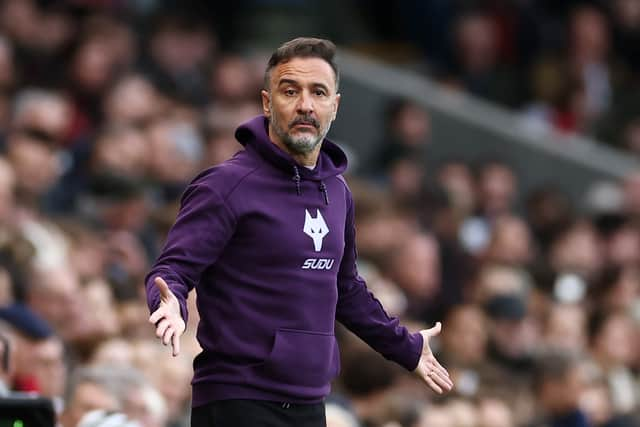
In recent years Wolves have been a team fighting towards the bottom and a disastrous start to this season has seen Vitor Pereira pay for that with his job.
The man who arrived last December to save Wolves from relegation - a feat he achieved while also being nominated for Premier League manager of the season - has been shown his marching orders less than a year later and while he has made mistakes that have led us to this conclusion, he is not wholly to blame.
In it's current form, Wolves are not a club that is set up for success.
Behind any head coach there has to be a structure that allows the manager to do his job on the training pitch without concern for the house of cards falling down around him.

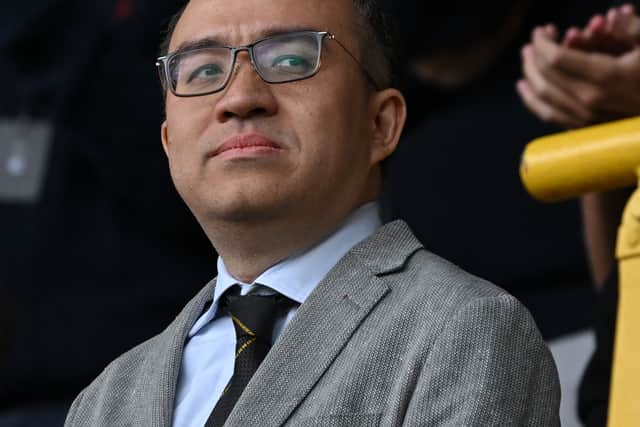
Club chairman Jeff Shi makes the final decisions at Wolves but the process to coming to those decisions is not working. Wolves desperately need strategic change to ensure better choices are made and the club has ambition and a clear vision.
Currently, Wolves have no strategy or long-term plan and that is proved by the summer recruitment.
Matheus Cunha, Rayan Ait-Nouri, Nelson Semedo and Pablo Sarabia all left, while six players arrived without a single minute of Premier League experience between them and some of them were the fifth choice signing after deals for other players fell through.
Pereira was also picky about the players he wanted and turned down potential options - meaning he is still partly to blame - but Wolves' recruitment strategy was fractured from the very start.
A midfielder was desperately needed but not signed, the wing-back areas needed more attention and in the forward line Wolves lack any creativity or goals. It is difficult to see where that will come from in the current team.
The first signing of the summer was a 21-year-old with limited experience that Wolves overpaid for and have hardly played. That was the window in a nutshell.
Pereira was made aware of his dismissal this morning (Sunday) and the Express & Star understands the former Porto boss holds some regret over not leaving the club in the summer, due to fears over the transfer window, lack of quality in the squad and poor planning. Pereira is planning a return to the Premier League at the next available opportunity, but time will tell if he makes a success of it.
The mental toll of failing to win a game - in particular the late equalisers they suffered against Spurs and Brighton - impacted the squad severely and that also comes back to the leadership in the dressing room, which needed addressing a long time ago, too, but was allowed to fester.
The squad was lacking a stand-out option to be the new captain and instead the armband has been passed around like a bad joke as Pereira chopped and changed with his team too often.
Against Burnley, none of the leadership group were even on the pitch from the start.
The head coach was desperately searching for a winning formula but never found it and that was ultimately his downfall.
But odd team selection decisions also alienated himself as supporters' frustration grew.
Andre was dropped in the second game of the campaign and Pereira publicly called him out, before going on to drop him two more times this season.
On top of that Joao Gomes has been benched for the last two Premier League matches. The decision to leave him and Andre out against Fulham - benched together for the first time - invited intense scrutiny. The horrendous performance and result that followed was ultimately the end of Pereira's reign.
In an attempt to cover up Wolves' problems with creativity, Pereira has attempted to make Wolves pragmatic and hard to beat.
But they have conceded goals at will and been incredibly easy to get at.
The team has too many runners and athletes but not enough technicians - someone to unlock the door with a bit of magic and win a game.
The defeat against Burnley may not have been Pereira's final game, but it was the match in which the end of his tenure felt inevitable and a case of 'when' and not 'if'.
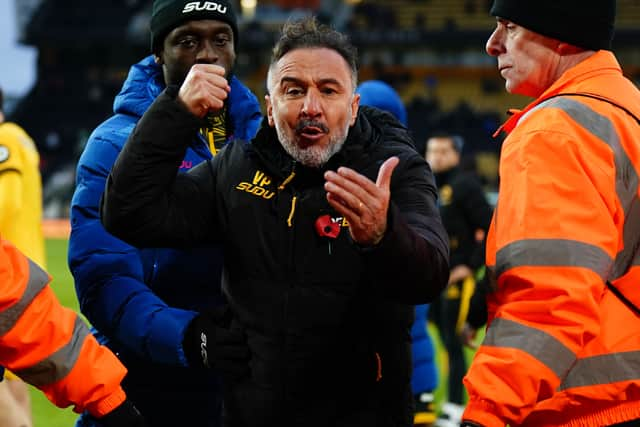
Following that loss, Pereira confronting angry fans in Molineux's south bank was well-intentioned but ill-advised.
The 57-year-old wore his heart on his sleeve and genuinely wanted Wolves to do well, both for the club and his own career, and that boiled over into a furious rant at supporters in front of the world's cameras.
Those images - perhaps more dramatic than the actual event itself - were a bad look for Pereira and Wolves. At that point it felt like it would only end one way.
The second half against Chelsea in the Carabao Cup gave Pereira some brief breathing space, and some good will from fans, but that was dashed at the weekend.
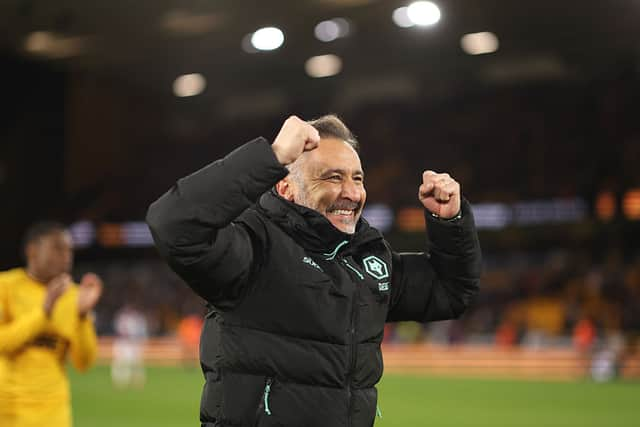
Although this decision to remove Pereira has been done with Wolves' best interests at heart, there is also something inherently sad about his sacking.
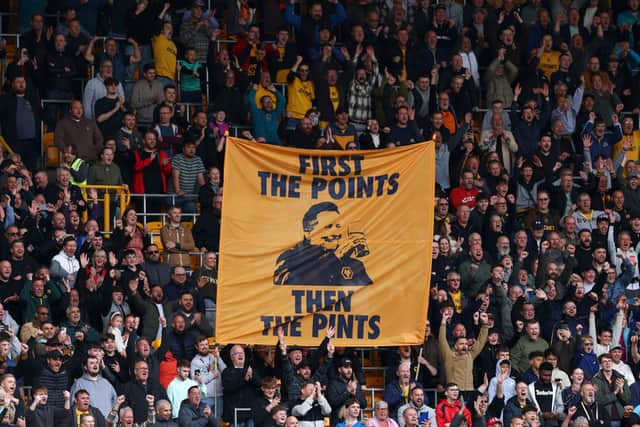
The Portuguese head coach helped save the club from relegation last season and endeared himself to the Wolves faithful with his trips to the pub and 'first the points then the pints' mantra.
Wolves fans had a real connection with him but the reality of football is that any connection is built on results and Wolves last won a Premier League game in April.
And as we were a year ago, Wolves are back in the same cycle and the manager merry-go-round continues.
Pereira is the latest casualty of a flawed system at Wolves that is not fit for purpose.
The head coach ended up being a problem too with his decisions, but the bigger problem runs much deeper at Wolves.
A proper structure behind the scenes, with a coherent plan, is essential. Something else must change because it cannot always be the manager if Wolves want sustained success.
If you circle the drain for long enough you will eventually be relegated.
Regardless of Pereira's sacking, it could still be that year, but Wolves' future in the long-term is perhaps more pressing if they want to return to the glory days once more.
Comment Guidelines
Iconic Media encourages reader discussion on our stories. User feedback, insights and back-and-forth exchanges add a rich layer of context to reporting. Please review our Community Guidelines before commenting.