
Wolves memories: Stunning set-pieces to savour
Incredibly, Wolves and Stoke will be meeting for the first time in more than 14 years when it comes to league hostilities on Saturday lunchtime. An innovative set piece from one of the previous Molineux meetings inspired a look back on great Wolves free-kicks past.
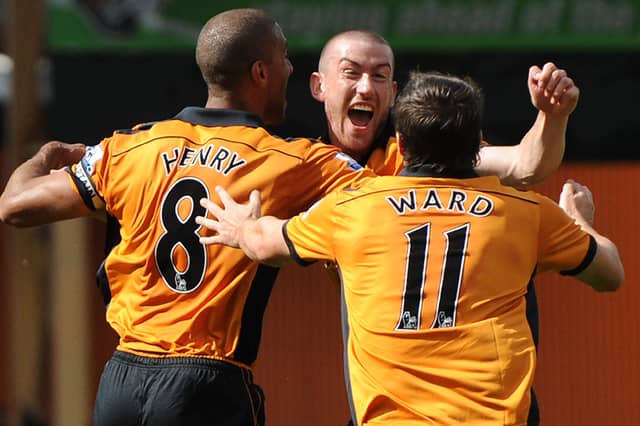

Back in 2010 it was the first match of the season. A pulsating Staffordshire derby, as it is sometimes labelled.
Stoke had already hit the crossbar via Kenwyne Jones before, in the 37th minute, Kevin Foley was fouled by Dean Whitehead just outside the area.
And that was the cue for Wolves’ midfield pair of skipper Karl Henry, against his former club, and playmaker David Jones to share a knowing look.
This was their moment.
“Mick McCarthy was really good on coming up with free-kicks for us to try out and practice in training,” Henry recalled this week. “For a former centre-half, people might find that a little bit strange, but he was very creative in what we would work on.
“Sometimes you see other teams do free-kicks, and you think it would work well, and maybe you just adapt them a little bit, all depending on the players in the team.
“We’d work on a number of set pieces and you would have them all on rotation, as well as knowing that different ones would work better in different parts of the pitch.
“For that one, literally right on the edge of the penalty area, the test is how to get the ball up and down quickly, which is a very difficult skill.
“We tried this particular routine against the academy lads – that is what Mick used to do a lot because our first-team players would know exactly what we were trying and would know how to stop it.
“Doing it against the academy lads made it more realistic because they didn’t know what was coming, and that made it a really good test.”
So it was that Henry, after a little faked pass, rolled the ball back to Jones whom, almost in one movement, flicked it up before volleying the ball over the wall and beyond Stoke keeper Thomas Sorensen, kissing the underside of the crossbar before finding the net.
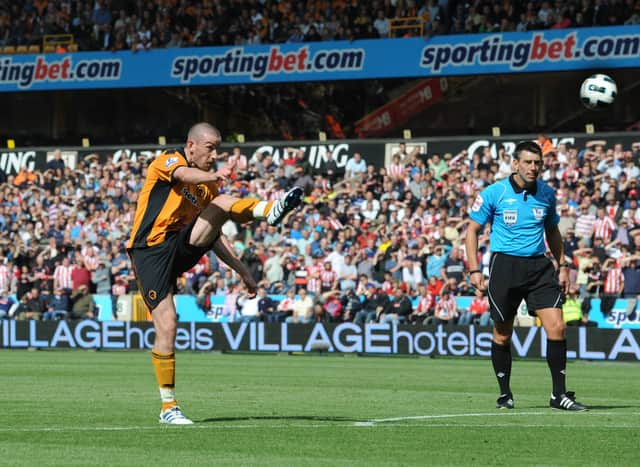
Poetry in motion. And the crowd went wild.
“It’s a technique we had used with free-kicks out wide because it gives you a different trajectory when you cross the ball in and makes it more dangerous,” says Jones. “In terms of being more central and going for goal, I’d scored a couple from that routine in the youth team at Manchester United and in pre-season for Derby, but this was the first one at first team level in a competitive fixture.
“Mick was always great not just in working on routines but in being willing to try more creative approaches – other managers might think you were trying to showboat but Mick could see the value in it and also didn’t mind if you messed it up.
“Myself and Karl would work on things like that a lot and keep practicing, and so as soon as we got that free-kick, we knew what we needed to do.
"And although it takes a bit of technique, that situation is one of the few occasions around free-kicks where I am really confident that I am going to score.
“All you have to do is think about the flick and the volley, not the wall or the goalkeeper, because if you get those contacts right you know you’ve got a great chance.”
There were vague similarities from the Jones/Henry combo with the ‘Donkey Kick’ goal manufactured by later Wolves midfielder Willie Carr and previous Molineux man Ernie Hunt for Coventry City back in 1970. That goal, where Carr flicked the ball up with his heels for Hunt to volley it in, was outlawed at the end of that season prompting the need for the roll back and flick-up instead.
Anyway, we digress. Discussion around Jones’ superb strike ahead of Wolves welcoming Stoke again this weekend also lends itself to a greater examination of the expert purveyors of set pieces through recent Molineux history. Particularly around those little intricacies and shifts of the ball which can, so often, make all the difference.
Wolves have also been fortunate to have some exceptional deliverers of a dead ball across the last few generations. Throw the question out to fans and all those set-piece wizards are thrown straight back. Robbie Dennison back in the day, that game-sealer against Burnley in the Sherpa Van Trophy at Wembley one of many he found the net with during his spell at Wolves.
Obviously Ruben Neves. Even aside from the incredible flick and volley against Derby from a cleared corner, his portfolio of direct free-kicks takes some beating. And took some stopping. As did the first-time strike from a different routine when Joao Moutinho squared a free-kick to him outside the box against Aston Villa in 2019, Neves firing emphatically home in another Wolves’ win.
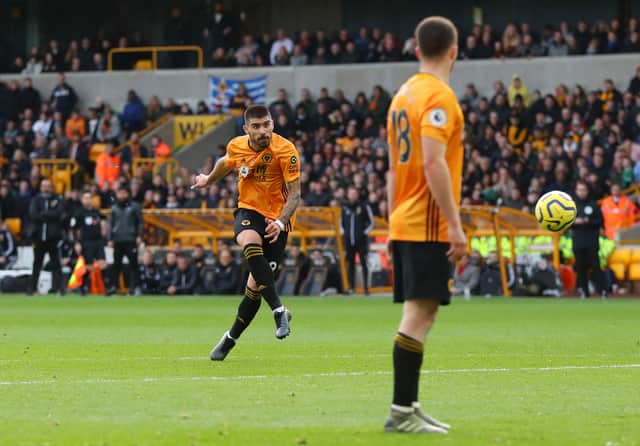
That particular effort provided echoes of Jamie O’Hara against West Brom at The Hawthorns in 2011, as he stepped back into midfield to execute a superb left-footed shot after Nenad Milijas knocked a free kick sideways.
Again, for the more intricate, how about Kenny Hibbitt’s dummy and run into the penalty area as Carr also then delayed before finding him to finish against Bolton in 1977? Or Tony Dinning, away at Grimsby, taking a tap from a free-kick on the half turn before scoring via a deflection. Well worth the good fortune from the ingenuity. And they all count.
Heading back to those little shifts in approach and emphasis, a couple of other well-worked free kicks from recent generations spring to mind.
Going back just over three decades, to 1994, Wolves produced a giant-killing FA Cup win at Ipswich when Lee Mills grabbed the opener before Andy Thompson added a second from a free-kick routine.
And then, six years later, Temuri Ketsbaia provided a clinical finish on the opening day against Sheffield Wednesday to a clever ruse involving Simon Osborn and Lee Naylor.
Thompson was, as many recall, Wolves’ undisputed penalty king for so many years, but free-kicks were slightly more out of his comfort zone.
Yet as Wolves headed to Portman Road in search of an upset, he was the man entrusted with hitting a shot from distance advancing from his left-back position after Mills had opened the scoring eight minutes in.
With Kevin Keen lurking, Dennison tapped the ball to Paul Cook who then played it square for Thompson to strike from distance.
Thompson’s technique from the penalty spot was always to know exactly where he was going – usually hard and low to the keeper’s right – with the confidence that if he struck the ball powerfully enough and found the side netting it just couldn’t be saved.
For this free-kick, it was slightly more speculative, but with the aid of a slight deflection, it found the net and helped Wolves to a 2-1 victory on what ultimately proved a special night in Suffolk.
“I was happy to step up, but I wasn’t usually on free-kicks, it might have been a surprise element to the opposition but it was probably as much of a surprise to me to be involved!” says Thompson.
“We had some great free kick takers in the team like Robbie (Dennison) and Cookie (Cook), but I guess this was a bit different.
“We’d worked on it in training, but it doesn’t matter how much you do that, it is all about how you execute it when the chance comes along.
“Even if you had scored a few in training, it would give you confidence, but you know you are getting a few goes at it whereas in a match, it’s just that one chance.
“So as with penalties, it was all about making sure the ball was on target, and the slight deflection helped.
“Fortunately, it ended up in the back of the net and we went on to enjoy a great win.”
What Thompson was to penalties, Osborn was to free-kicks. The mercurial midfielder scored several during his six years at Molineux, including at Sheffield United in early 1997 when Steve Bull struck a dramatic late winner.
“I always enjoyed taking set pieces – free kicks and corners – and for free kicks there was always a specific side I preferred which suited my technique,” he says.
“Other players had different approaches, someone like Mark Venus would go for power, but I was more about placement.
“Once a week I’d do some practice after training, maybe taking 20 to 30 free kicks, aiming to hit a bib in the goal, and I’d just work on repetition.
“It was a bit like Jonny Wilkinson, probably not as meticulous as him, but focusing on the same sort of run-up, same sort of connection and visualisation of where I wanted to put the ball.”
It was the opening day of the 2000/01 campaign when Osborn was involved in a more creative free-kick routine which paid dividends.
Sheffield Wednesday keeper Kevin Pressman had been sent off just 13 seconds in, before Wolves won a free-kick after 17 minutes.
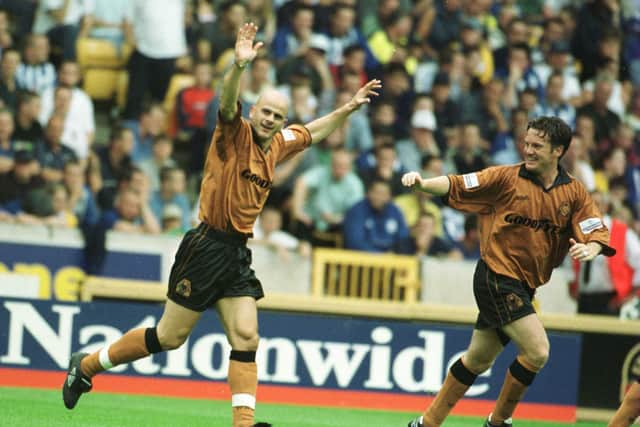
Ketsbaia rolled the ball to Osborn who trapped it, seemingly in readiness for Naylor, but he then touched it away from him by which time Ketsbaia had made a run across the pitch before producing a superb low drive to open the scoring.
“We’d worked on it a lot and wanted to get it right because it’s the sort of free kick you can probably only try once,” Osborn adds.
“Temuri had great technique, he was fantastic with both feet, and so once he was in the right position we knew he had a great chance to score.
“For me it was about getting the weight of the pass right, to get it far enough away from the wall but not too close to the covering defender, and to be honest it went a little bit too far.
“But it probably helped open the goal up even more and, in the end, Temuri got a great connection on it, and it flew into the back of the net.”
There have been many other well-worked free-kicks in recent years. Notably away at Bournemouth when Joao Moutinho played a beautifully-weighted pass into Adama Traore, whose cross was dispatched first time by Raul Jimenez. Three perfect touches.
Wolves also tried something similar in the McCarthy years with Jones playing a similar pass to Kevin Foley down the right, one of which almost brought a winning goal at the end of a 2-2 draw at Hull.
For all those free-kicks, what is it like to be on the opposition side of similar efforts? As a goalkeeper. And what would Matt Murray have made about trying to stop the free-kick from Jones?
“As a goalkeeper, facing free-kicks always threw up plenty of questions,” he says. “Should you have a wall? Should you not have a wall? Should you put the taller players on the sides of the wall, or in the middle? Should the wall charge? Should they jump? Nowadays you also have the ‘draught excluder’ with the player lying on the floor as well.
“Sometimes you had to be brave and protect your side of the goal and if they got it up and over on the other side then fair play.
“Getting beaten on your own side was always really annoying and it happened to me a couple of times, I remember once getting ‘done’ by Paul Merson at Portsmouth.
“You just want to try and pick out the ball as soon as possible, and for the one that Jonah (Jones) scored against Stoke, that would be difficult.
“Him and Karl were both really good technical players who had worked at it, and were always innovative, and it was a brilliantly-executed free-kick.
“I know it’s one that still gets talked about quite a bit, and rightly so because it was such a well-worked set piece.”
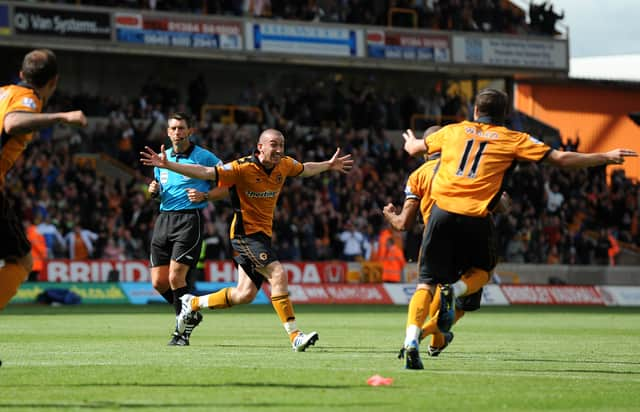
Indeed, it does get talked about, with Henry often, tongue in cheek, taking much of the credit for the assist!
“In true Jonah fashion, he is always happy for me to take the PR from it,” he laughs. “It is funny though, especially in front of a full house, you know you’re going to look pretty silly if you try something innovative and it doesn’t come off.
“The key thing was not allowing the wall to get too close, as that would make it really difficult, so I did a little fake to draw the wall out and then, as they were going back, laid the ball off.
“It was a phenomenal piece of skill for Jonah to pop the ball up and execute the volley so perfectly, which shows the sort of player he was.
“I’d say it was Mick’s idea, Jonah was the one consistent enough to nail it perfectly, and I just managed to get in on the action, like the getaway driver!”
“We joke about it a lot but to be fair to Karl, he did get the roll back absolutely spot on that day,” adds Jones. “At other times players had rolled it too fast or too slow, or even to my wrong foot, but he got it spot on which is why I am happy to give him some of the credit!”
It was sadly to prove Jones’ last league goal in a Wolves shirt, and he would only make 11 more Premier League appearances before leaving the club.
Not however, before BBC presenter Dan Walker had brought the Football Focus cameras to Compton to deliver their own ‘take’ on the Henry/Jones masterpiece.
It was certainly a free-kick well worthy of the adulation.
Comment Guidelines
Iconic Media encourages reader discussion on our stories. User feedback, insights and back-and-forth exchanges add a rich layer of context to reporting. Please review our Community Guidelines before commenting.