
Matt Maher: Midlands blessed with a trio of the very best
Should Unai Emery succeed in guiding Villa into the Champions League this season, it would be very difficult not to select him as the West Midlands manager of the year.


Only twice previously has the region had a representative in Europe’s premier club competition. Both times it was Villa, the season after they won the Division One title and then the following year after they won the European Cup itself.
Since then the tournament has expanded, rebranded and in Premier League terms increasingly become something of a closed shop, open only to members of the division’s so-called Big Six.
Emery would be the first West Midlands boss to crack the hegemony, triumphing where the likes of Martin O’Neill and Nuno Espirito Santo before him fell short.
He would do it having overcome a fair share of adversity too, thanks to a steady succession of injuries which began with losing Emi Buendia and Tyrone Mings on the eve of the season and continued his week with the loss of midfielder Boubacar Kamara for the remainder of the campaign.
Emery has already demonstrated an ability to adapt in order to keep Villa’s season on the rails, though it feels fair to say resources have never been so stretched as they are now. Momentum having stalled, these next few weeks present probably his biggest challenge since first walking through the doors of Villa Park 15 months ago, tasked with rousing a team which sat just above the relegation zone.
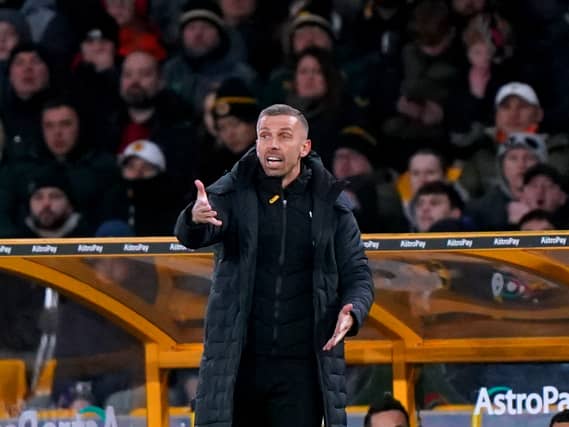
Emery, of course, is not the region’s only success story this term, as Albion and Wolves supporters would be quick to attest. Add Gary O’Neil and Carlos Corberan to the mix and you have three examples of seriously impressive coaching jobs, each slightly different but with all having overcome obstacles of varying degrees to keep their respective teams on track.
O’Neil appeared a man walking into a storm when he arrived at Wolves just a few days before the start of the season to inherit a squad in flux, which had been branded not good enough by predecessor Julen Lopetegui.
Though there was always a suspicion the players were slightly better than the Spaniard believed, O’Neil has proved the point in emphatic fashion.
Last weekend’s defeat to Brentford was a setback, the hamstring injury suffered by Matheus Cunha even more so, to hopes of challenging for European football.
Yet the fact such a sentence can even be written shows how far O’Neil’s team have surpassed expectations. More than that, he has made Wolves fun to watch again, restoring some attacking flair to a team which in recent seasons had garnered a reputation for being rather stodgy.
There’s still the possibility of glory too, with an FA Cup fifth-round tie against Brighton to come on Wednesday week. Win it and Wolves will be just one match away from Wembley.
That is the venue where Albion are also hoping to end their season in the Championship play-off final.
The fact the Baggies play in the second tier means Corberan’s work risks being overlooked outside the region.
Inside it, when taking into account the context of where the club stands at this point in its history, the job he has done quickly begins to look the most vital of the lot.
That Albion’s most important fixtures were taking place in the boardroom rather than the pitch this season has long been clear. With controlling shareholder Guochuan Lai rapidly running out of resources, the need for fresh investment grew ever greater.
Confirmation, late on Thursday night, US entrepreneur Shilen Patel had agreed a deal to buy Lai’s majority stake was akin to a storm cloud being lifted from above The Hawthorns.
While it is takeover negotiations which were most crucial, it does not mean results on the field have not been important. At a base level, Corberan keeping his team in the promotion hunt has been a welcome distraction for fans nervous about the progress of those takeover talks.
Much more importantly, on-field success has ensured Albion remain an attractive proposition as possible to prospective buyers, who could see a club still in contention to be back in the Premier League come the summer. Patel, understandably, is understood to be a huge fan of Corberan.
The Spaniard has rarely had it easy since first arriving in October, 2022, with the Baggies sat in the relegation zone.
There has been upheaval the like with which Emery and O’Neil have not had to deal, including last summer’s departure of Ron Gourlay, the man who did more than any other to convince him to join (and then sign a new contract when Leeds came sniffing).
There were also fan protests against Lai, while the club’s financial position has left Corberan considerably restricted in terms of recruitment.
To keep things rolling amid so much background noise is an achievement which should not be underestimated.
At a time when it would be so easy to make excuses, Corberan has kept his staff and players as detached from boardroom events as possible. That is far easier said than done.
So too is maintaining consistent performances from your team when confronted by a series of long-term injuries, most notably in attack.
Having just got Daryl Dike back, Corberan lost the striker again this week. With Josh Maja also sidelined, Brandon Thomas-Asante is the only frontman the head coach has been able to call on for the whole campaign.
Good managers get the best out of their resources.
It is not hard to compare the improvement Corberan has found in Alex Mowatt, a player who spent last season out on loan, with the rise of Leon Bailey at Villa and the leap forward made by Nelson Semedo at Wolves.
Good managers are also often those best able to adjust and cope with the inevitable variables the game throws up. Corberan, like Emery and O’Neil, has shown he is more than adept at that too.
--oo.
Comment Guidelines
Iconic Media encourages reader discussion on our stories. User feedback, insights and back-and-forth exchanges add a rich layer of context to reporting. Please review our Community Guidelines before commenting.