
Matt Maher: It’s never been tougher to referee in the Premier League
So long as football is played, there will be complaints about referees and refereeing decisions.
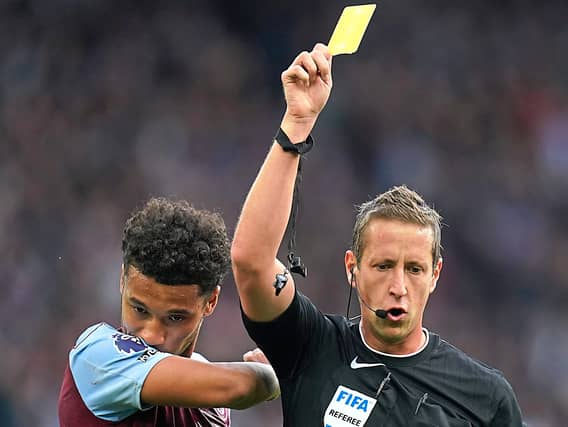


That is the first thing which must be kept in mind when approaching the current debate about the standard of officiating in the Premier League.
Another is this: Not since a ball was first kicked in anger has it ever been tougher to referee a professional match.
It is not merely that the game is quicker than ever before, or that deceiving the officials has somehow become a skill for which players are too rarely criticised and sometimes even praised.
No, most significant is the presence of dozens of TV cameras allowing millions sat at home the luxury of viewing contentious incidents several times in slow-motion, before sitting back and happily declaring the person who gets one look and a split-second to make up their mind a fool.
Viewed from that perspective, it is easy to see why the sport sought to utilise technology to assist referees.
Yet, as we are discovering, even that has problems. Sure, VAR’s implementation could probably have been handled better but no matter which way you work it, video replay will never be the silver bullet to eradicating all errors some believe it can be. Such perfection is a mere pipe dream.
None of which means managers shouldn’t demand better when certain standards aren’t met.
By and large, you would say Gary O’Neil has remained on the right side of respectful despite having more reason than any other Premier League boss to complain.
There is no question Wolves have been on the end of some complete howlers, the latest of which came with the award of a late penalty in last weekend’s defeat at Sheffield United.
O’Neil’s exasperation in the minutes after full-time at what he branded, quite fairly, a “crazy” decision was perfectly understandable. Importantly, however, he also noted how his team’s own shortcomings had also been a factor in their downfall at Bramall Lane.
A couple of days later, after having had a chat with officiating chief Howard Webb, the Wolves boss was even more measured.
“Obviously, they (the referees) are under a lot of pressure at the moment,” he noted, adding: “I’m confident they are trying to shift things in the right direction.”
That doesn’t mean he is any less frustrated with the bad luck which has left his team several points worse off than they should be. But it is at least a constructive, grown-up way to look at the problem.
The same cannot really be said for Mikel Arteta, who after Arsenal’s defeat at Newcastle on Saturday evening produced one of the Premier League’s managerial rants for the ages as he took aim at the “embarrassing,” “disgraceful” and “sickening” officiating he believed had condemned his team to defeat at St James’s Park.
There’s always a danger of reading too much into what managers say in post-match press conferences, even one so explosive as this.
Yet it was followed, the next day, by an official club statement backing up Arteta’s words. On Monday, meanwhile, the Gunners boss was still unwilling, or maybe unable, to articulate precisely which part of Anthony Gordon’s winning goal he took issue with.
If your chief complaint is about a lack of sharpness, then your argument is not helped by being sketchy or vague on the details yourselves.
Arteta’s meltdown smacked of being exactly what it was, a manager going too far while using the time-honoured tactic of deflecting attention away from his and his team’s shortcomings in defeat.
Gordon’s goal was scrappy and a little fortunate but there wasn’t an obvious reason to disallow it. All told, it wasn’t even the most contentious decision of the weekend, let alone the season. The reaction, for which Arteta will surely be sanctioned, was completely out of proportion.
It will have the knock-on effect of raising the scrutiny on referees, heading into another weekend where every questionable call will again be picked over.
Criticism is part of the job, of course. Anyone who chooses to become a referee knows this. Too much of it these days, however, feels over the top. If refereeing standards are to get better, they might benefit from others in the game having just a little more realism.
“People are just going to forensically scrutinise everything to make sure they’re comfortable it’s right, and then even after that, we’re still not happy,” observed Tottenham boss Ange Postecoglou on Monday night after a match in which two of his players were sent off.
Postecoglou’s concern at the erosion of referee’s authority is refreshing and while it may open the Australian up to accusations of hypocrisy, should he mutter any annoyance the next time Spurs get the wrong end of the stick, his is the kind of adult perspective too often missing from the discussion.
It probably doesn’t help so much flak comes from former referees, who should know better than anyone how tough the job is.
It is hard to believe Keith Hackett, never shy to voice his opinion in newspaper columns or online, went through his career without making the odd blunder.
He also retired in 1994, at which point the majority of top-flight matches were covered by one fixed TV camera.
Mistakes have always been made, it is just now they are so much easier for us all to see, feeding into the flawed narrative standards are the worst they’ve ever been.
Video replay can, if used efficiently, eradicate the biggest blunders but is ill-suited to subjective calls.
Officiating errors are part of the game. They always have and always will be. That doesn’t mean we shouldn’t expect better.
But we might all benefit from taking a deep breath, stepping back and understanding what is and isn’t realistic in one of the most unforgiving jobs in sport.
Comment Guidelines
Iconic Media encourages reader discussion on our stories. User feedback, insights and back-and-forth exchanges add a rich layer of context to reporting. Please review our Community Guidelines before commenting.