
'Kenny Jackett helped shape my life'
Saturday’s fixture between Wolves and Watford will see Molineux pay a pre-match tribute to Kenny Jackett, who played such key roles in successes at both clubs, and who sadly passed away this summer. Darren Ward owes so much to Jackett, whom he played for at Watford and Millwall, either side of a short stay at Wolves. He spoke to Paul Berry.
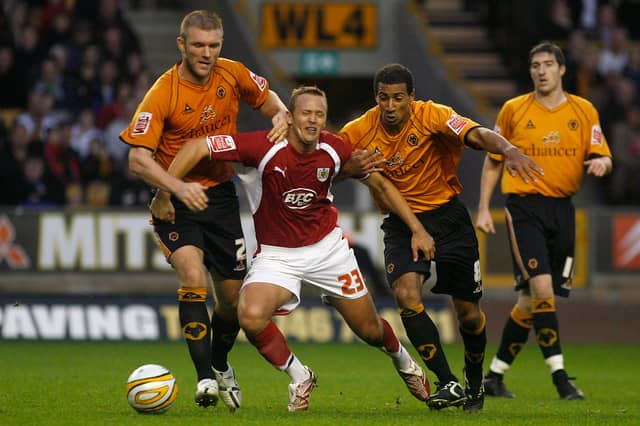

“In terms of mentorship, in terms of support, in terms of helping lay the foundations for my career, Kenny Jackett played such a big part in my life. It was an absolute pleasure to have known him and to have worked under him.”
Darren Ward was devastated to hear the news this summer of Jackett’s passing at the age of 64. He knew he had been unwell. Like so many others, he had been in text message contact to see if there was any way he could help. Sadly, there wasn’t.
Ward was at Watford’s first league game of this season, a 2-1 win against Southampton, when the Hornets paid a wonderful tribute to Jackett. Fans travelled 19 hours by car to pick up a special tribute banner which was displayed in the stands. Ward felt privileged to chat to Jackett’s wife Samantha, and to tell her how much he had influenced him.
Ward’s career as a defender ran for 23 years and comprised 630 appearances, and 27 goals. It included three years at Wolves, albeit only one as a regular in the team. A spell at Molineux he still savours, but wishes had lasted longer, and been more successful.
He now heads up the DW Soccer School in Hitchin, not far from where he lives. He has had a couple of coaching and managerial roles and remains open to the right opportunity, should it come along.
And yet so much of Ward’s career, alongside his own ability and work ethic, is down to the mentors he met during the early days with Watford’s academy.
That included former Wolves influences such as Bobby Downes, who was overseeing the youth set-up, and Robert Kelly, coach of the under-18s during Ward’s second year as a scholar albeit by that time he was more regularly training with the first team.
Then there was Graham Taylor, who managed him at Watford. And then there was a future Wolves influence, in Jackett. So many influences from the yellow of the Hornets and the gold of Wolves.
“I was probably quite late getting in at a club, around under-14s at Watford,” Ward recalls. “But I was so lucky because we had such a brilliant team at youth level, so strong, regularly beating Arsenal, competing with the likes of Tottenham and West Ham who were always the top teams.
“So many coaches played a part, my first was John McDermott, now the technical director with the FA, and Kenny came in as our youth coach when we became full-time.
“And from there, all of us except one, signed pro.

“As soon as I started working with Kenny, I could see the quality he had as a coach. He was the main man among the coaches, the top dog, and had that balance of being such a good coach alongside the discipline and always letting you know where you stood.
“He had that demeanour, I could just see he was going to progress to bigger things as a coach, and I felt privileged to be part of that fantastic group working under him.
“Kenny was a big ambassador of myself as a player, and that helped me develop to the point that in my first year as a YTS, at 17, I made my debut for the first team.
“It was away at Luton, not a bad one to start, a proper local derby, and it was a challenge, but a fantastic time and a fantastic opportunity.
“I’m forever grateful for that chance, and so much of it was down to how much I improved in those first few months as a YTS under Kenny.
“As time went on, Kenny then moved up to the first team coaching set-up, both as manager and then Graham Taylor’s assistant, so I was able to work with him some more.
“But it wasn’t without any obstacles. I had really been building up some momentum with my performances, only to then break my shin in two places, which really set back for a good while.”
When he did recover after a lengthy absence, Ward enjoyed a loan spell at QPR, before returning to Watford and making nine appearances in the Premier League.
His first of those appearances, still at only 21, saw him come against Mark Hughes for Everton at Goodison, before other tussles with Arsenal and Manchester United teams including the likes of Dennis Bergkamp, Thierry Henry, Dwight Yorke, Teddy Sheringham and Ole Gunnar Solksjaer. Quite the baptism!
“I remember Mark (Hughes) and myself kicking lumps out of each other in front of a full house, which gave me the taste for it!” he says. “Getting the chance to play against some of the best players to have walked on a football pitch – it was such a moment of gratitude especially after the serious injury which could have ended my career and brought me one of the hardest periods of my life.
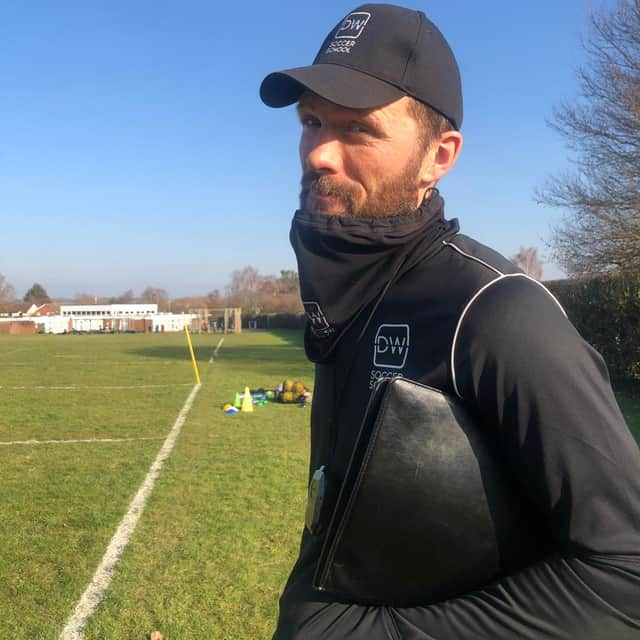
“It had been such a nightmare that I had to fight back from, so getting those games in the Premier League and staying in the team until the end of the season was an incredible highlight.”
As time moved on, so too did Ward, with largely successful stays with Millwall and Crystal Palace preceding his switch to Wolves, in the summer of 2007.
But of all the moments and the successes that he had enjoyed prior to arriving at Molineux, there is always one which has to stand out.
Playing for Millwall in the 2004 FA Cup Final, having finished tenth in the Championship, against Manchester United, who were third in the Premier League.
So, add to that list of opponents whom Ward has come up against, footballing royalty in Roy Keane, Paul Scholes, Cristiano Ronaldo and Ruud van Nistelrooy.
Millwall held out until Ronaldo scored just before half-time, and ultimately lost 3-0. This was also the time when Ward became known as the ‘Peckham Beckham’, something of a tribute to the legendary United midfielder who had left Old Trafford the previous year.
“We had a very good squad at Millwall with experience from the likes of Dennis Wise and Kevin Muscat, ex-Wolves of course, and talents such as Timmy Cahill, Paul Ifil and Danny Dichio, we were a confident team,” says Ward. “I never experienced a team spirit like it during my career – the real Millwall style with the jokes on the coach and at the training ground, sticking together and going out a lot together.
“The achievement was winning the semi-final against Sunderland, because we had three injuries in the first half against a very strong side under Mick McCarthy.
“The final was a wonderful occasion even when you look back now with the result.
“And the Peckham Beckham? Yeh, that was alright! One of the papers gave me the label and the lads picked up on it.
“I liked my clothes, the hairstyle, I liked my cars – whatever the resemblance that people thought it was at the time, and I have been called far worse down the years!”
Meanwhile, it was McCarthy, who regularly kept tabs on players who had impressed when playing against his teams, whom, three years after the FA Cup semi-final, made his move for Ward, for Wolves.
“There were a number of teams interested at the time, Leeds were one and also a few overseas, so I was looking at different options,” Ward explains. “But there was a fantastic energy around Wolves, good young players breaking through like Michael Kightly, and it looked a really interesting prospect.
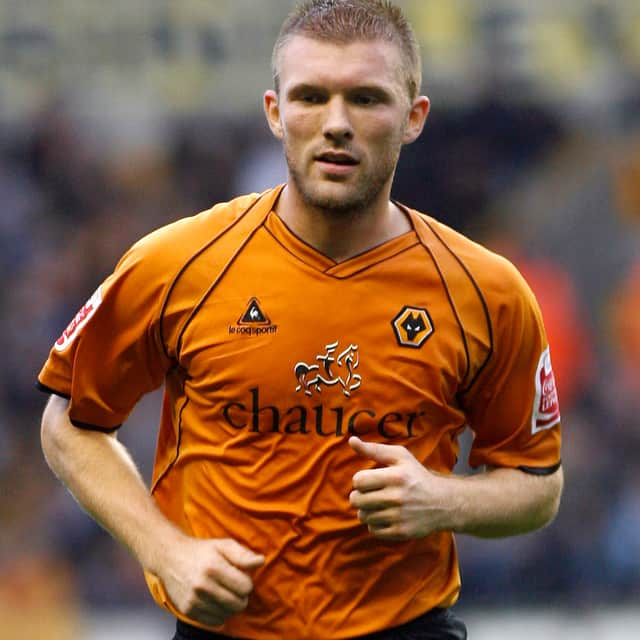
“Mick had been keeping tabs on me including in that FA Cup semi-final, and as soon as I spoke to him, I knew I wanted to sign.
“I always got on really well with Jez (CEO Jez Moxey) as well, and it felt like the best move.”
Ward made 32 of his 34 Wolves appearances in that first 2007/08 season, in which the team only missed out on the play-offs on goal difference.
The McCarthy rebuild was gathering pace, but by the time it came to fruition with promotion a year later, Ward was no longer involved.
Nothing major, nothing sinister. Just one of those things that happens in football, and Ward looks back with only a tinge of regret mixed with so many fond memories.
“I played a lot in that first season, but there were also a few things going on behind the scenes which made things difficult,” he recalls. “When I put my shirt on, and Mick got his training gear on, there was a bit of a clash and stuff happening in training which I would voice my opinion on.
“This happens in football, it’s part of the journey, and I have nothing but good things to say about Mick – who I have met several times since – and Terry Connor, both of them are brilliant people.
“Ultimately Mick made the decision to go in a different direction with his centre-backs, and I remember when Richard Stearman came in at the end of that season, I knew they had got a really good one.
“I sat down with Mick and said, ‘do you think I should call my agent?’ And we both started laughing. But we were always straight up and honest with each other, which is how it should be.
“And look, there are still moments I look back on with really great memories from my time at Wolves.
“I was captain for a cup game with Cambridge, I remember us getting a draw against West Bromwich Albion when they were miles ahead of us at the time, as well as meeting so many great people and playing in front of such a great set of fans.
“When I walked out at Molineux I knew I was at a massive club and a club with so much history – it was an absolute pleasure and privilege to have played for Wolves.”
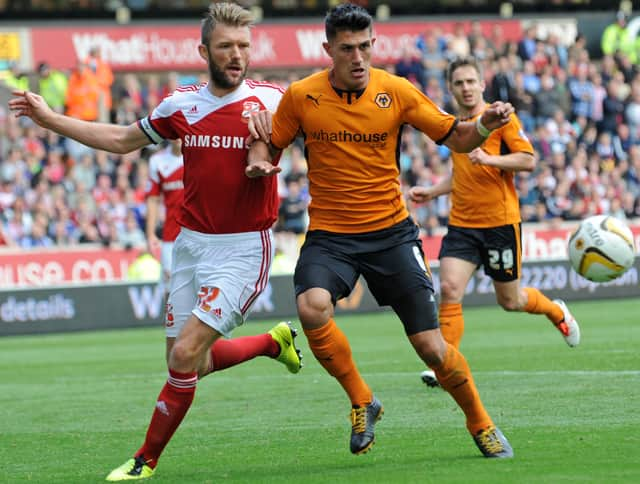
There was still much more to come for Ward as a player after leaving Wolves. Returning to Watford and Millwall for loans, with a spell at Charlton in between, and then to Millwall permanently, Swindon, Crawley and Yeovil. He was still playing for Hemel Hempstead at the age of 40. Now that’s a love of the game!
The longevity was, in part, due to the way he looked after himself during his career. At Wolves, perhaps as the benefits of sport science and nutrition were only just coming into the game, he already had a laser-like focus on what he was eating, a diet packed with organic food which quickly became the talk of the dressing room.
“Ever since I broke my leg, which potentially could have ended my career, I had a good look at diet and lifestyle to see what I could do to make marginal gains,” Ward explains. “I’d bring my own food in, and ask the chef to cook it, and take it to away games as well.
“I remember Mick taking an interest, and Tony Daley and Steve Kemp, as this was a time when players looking after themselves better off the pitch was becoming more important.
“I really think it helped me play on for so long and make so many appearances, because my recovery between games was fantastic, as well as my test results when I came back for pre-season.
“I always tried to maintain high standards, and improve myself, whilst at the same time trying to help younger players do the same.”
Back at Millwall, Ward was once again reunited with Jackett, this time as an experienced leader rather than the young protegee who the former youth coach had nurtured so successfully.
He also returned to Wembley, playing his part in keeping a clean sheet in the play-off final win against Swindon which took the Lions into the Championship.
And those vanquished opponents Swindon was where Ward first went into the dugout, for a short spell as joint caretaker boss alongside Tommy Miller following the departure of Paolo Di Canio.
Ward has his UEFA ‘A’ Licence, and there have been opportunities for coaching and management roles having also been in the chair at Hemel Hempstead and, more recently, Arlesey Town.
Whilst still open to those types of opportunities should the right one come along, much of Ward’s attention at present is devoted to his Soccer School, which is going from strength to strength.
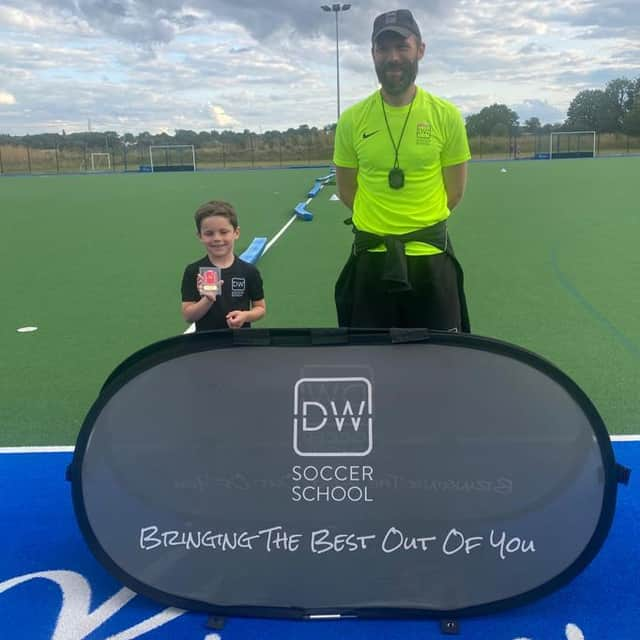
“I have enjoyed those coaching opportunities even though they have been challenging, including working with the lowest budget in the league at Arlesey,” he says. “It gives you that challenge of building a squad, bonding a group, trying to get them to play good football.
“At the same time, I am really enjoying what I am doing with the Soccer School, where we now coach over 500 young players a week, as well as doing after school clubs and birthday parties.
“It is also nice to be able to enjoy family life – we’ve got three children and having been a footballer travelling everywhere, it’s nice to be based more at home and able to spend time with them as well.”
And so, at 48, as Ward continues to progress on his new footballing chapter, there is also time to look back, and reflect, on a career very well spent.
He is one of three brothers to have played professionally, alongside Elliot and Scott, and in addition to the Millwall promotion, FA Cup Final and so many other good times, there are also Player of the Season accolades to savour.
Of course, it all began with Wolves’ next opponents Watford, under the influence of so many important coaches, including Jackett.
“When I think back to heading to Watford as a schoolboy, as one of four boys brought up at a pretty rough and ready school, I could never have imagined going on to have a career,” he reflects. “A dream come true, that is the only way to describe it, and a career for which I will be forever grateful.
“I’d like to think I’ve left a legacy as well, with the standards I tried to follow, the professionalism, and always treating people with respect.
“I’m also forever grateful for the support of my family, my wife who has been with me for most of my career, my mum and dad for their support, it all makes me feel very fortunate.
“And yes, I will have learned a lot from that from people like Kenny and Graham Taylor, and advice I received from both of them when I went in to sign my first contract as a pro.
“I didn’t ask a single question about what the terms were or what money I was getting, I was like, ‘yes I’m ready, I’ll sign’!
“’Well done,’ they said. And then: ‘you’ve signed as a professional but you’re not really a professional until you have played 100 games.’
“That was a massive target for me, which I ticked off game by game, so to go on and play over 600, well, it was amazing.
“A boy’s dream definitely came true, and I am so very grateful for everything that I received.”
Comment Guidelines
Iconic Media encourages reader discussion on our stories. User feedback, insights and back-and-forth exchanges add a rich layer of context to reporting. Please review our Community Guidelines before commenting.