
Molineux expansion plans over the years as Wolves reveal latest on stadium
Molineux is a grand old stadium with more than 130 years of history behind it.
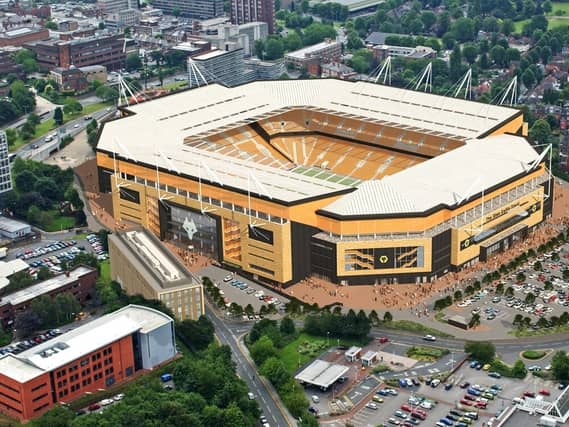


Wolves, one of the 12 founding Football League sides in 1888, made Molineux their home in 1889.
Over the years, Molineux has seen the highs of the top flight winning sides of the 1950s and the Division Four lows of the 1980s - now, they are going into their eighth consecutive season in the Premier League under Chinese owners Fosun.
A historic football club with a well-known home - Molineux is a special place to many.
Chairman Jeff Shi said this week: "I have been to many stadiums in the UK and it's a good stadium" - and he is not wrong. Compared to some other top flight grounds, Molineux is still an excellent place to play and watch elite football.
However, it is also in desperate need of some modernisation and recent licks of paint have only papered over the cracks.
Plans to revamp Molineux have been shelved, seemingly indefinitely, and not for the first time.
In July 1958 Wolves had just won their second league title with legendary Billy Wright as captain and Stan Cullis as manager.
Often, crowds of more than 50,000 were in attendance and plans were being drawn up to transform Molineux.
The groundbreaking and ambitions plans, ordered by chairman James Baker, unveiled a 'stadium of the future' that would aim to cement Wolves' place as one of the biggest clubs in the world.
For just £500,000, Molineux's capacity would increase to more than 70,000 and have 14,000 seats.
 Everything was in place for the project to go ahead, but conflict between the club and the council over the impact on the surrounding area saw the rebuild be rejected by a planning committee.
Efforts by Baker to change their minds were wasted and the plans never got off the ground.
Looking ahead to 1978 and Wolves were once again drawing up a transformation of Molineux as it was crumbling and badly needed a rebuild.
Attendances stood at around 20,000 to 30,000 during the 1970s but 53,379 against Leeds in 1972 and 48,918 against Liverpool in 1976 proved the club still had potential.
The Safety of Sports Grounds Act had been introduced and the wooden Molineux Street stand was deemed unsafe and chairman Harry Marshall was determined to demolish it, while also revamping the whole ground.
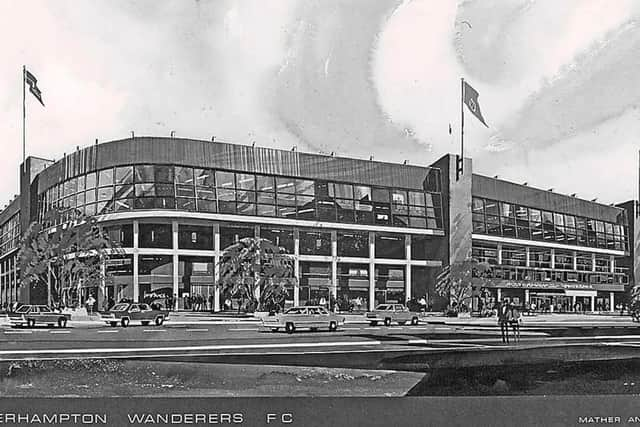
Blueprints for a 40,000 capacity stadium, with the corners filled in, were created with the aim of completing it by 1984.
It would cost £10million and Wolves purchased 71 terraced houses on Molineux Street and demolished them to make way for the new £2million stand, named the John Ireland stand after the club president.
But Wolves ran out of money. They splashed the cash in the transfer market with an English record transfer fee of almost £1.5million for Andy Gray and debts on the new stand saw Wolves go bust.
One of the success stories around Molineux rebuilds came in the early 1990s when Sir Jack Hayward gave it a monumental facelift for £15million and made it unrecognisable from it's previous form.
Moving into more recent times and Wolves were eager to go to the next level under chairman Steve Morgan in 2010, who was keen to build on Sir Jack's ambitions.
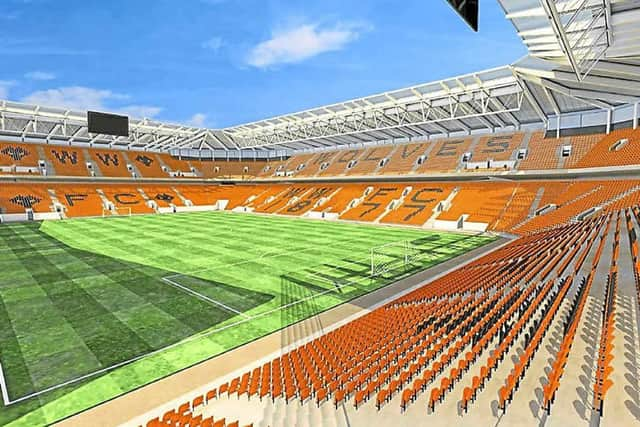
Morgan unveiled stunning plans to spend £40million on Molineux and have it rival the best in the land, with a capacity for 37,000 fans and aspirations to add 13,000 more.
The stadium was starting to look dated following Sir Jack's rebuild and Morgan was desperate for more modern facilities.
Wolves were battling to stay in the Premier League at the time and attendances were strong and as the plans were unveiled they showed a stunning vision of the future.
They aimed to redevelop three stands initially, taking it to a 37,000 capacity, with scope to make it 50,000 in the future once the Billy Wright stand was also redeveloped.
A superb new Stan Cullis stand fully reopened in 2012, at a cost of £18million, and was a major success, but the rest of the work never came to fruition.
Wolves suffered back-to-back relegations in 2012 and 2013 and found themselves in League One as attendances plummeted.
Morgan focused on improving the training facilities instead and the 2010 stadium ambitions never came to pass.
Now, in 2025, Wolves are again looking back on ambitious stadium plans that have not got off the ground.
A triumphant return to the Premier League under Fosun gave birth to more Molineux plans in 2018.
Nuno Espirito Santo had his side purring, fans were flocking to watch the team and thousands were on a season ticket waiting list.
Ambitious discussions around a 60,000 seater stadium first took place, although plans meant the project would be done in stages.
The South Bank, aka the Sir Jack Hayward Stand, would be the first to be redeveloped and double in size to a 10,000 single tier stand, hoping to be ready by 2020.
"We wanted to be comfortable that we have the ability to go up to 45,000-47,000, or even the mid-50,000 or higher," Managing director Laurie Dalrymple told a meeting of the Wolves Fans' Parliament.
An artist impression was then revealed to the delight of Wolves fans and council leaders in the city, showing a modern multi-purpose Molineux, with a more realistic aim of getting up to a capacity of 50,000.
City of Wolverhampton Council managing director Tim Johnson, said: “On the back of what has been a fantastic season for Wolves, these are hugely exciting plans.
“They demonstrate the club’s vision and ambition – and will enhance our city’s continued growth.
“It is a vote of confidence in a resurgent city benefitting from £4.4 billion investment on site or planned.
“The council is working closely with the club and other city partners to deliver these plans. This includes how the stadium can be better connected to a reimagined city centre.”
Chairman Shi added in 2019: "The most important thing is to have enough capacity. 40,000-50,000 is not a problem by my understanding. Wolves is like a sleeping giant."
But Wolves and the local authority correctly and consistently said that the current 32,000 Molineux was already having an impact on the local area and infrastructure and a lot of collaboration work would need to be done to get the plans up and running.
It was then revealed that the Steve Bull stand would be focused on first, with work starting in 2020, before the South Bank work could follow in 2022.
That decision change made a lot of sense considering the Steve Bull stand dates back to 1979, in its previous guise as as the John Ireland stand.
A capacity of 46,000 became the initial target, with future ambitions of potentially reaching the 50,000 or 60,000 mark.
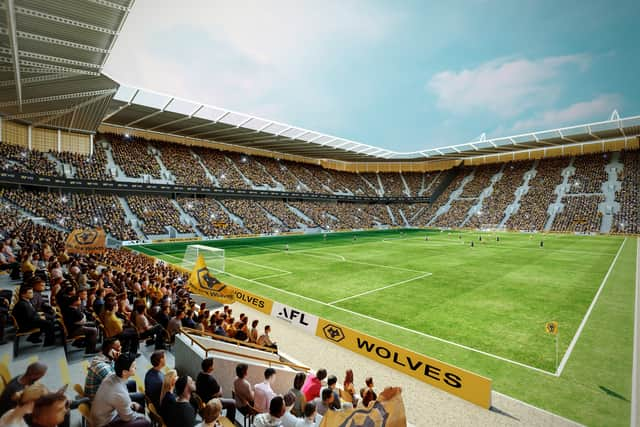
"There has never been any lack of ambition for us to take the capacity in to the 50,000s or higher but we have to respect what the market dynamics are telling us, and we have to be adopting a more realistic and pragmatic approach that we are comfortable with," Dalrymple said.
"We want to be seen as an iconic venue for a multi-purpose use, not just in the Midlands but nationally as well.
"We want this stadium to become not just a fantastic football venue but also a choice for non-matchdays.
"It would be unforgivable if we redeveloped without other business uses in mind."
The Steve Bull stand has always been a sticking point for the club with little room to expand behind it but Wolves were working with companies and architects to put a plan in motion.
That was until the Covid-19 pandemic hit. Stadiums were emptied and Wolves' focus shifted to splashing the cash on first team signings, following Nuno's two seventh placed finishes in the Premier League and reaching the quarter-finals of the Europa League.
Wolves have safe standing in areas at Molineux and the corner Graham Hughes stand, but the stadium has otherwise been relatively untouched since those plans were shelved.
Financial worries have plagued the club in recent years and although they look set to improve the squad this summer, a redevelop of Molineux is not a priority.
The club's hierarchy have been quiet on ambitions for the stadium ever since, until chairman Shi spoke this week.
"On capacity we have 32,000 and I think it's good enough, maybe 35,000 or 40,000 is the max for the city, but it's not urgent," he said.
However, he went on to admit the hospitality at Molineux needs addressing and that the Steve Bull stand needs work as it is 'too old'.
Wolves currently have no plans to rebuild Molineux but do want to address the facilities in the Steve Bull stand. When those come to fruition is anyone's guess.
After two relegation battles in three seasons, working on Molineux cannot be seen as a priority, but after decades of missed opportunities the time will come when this great old stadium needs modernising.
Comment Guidelines
Iconic Media encourages reader discussion on our stories. User feedback, insights and back-and-forth exchanges add a rich layer of context to reporting. Please review our Community Guidelines before commenting.