
Andrew Mountbatten-Windsor is not the first royal to be arrested: Here's five others who had their collars felt
Which other members of the Royal Family have been arrested? Mark Andrews takes looks back in history

The arrest of Andrew Mountbatten-Windsor has sent shockwaves around the world.
He is not the first member of the Royal Family to be arrested, but you do have to go back a fair few years to find events of similar magnitude.
We're happy to stand corrected, but we reckon the most recent arrest of a senior member of the Royal Family was that of King James II in 1688, during the 'Glorious Revolution' of 1688. With the English Civil War still fresh in the public's mind, James's Catholic faith was a bone of contention from the very beginning, dividing Parliament into Catholic-sympathising 'Tories', who broadly tolerated him, and the Presbyterian 'Whigs' who were fiercely opposed.
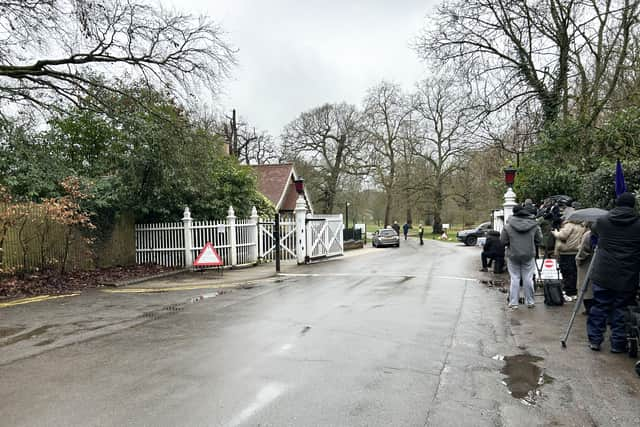

The birth of James's son, also called James, on June 10, 1688, displaced James's protestant daughter Mary as heir to the throne, and the arrest - and subsequent acquittal - of seven Anglican bishops stoked fears of another civil war. A group of concerned nobleman - including the Earl of Shrewsbury - invited his Dutch nephew William of Orange - Mary's husband - to come to Britain and claim the Crown. James put up little resistance, and was arrested on December 11, while trying to flee to France. Reluctant to turn his uncle into a martyr, he allowed James to escape to France and spend the rest of his life in exile.
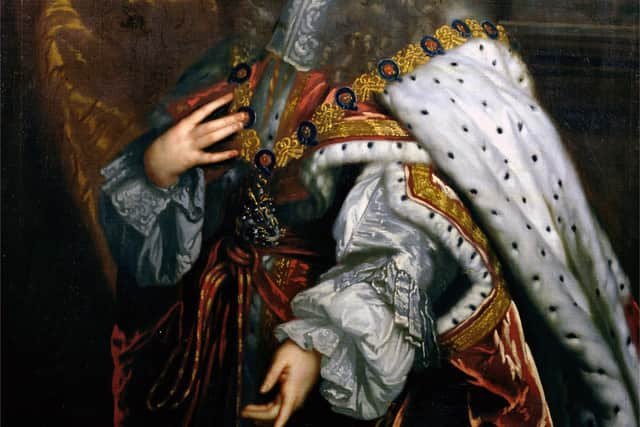
Less fortunate was James's father - and William's grandfather - King Charles I, who of course was executed for high treason in January, 1649, after being defeated by Oliver Cromwell's forces. Charles's increasingly autocratic rule had put him at odds with his parliament, which demanded a greater role in lawmaking. After his defeat in 1645 at the hands of the Cromwell's New Model Army, he fled north and surrendered to Scottish forces in May 1646. He was handed over to the Long Parliament in London, but refused to accept his captors' demands for a constitutional monarchy with greater parliamentary powers. He temporarily escaped captivity in Hampton Court in November 1647, but was arrested for a second time on the Isle of Wight the following month.
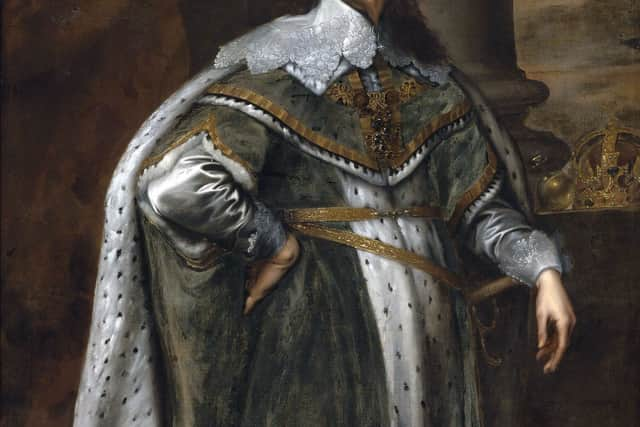
Charles's execution marked the abolition of the monarchy in England, and the beginning of an 11-year republic. His son, though, fled to Scotland, where he was proclaimed King on February 5, and the fighting continued at the Battle of Worcester. Charles II's defeat at Worcester on September 3, 1651, led to him evading arrest by hiding, first, in an oak tree at Boscobel House, near Brewood, and then at Old Moseley Hall in Wolverhampton. He fled to France, and later returned to be made King with the restoration of the monarchy in 1660.
Queen Elizabeth I, daughter of Henry VIII by Anne Boleyn, was arrested not once but twice prior to her accession to the throne, but on neither occasion were her captors able to make the charges stick.
Her first brush with the law came at the age of 15, when she was effectively placed under house arrest by her half-brother Edward VI amid rumours that her stepfather Thomas Seymour had plotted to have him kidnapped, before marrying Elizabeth. Seymour was beheaded on March 20, 1549, but no evidence was found of Elizabeth's involvement in the plot.
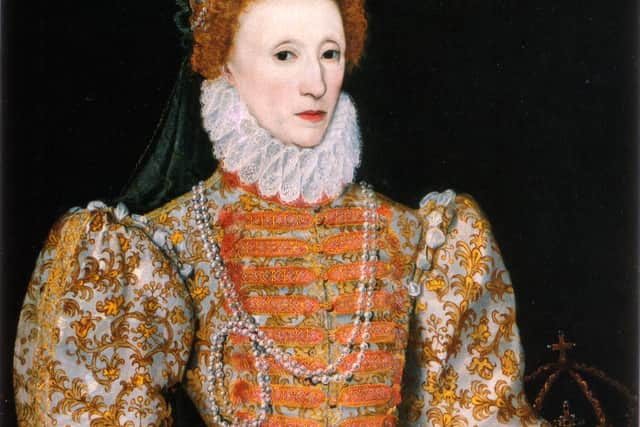
She was arrested a second time in early 1554, when at the age of 20 she was accused of involvement in the 'Wyatt Rebellion', an uprising by Protestants against the Catholic Queen Mary I, who was known as 'Bloody Mary' because of her ruthless suppression of Protestant dissent. Mary, who was Elizabeth's half-sister, had enraged many with her controversial marriage to King Philip II of Spain, and as a Protestant daughter of Henry VIII, Elizabeth was an obvious figurehead for any rebellion. Elizabeth was taken to the Tower of London on March 18, 1554, arriving by river boat and ascending the slippery steps from 'Traitor's Gate''. As she stood at the top of the stairs she pronounced: "Here landeth as true a subject, being prisoner as ever landed at these stairs…..I come in as no traitor but as true a woman to the Queen's Majesty as any as is now living; and thereon I will take my death.”
Elizabeth spent eight weeks in the Bell Tower, not knowing her half-sister's plans and fearing execution. Despite prolonged interrogation, she managed to avoid incriminating herself, and was released without charge.
Not so fortunate was Elizabeth's cousin, Mary Queen of Scots, who was executed on the orders of Elizabeth in 1587.
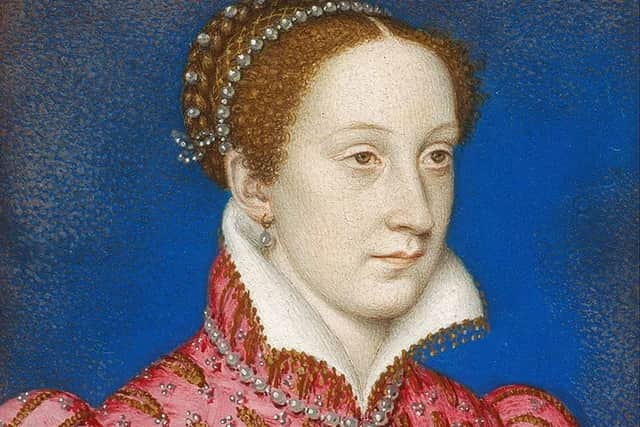
Elizabeth had succeeded Mary I on the death of her half-sister in November 1558, and for the first seven years she reigned alongside her cousin Queen Mary of Scotland. When Mary was deposed in a rebellion, to make way for her one-year-old son James I, she fled to England seeking the protection of her cousin, hoping that Elizabeth would help her reclaim the throne.
As a great-granddaughter of Henry VII, Mary had once claimed Elizabeth's throne as her own and was considered the legitimate sovereign of England by many English Catholics. On August 11, 1586, after being implicated in a plot to assassinate Elizabeth, Mary was arrested while out riding and taken to Tixall Hall near Stafford, and was executed on February 8, 1587 at Fotheringhay Castle.
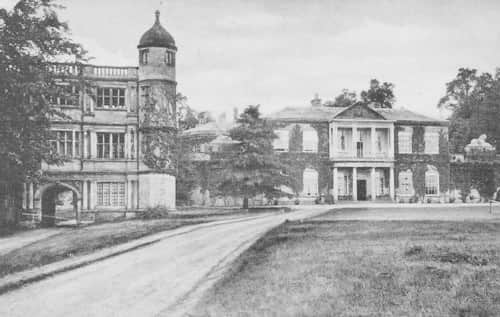
Bloody Mary's ruthlessness, of course, stemmed from a plot much closer to home, with links right here in the heart of the Black Country. And it involved one of the most infamous arrests and executions of them all, that of 'nine-day Queen' Lady Jane Dudley.

As Lady Jane Grey, she was the great-granddaughter of Henry VII, grand-niece of Henry VIII, and a cousin of Bloody Mary herself.Elizabeth I In May 1553, aged about 16, she married Lord Guildford Dudley, son of Edward VI's chief minister John Dudley, Duke of Northumberland. Edward was just nine years old when he became King, and by 1550 John Dudley, baron of Dudley Castle, had effectively established himself as regent. Edward's short reign was afflicted by ill health, and in June, 1552, - just week's after his son's marriage to Lady Jane - he persuaded the ailing 15-year-old King to make a will nominating Jane and her male heirs as successors to the Crown, in place of his half-sisters Mary and Elizabeth.
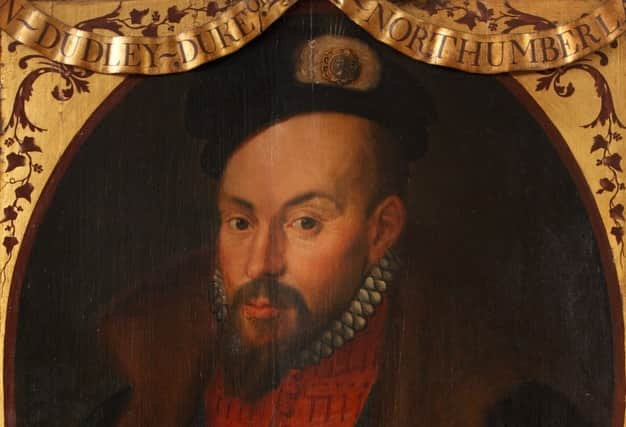
The King died on July 6 and, much to Dudley's delight, Jane was proclaimed Queen on July 10, 1553, but support for her quickly evaporated, and nine days later the Privy Council declared Mary Queen in her place. Jane and Dudley were both arrested, the latter tried on August 18 at Westminster Hall, and executed four days later.
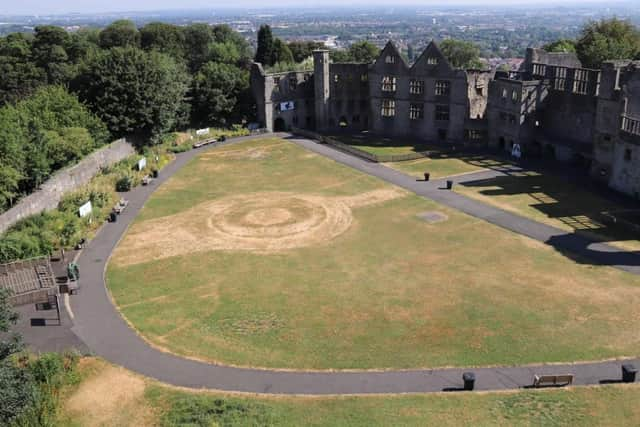
Mary had hoped to spare Jane's life, believing she was merely a pawn in Dudley's schemes. But the Wyatt rebellion of 1554 made her fearful of her position, and Jane was executed on February 12, 1554.
Of course, Princess Anne has also had a few brushes with the law in relation to driving offences, but we think we will leave those for another day.