
'Why has so little has changed since Grenfell tragedy?' – Andy Richardson
Has it really been seven years? Few can fail to remember the fateful and terrifying day when they woke up to the news of the Grenfell Fire.
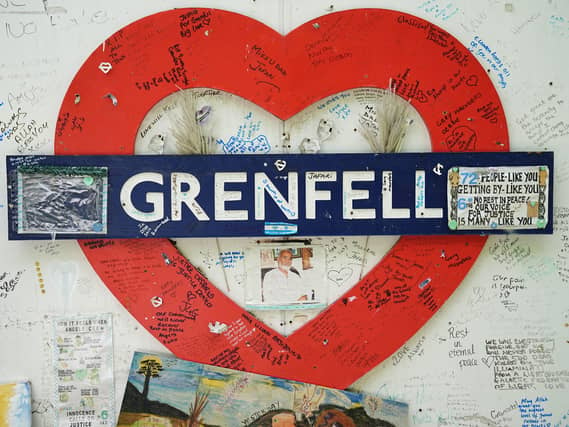

While the Fire Service battled in vain, the situation was made far worse by a catalogue of errors. People were told to stay put, when it would have been better for them to leave. The authorities were slow to act, failing to realise the magnitude of the event or provide the relief.
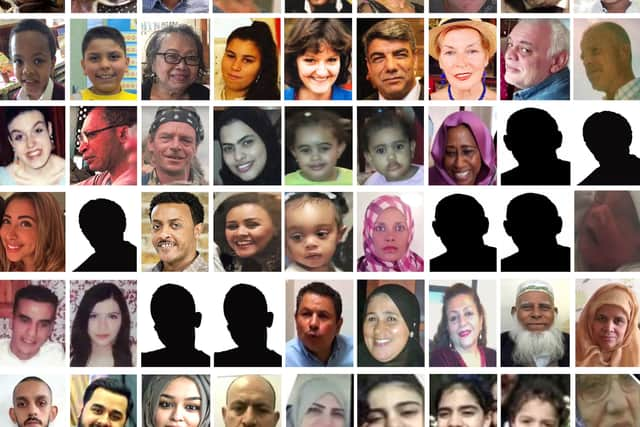
Bereaved families were told there’d be a quick inquiry into the errors arising as businesses and individuals were held to account. And more than seven years have passed, during which time Greenfell Tower has stood in silent tribute to the 72 who died.
People weren’t listened to – either before, or after. People hadn’t wanted the flammable cladding stuck to the outside of their building in the first place, and afterwards, the business of taking down similar cladding elsewhere has been horribly slow.
Justice delayed is justice denied and seven years on, too little has been done. The community at Grenfell has been traumatised, the pain and emptiness is hard to comprehend.
The rich and powerful could have done more. The climate of inertia that they were a part of proved deadly. Philip Heath, a technical manager for insulation manufacturers Kingspan, captured the mood when in 2008 he circulated an email about contractors who had questioned the safety of their product. He told a friend, they were: ‘Getting me confused with someone who gives a dam.”
That ethos, that sense of not caring, was at the heart of the tragedy. Businesses didn’t care – they simply wanted to cash in. Politicians didn’t care – they simply wanted to be the person who wasn’t to blame. The fire brigade’s advice to stay put was wrong, too – and cost lives. Expert evidence was concealed. The propensity for cladding to catch fire and turn into a raging inferno was overlooked.
Health and safety isn’t a vote-winner – in the way that spending more on the NHS is. There was a presumption with Grenfell that a tragedy of that magnitude could not happen, until it did. And since the inferno, too little has changed. More than 3,000 high- and mid-rise buildings across England are still being monitored because they have unsafe cladding.
While recommendations to prevent such a tragedy have come seven years after the blaze, the Government currently has no obligation to carry them out, nor is there a formal process to monitor what is rejected and why. Michael Gove, the former Housing Secretary, has admitted that faulty and ambiguous government guidance was partially to blame for the Grenfell Tower tragedy.
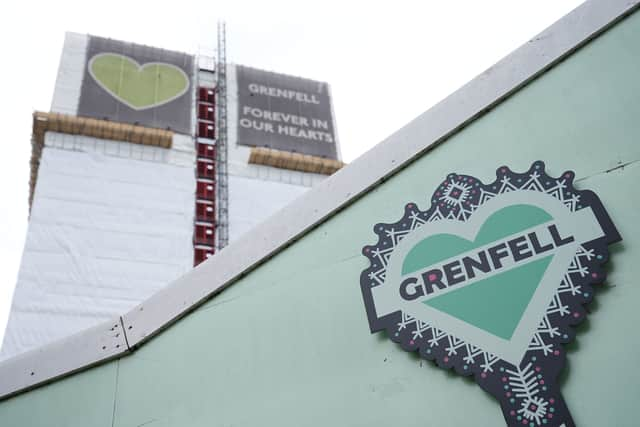
The cost of maintaining the charred remains of the tower is a staggering £340 million. And yet the building stands, wrapped in its white cover, with a banner at the top, without any forward movement on its demolition or the construction of a memorial garden.
Britain is used to such failures. From Hillsborough to Windrush, from the infected blood scandal to the demonisation of postmasters and postmistresses, from phone hacking to blacklisting, from undercover policing to Horizon.
A common thread through many of the scandals, including Grenfell, is the arrogance of businesses that prioritise reputation and the pursuit of profit over truth and the safety of the public. Legitimate complaints were ignored when people expressed concerns over the safety of cladding – just as sub-postmasters and the victims of Windrush were also ignored. Regulations and complaints are viewed as ‘a burden to business’, which often mean such scandals become inevitable. Those in power choose to ignore the voice of the proletariat.
Sir Keir Starmer’s government has promised to introduce a duty of candour law for public servants, following calls from Grenfell and Hillsborough survivors. The legislation, to be known as the Hillsborough Law, was in the King’s Speech at the state opening of parliament on July 17.
Briefing documents published alongside the King’s Speech said the proposed new law will address the “unacceptable defensive culture” prevalent across “too much of the public sector”. It had better work. There have been too many scandals – and Grenfell is the latest in a long and sorry line.