
'I may not like Donald Trump's message - but I like his clarity'
‘No ambiguity, no attempt to soften the message. Just raw, unfiltered abuse’ - why we can’t ignore Donald Trump
The language of diplomacy – of politicians and policy makers – used to carry weight. It suggested seriousness, responsibility, even a kind of moral authority. But listen to it now and it often feels like background noise – carefully worded, endlessly rehearsed, and strangely empty.
What was once meant to reassure now feels like it’s designed to obscure.
I was reminded of this rather abruptly the other morning, waking to the news of fresh, expletive-laden remarks from Mr Trump directed at the Iranian regime. Startling, yes. Undiplomatic, certainly. But also – if one is being honest –striking in their clarity.
There’s no ambiguity, no careful calibration, no attempt to soften the message. Just raw, unfiltered expression of abuse.
For decades after the war, Western political language was built on caution. Leaders chose their words with precision, avoiding anything that might inflame tensions. That made sense in a world still haunted by global conflict.
But somewhere along the way, caution turned into evasion. The phrases became predictable: ‘winning the hearts and minds,’ ‘constructive dialogue,’ ‘collateral damage.’ They sound polished, yes – but also detached, almost sterile.
And the public has started to notice.
Language and its connotations are important. It’s the reason why I read English at University – to study its power and the politics of its use. Everything matters it’s diction, it’s tone and shades - it’s implications.


But the public’s disconnect isn’t just about style. It reflects a growing impatience with institutions that seem to talk in circles while problems drag on unresolved. Whether it’s terrorism, conflict in the Middle East, or immigration at home, people are no longer convinced by language that feels like it’s been filtered through five layers of approval before it reaches them.
And if you want a weekly illustration of this, just watch BBC Question Time. I often find myself frustrated by the panellists – the politicians, the commentators, the professional talkers – who manage to speak at length while saying very little. Their answers are polished, cautious, and almost entirely forgettable. They circle the issue, qualify every statement, and retreat into the safety of vague generalities.
Then, quite often, a member of the audience stands up and cuts straight through it. No jargon. No performance. Just a clear, direct expression of concern or frustration. In those moments, it is not the policymakers or critics who sound convincing – it is the ordinary citizen. And that inversion should give us pause.
Into this space has stepped a very different kind of voice. Again, take Mr Trump. When he pulled the United States out of the Iran nuclear deal, he didn’t dress it up in diplomatic jargon. He called it ‘disastrous’ and spoke about Iran in blunt, often combative terms. Critics winced at the lack of decorum, but many voters heard something else: clarity. No hedging, no euphemisms – just a leader saying exactly what he thought.
That, more than anything, explains his appeal. It isn’t simply his policies, but his refusal to sound like every other politician. In an era where so much political speech feels it’s full of obfuscation and meaninglessness, his words feel immediate, even visceral.
For a public tired of being managed through language, that kind of directness carries a certain power.
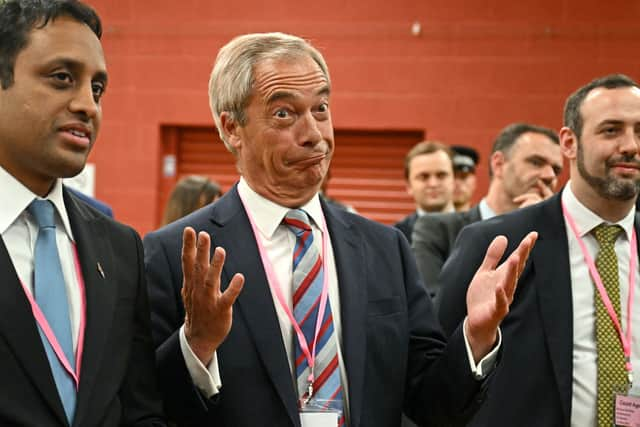
And it’s not just an American phenomenon. You can see the same shift happening here in Britain. The rise of parties like Reform UK reflects a growing frustration with mainstream political discourse.
For years, immigration has been discussed in technical, almost bureaucratic terms – ‘net migration,’ ‘multiculturalism is our strength’, ‘equality and diversity’. Perfectly accurate, perhaps, but also oddly disconnected from how people actually experience the issue.
Reform UK, whatever one thinks of its politics, doesn’t speak like that. It talks bluntly about borders, control, and what it sees as political failure. It says out loud what many voters feel has been tiptoed around for too long. That willingness to confront the so-called “elephant in the room” is precisely why it’s gaining traction.
Of course, there’s a risk here. Strip away diplomacy entirely and you’re left with something much harsher – politics as pure confrontation. Diplomacy exists for a reason: it creates space for compromise, for de-escalation, for living with difficult realities. But when its language becomes so polished that it no longer feels real, it loses credibility.
That’s where we are now—a kind of breaking point. The issue isn’t just that diplomatic language has become dull; it’s that people no longer trust it. They hear the words, but they don’t believe them.
What people seem to want instead is something simpler: honesty, even if it’s uncomfortable.
A bit of passion. A sense that the person speaking actually means what they’re saying.
The challenge for modern politics isn’t to abandon diplomacy altogether. It’s to rescue it from its own emptiness – to make it sound human again. Because if it doesn’t, others will continue to fill the gap, speaking more loudly, more bluntly, and with far less restraint. And whether that ultimately helps or harms public life is a question we can no longer afford to ignore.
Comment Guidelines
Iconic Media encourages reader discussion on our stories. User feedback, insights and back-and-forth exchanges add a rich layer of context to reporting. Please review our Community Guidelines before commenting.