
Toby Neal: Could car charges be Britain’s new Brexit?
Could this be a new Brexit? It is a troubling question causing a tremor of concern in the circles of the good people who know what’s good for the people.
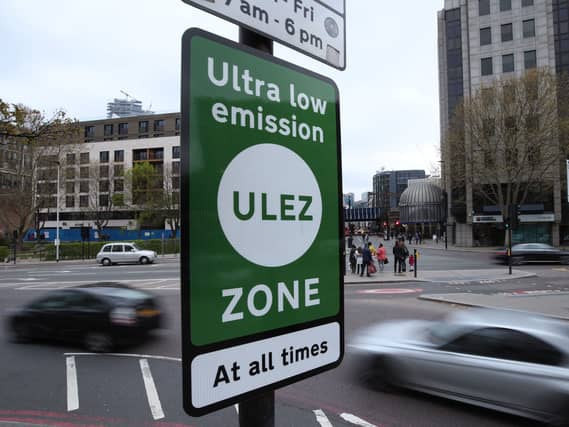

The disquiet arises out of the stunning result of the Uxbridge by-election which, through extraordinary efforts, Labour failed to win.
All sides agree that the reason the Tories unexpectedly retained the seat was local opposition to London’s ultra low emission zone, a measure designed to cut health-damaging air pollution.
Who in their right mind could oppose that? Well, a voter who can’t see what’s in it for them, that’s who.
The deal laid before Uxbridge folk amounted to this. When the zone is expanded into Uxbridge, people living there who are struggling during a cost of living crisis and who cannot afford newer cars will have to pay £12.50 a day as a punishment for the pollution they are causing with their old bangers.
You want to save the planet, but it’s a hard pill to swallow.
Uxbridge is a significant moment, as if Britain is to meet its net zero targets then there are going to have to be more similar measures coming in, and the next decade is going to be a crunch point as specific policies start to collide, for the first time, with the democratic process.
While the talk about tackling climate change remains unspecific, about moving towards a greener economy and greener jobs, everybody can sign up to the noble cause.
But when push comes to shove, some people are quite happy in the non-green jobs they already have in, say, the airline industry or oil industry, just as the fossil fuel-producing miners were until Margaret Thatcher declared their industry obsolete and redundant and sacked them en masse in the 1980s.
The similarity with Brexit is that for years among institutions, influential individuals, and the vast majority at Westminster, there was a consensus, an understanding that membership of the EU was the best thing for Britain, so good that it was pointless even discussing it and anybody who did rock the boat was a fruitcake, looney, or closet racist, to use David Cameron’s words. Then came the 2016 referendum and ordinary people didn’t vote the way he thought they would.
The Uxbridge result shows the perils that can befall our leaders if they assume the unassumable. Electoral support for net zero measures cannot be taken for granted. It has to be nourished and nurtured.
There has hitherto been broad cross-party consensus but, politicians being politicians, they are always looking to see where the votes are. As we have seen, some Tory MPs have perked up as they think there might be electoral advantage in rowing back on some net zero commitments
Admittedly, there is a difference when compared to Brexit in that when it came to polls showing ordinary voters’ top concerns, for years membership of the EU didn’t figure at all, while climate change and the environment are major contemporary issues, particularly among the young. Remember what they said during the Brexit referendum? Nobody votes to be poorer and nobody votes to be put out of work.
One or two guides to the Ulez scheme I have read have the patient tone of somebody explaining something obviously beneficial to the slow-witted. But Uxbridge voters do seem to have known what they were voting for (or rather against) and concluded they would be poorer.
There again, let’s not get too carried away. Uxbridge was only a by-election, a one-off in which the Ulez expansion was a specific and targetable local issue for disgruntled voters.
As Britain strives to take a leadership role on climate change, there is going to be a challenge in persuading voters to accept things which may not benefit them personally, and objectively will be symbolic and example-setting rather than difference-making.
That’s because the UK produces just 1.1 per cent of global emissions, whereas China produces 28 per cent and has been responsible for almost two thirds of the growth in emissions since 2000 (source: House of Commons Library).
By the way, in case you’re interested, as I write the current figures for energy generation in the UK are: gas 11.9GW; coal 0.4; nuclear 2.5; solar 3 (it isn’t very sunny today); and wind 5.8.
Comment Guidelines
Iconic Media encourages reader discussion on our stories. User feedback, insights and back-and-forth exchanges add a rich layer of context to reporting. Please review our Community Guidelines before commenting.