
The legend of Dick Turpin – why pubs love to claim him for themselves
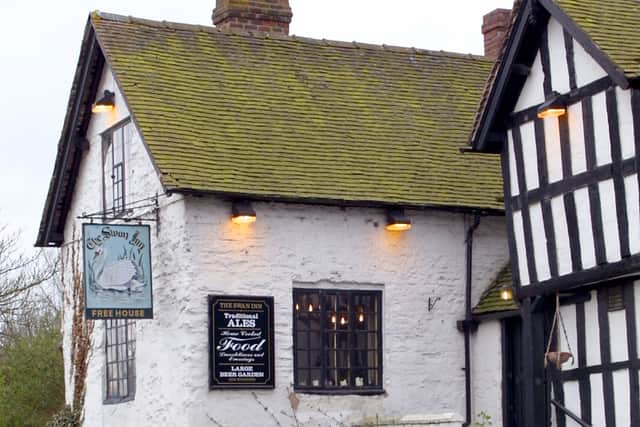
“Reputedly the oldest pub in Shropshire,” the glowing on-line publicity for the Swan Inn, a delightful watering hole in the picturesque parish of Aston Munslow, informs prospective customers.


“Serving good, traditional food, The Swan is a 14th century coaching inn once accommodating Dick Turpin.”
I have no doubt The Swan lavishes upon its patrons glorious food and top quality ales. But I question whether it accommodated Britain’s most famous highwayman.
It is one of many pubs in Shropshire and the West Midlands that have Dick Turpin among their lists of long-gone locals.
Dick also whetted his whistle at the Four Crosses, near Cannock, New Oscott Tavern, Birmingham, Ye Old Leathern Bottle, Wednesbury…
If pubs have whitewashed frontages and timbers, Dick drank at ‘em.
Add to the bulging catalogue, ancient inns throughout England that also lay claim to Turpin and you have an armed robber with a serious drinking problem.
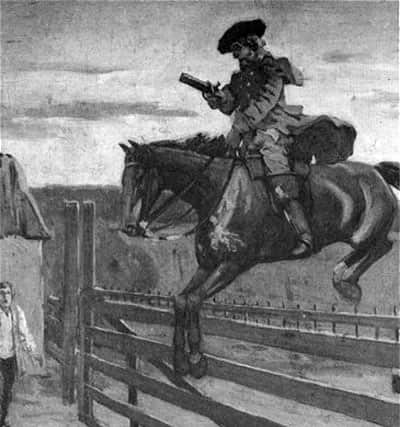
When Dick went on a pub crawl, he certainly covered marathon distances. Perpetually pie-eyed, it’s a surprise he managed to clamber astride faithful steed Black Bess, let alone hold a flintlock pistol straight.
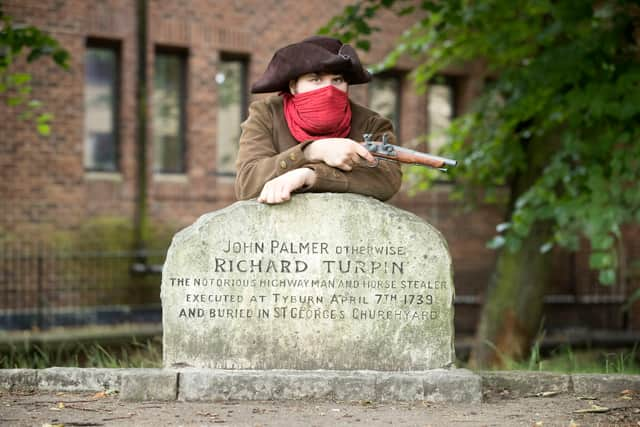
I can envisage the scene as the dashing, masked highwayman threatened coach passengers: “Have no fear ladies, the bounder’s hand is shaking like a leaf. He can hardly stand, let alone deliver, be gad.”
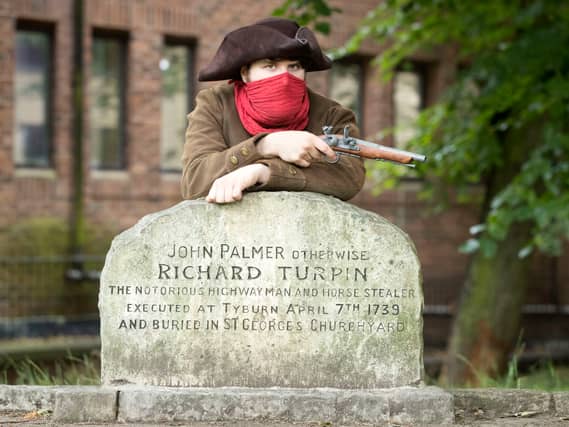
There is not a shred of hard evidence linking Turpin to any local boozer. And until I see an authenticated piece of graffiti on a urinal wall bearing the slogan “Dick Turpin wuz ‘ere, 1737”, I’ll treat all such boasts with extreme caution. Even extreme prejudice.
For example, folklore has it Turpin stopped off for a swift one at the New Oscott Inn – now a garden centre – on his way to Hull where he was arrested and hanged in 1739. It was his last flagon of frothing ale.
Nice tale, but fanciful.
Dick’s partner in crime, “Captain” Tom King, hailed from Stonnall, close to Sutton Coldfield, yet the pair built their criminal empire in the Epping Forest area.
Claims they spent nights together at Stonnall’s Welsh Harp have been rubbished. There’s one problem with reports a tunnel, begin enough for a highwayman and his horse, led from the inn to the safety of open ground. There isn’t one.
Historians are not even sure the “Tom King” who linked-up with Dick is the same man.
Legend will have you believe Turpin’s links to the Black Country, in particular, were thick and strong: he certainly couldn’t get enough of our beer.
The reality is his story has been distorted and glamourised beyond belief, many of his deeds pure pulp fiction. Long before Donald Trump bellowed “fake news”, there were tales of Turpin.
The handsome Dick Turpin we know – the template for courteous, gentlemanly thieves – was invented by a penny-dreadful novel, the persona then further polished by a succession of swash-buckling films.
His most famous adventure, racing Black Bess from London to York – a journey that claimed the nag’s life, is pure horse manure.
It was included by novelist William Harrison Ainsworth in his 1834 book Rockwood, which featured Turpin as a main character.
And Ainsworth pretty much copied the scene from 1727 work A Tour Thro The Whole Island of Great Britain by Robinson Crusoe author Daniel Defoe. Defoe’s highwayman was called William Nevison.
The piece of fiction was not only rubbish, it was recycled rubbish.
The real Dick Turpin was dishevelled, pock-marked and downright dangerous, an 18th century mobster who had no qualms about killing for cash. There was no virtue, just violence. He was more sadistic burglar than mugger on horseback.
Tristan Vetta, an Epping Forest warden who organised Turpin themed walks through the woodland, said: “Turpin was often romanticised as a Robin Hood figure, but he was a very dangerous, ruthless, violent criminal who robbed and tortured his victims in their own homes.
“He never did this for the betterment of other people, only ever for personal gain.”
We know he was baptised on September 21, 1705, in Hempstead, Essex, one of John and Elizabeth Turpin’s six children.
He pursued a career as a butcher, opening his own shop in Buckhurst Hill, Essex, and married Elizabeth Millington in 1725.
The businessman soon discovered menace paid more than meat, but meat was the prize in his initial criminal forays.
He first strayed from the straight and narrow as a deer poacher, part of a gang who helped themselves to the Royal Forest of Waltham’s substantial herd.
The mob were not to be messed with and gained a reputation as heavy-handed enforcers: centuries before gangsters grew rich through drug deals, deer poaching, on a near industrial scale, offered big bucks, if you’ll excuse the pun.
Heaven help any other rogue who attempted to muscle in on the Essex gang’s forest. After threatening to murder a gamekeeper and his family in 1733, a £50 bounty hung over the heads of the firm, that’s over £9,000 today.
Turpin was now a wanted man, yet cranked up the criminality.
The mob were on a lucrative and brutal burglary spree, they were the Quality Street gang of their day. Turpin bagged himself a nice Christmas bonus on December 19, 1734, when he and the boys raided the Barking home of 73-year-old Ambrose Skinner and snatched £300, around £52,000 today.
On January 11, 1735, Turpin pushed two pistols into the face of a Mr Saunders at the terrified victim’s Charlton home. In the same month, Rev. Dyde’s man-servant had his face slashed “in the most barbarous manner”.
On February 1, elderly “Widow Shelley” was beaten-up and robbed in her own forest cottage, Read’s Weekly Journal reporting: “Five rogues entered the house of Widow Shelley at Loughton in Essex, having pistols, and threatened to murder the old lady if she would not tell them where her money lay, which she obstinately refused for some time.
“They threatened to lay her across the fire if she did not tell them instantly, which she would not do. But her son, being in the room, and threatened to be murdered, cried out he would tell them if they would not murder his mother, and did, whereupon they went upstairs and took near £100, a silver tankard and all manner of household goods.”
They rifled the place. No “stand and deliver” warning, just savagery.
The sadism employed by Turpin and his accomplices is best illustrated by their February 4 raid on farmer Joseph Lawrence’s Edgware home. Turpin pulled down the 70-year-old’s breaches, pistol whipped his buttocks, others bludgeoned the old man round the head, poured boiling water on him and dragged him through rooms by his hair and nose.
A maid was raped. The gang got away with £30.
It was to be the beginning of Turpin’s downfall. Two of the mob were later spotted by Mr Lawrence’s servants and seized. Under intense interrogation, one, aged only 15, buckled, turned super-grass and spilled names.
In a description of the wanted men, the London Gazette stated: “Richard Turpin, a butcher by trade, is a tall, fresh coloured man, very much marked with the small pox, about 26 years of age.”
Turpin, with his gang being picked off one by one, was on the run and turned to the crime he is now famed for, highway robbery.
He and an accomplice, believed to be Thomas Rowden, first struck on July 10, 1735. Just days later they staged another hold-up again in Epping Forest.
With £100 on offer for his capture, Turpin lay low in 1736, some believing he moved to Holland. He re-surfaced a year later, this time working with Tom King.
The partnership ended violently on May 2 when King was mortally wounded during a gun-fight that followed the theft of a horse. He died 17 days later.
Turpin hid in Epping Forest, haunted by the shadow of the gallows. On May 4, he officially became a murderer, gunning down gamekeeper Thomas Morris who had spotted the fugitive and, armed with pistols, attempted to capture Britain’s most wanted.
Morris’ bravery was perhaps bolstered by the eye-watering £200 reward pinned to Turpin.
Dick pulled off another Houdini act, fleeing to Brough, near Hull, then re-emerging under the alias of John Palmer. He was betrayed by his own white-hot temper and disdain for authority.
On October 2, 1738, he shot another man’s gamecock in the street, then threatened to shoot the angry owner. He was to be merely bound over for that altercation, but refused, through bloody mindedness, to pay the fine.
The punishment was cranked-up, further enquiries unmasked the villain.
Turpin was hanged on April 6, 1739, at Knavesmire, near York, and, in death at least, showed the dash and courage that time has bestowed on him. Resplendent in new shoes and shirt, bought for the occasion, he “played” the large crowd, bowing, grinning and waving when confronted by jeers.
Gentleman’s Magazine reported: “Turpin behav’d himself with amazing assurance and bow’d to the spectators as he passed.
“As he mounted the ladder, feeling his right leg tremble, he spoke a few words to the topsman, then threw himself off and expir’d in five minutes.”
That was the end of Dick Turpin, forever portrayed as a dandy highwayman.
Dandy? The ghost of Joseph Lawrence, beaten, scalded, tortured and humiliated by the thug, may beg to differ.
Dandy? Downright dangerous is a more fitting description.