
Star comment: Welcome news over breast cancer survival rates
There are good reasons why we hear so much about the travails of the NHS.
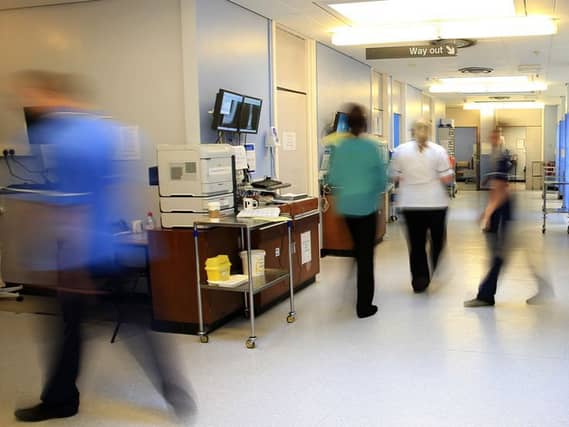

The institution has moved backwards amid overwhelming demand for services, the impact of Covid, underfunding, and inconsistency between different regions.
And yet, for all the problems with the NHS, in some areas, real progress is being made.
The proportion of women who survive breast cancer, for instance, has increased substantially since the 1990s.
A survey shows that women diagnosed between 2010 and 2015 were 66 per cent less likely to die from the disease within five years, compared to those diagnosed in the 1990s. It is a remarkable improvement and one that we can take comfort from.
A woman’s risk of death within five years of diagnosis was 14.4 per cent, for those diagnosed between 1993 and 1999.
This fell substantially to 4.9 per cent for women diagnosed between 2010 and 2015, according to the study, which has been published in The BMJ.
It is a fantastic statistic that provides real evidence of the huge steps being made in both the diagnosis and treatment of cancer.
The drive to find a cure for all cancers must continue, as should the message that an early diagnosis is key. If you have any suspicions that your body has changed, in whatever part of the body, it is essential to get yourself checked out.
Public awareness campaigns are ever-improving and the message that prevention is better than cure has reached millions of people. Services and treatments are also better, though, while statistics are improving, more must be done to reduce waiting lists – lest the good work is undone.
***
Issues surrounding the jailing of Carla Foster are incredibly sensitive.
The judge who jailed her was sympathetic but said he had to send her to prison by the letter of the law.
That law dates back to 1861, which immediately raises questions as to whether it is fit for purpose in the modern age.
The right of women to make decisions about their bodies is fundamental. We have seen the justified outrage in America where some states have removed that principle from many millions. But it is also right for laws to be in place to protect an unborn child that is close to its full term.
This case is tragic, but it has at least raised an important debate as to how future situations like this should be handled.
It is for Parliament to now set about reviewing the effectiveness, relevance and appropriateness of existing legislation.
Comment Guidelines
Iconic Media encourages reader discussion on our stories. User feedback, insights and back-and-forth exchanges add a rich layer of context to reporting. Please review our Community Guidelines before commenting.