
Peter Rhodes on Putin's war, eternal life and dying of optimism
Cambridge University has set up a unit to study research on prolonging human life, perhaps for ever.
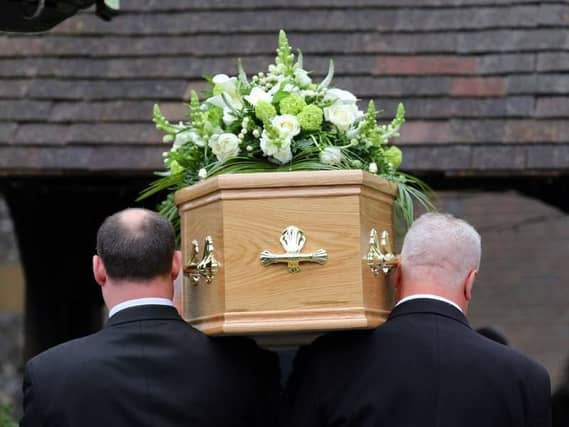

This prompts commentator Dominic Lawson to admit he fancies the idea of eternal life. He confesses: “The idea of being dead petrifies me.” And of course, he's not alone. On balance I think I'm happier as a warm, sentient being writing this column than a cadaver rotting in a box. By just about any yardstick, composing is better than decomposing.
In my experience, people who claim to have no fear of death actually have either no imagination or a pretty shaky grasp on the truth. I recall many years ago a moment of blinding veracity in an editorial conference as we discussed a reader who had just reached her centenary. “Seriously,” asked one bright young hack, “who wants to live to be 100?” An old hack replied: “Just ask anyone who's 99.”
More proof that the Covid inquiry is not all about hindsight. When Professor Sir Chris Whitty tells the hearing that allowing mass sports meetings was “logically incoherent”, he is not announcing new findings. He is repeating what many of us feared at the time. The warnings were clear and vivid, yet fans hoped for the best. The Cheltenham Festival and other sporting events went ahead and the impression was created that all was well. How many people died not of ignorance but of optimism?
As Putin's war rumbles on, I re-read The Crimean War, the excellent companion book to the 1997 Channel 4 series of the same name. The conflict, from 1853-56 ended when Russia was virtually bankrupt, her dead exceeded 450,000 and Russian soldiers, pitched against a coalition of France, Britain and the Ottoman Empire, had been seen shooting their own officers. It was a war punctuated with ghastly blunders on all sides. Neither side could really win but both sides were determined not to lose. Meanwhile, in Ukraine, 2023 . . .
Trivia corner. The last veteran of the Crimean War was called Timothy and died in 2004, aged at least 150. He was found on a ship in 1854 and served as a mascot throughout the war. Timothy, as you may have guessed, was a tortoise.
Comment Guidelines
Iconic Media encourages reader discussion on our stories. User feedback, insights and back-and-forth exchanges add a rich layer of context to reporting. Please review our Community Guidelines before commenting.