
Peter Rhodes on old sky taxis, the future for London and three snags facing law-makers
Nothing new under the sun? After my recent piece on the looming prospect of hi-tech air taxis clogging up our skies, a reader sends me an advert for an air-taxi service by three-seater monoplane from Grimsby airport to your chosen destination at just fourpence per mile, “as the crow flies.” The advert appeared in August 1935.
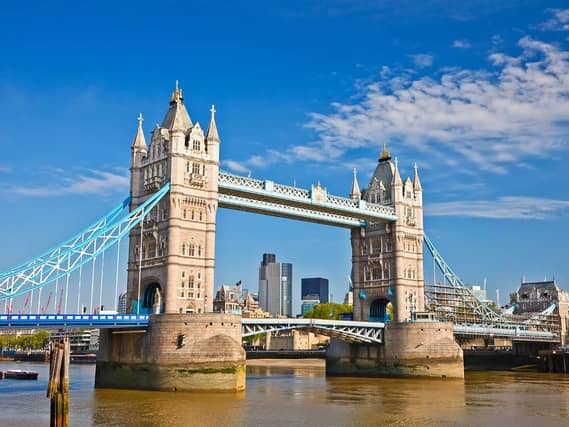

In yesterday's column I referred to London as “our capital". But does that sort of relationship still exist between the great city and its hinterland? London is a vast international colony, more like a city state than a mere city. The biggest city in western Europe, London is distinctly different from the rest of Britain by just about any measure you use, from ethnic mix (300 languages are spoken) to individual wealth, social attitudes, public demos, wealth inequality and even climate (all that concrete generates much heat).
Indeed, London is so different from the rest of the country, and growing more different with every passing year, that its ancient claim to be capital of GB, or even of England, is barely tenable. Cardiff, Belfast and Edinburgh function perfectly well as the undisputed capital cities of Wales, Ulster and Scotland. Either Birmingham or Manchester would make a more Englishy sort of capital than London. Has the time come for London to drop its capital pretensions and go its own way? I'm sure we provincials would wish it every success.
According to the old saying, knowledge is power. This presumably means plans for a “league table” of migrant-related crimes will give our criminal-justice system great power indeed. Except that it won't.
The scheme, proposed by former immigration minister Robert Jenrick, is to compile annual figures for criminals based on their country of origin. Thus, a sudden spike in shoplifting by Belgians or TV-licence dodging by Inuits can be dealt with by toughening up the appropriate visa and deportation rules. And only three tiny snags:
Firstly, a Crown Prosecution Service which refuses to prosecute. Secondly, a court system which already has a two-year backlog of cases. And thirdly, a plethora of lawyers prepared to argue that, possession of a TV licence is regarded as deeply dishonourable in Inuit culture. And back to square one.
Comment Guidelines
Iconic Media encourages reader discussion on our stories. User feedback, insights and back-and-forth exchanges add a rich layer of context to reporting. Please review our Community Guidelines before commenting.