
Peter Rhodes on mice, men, peanuts and Britain's nightly torrent of non-woke telly
I sympathise with the harassed TV newsreader who followed her colleague's summary on the death of President Jimmy Carter with the question: “So that 's his career in a nutshell?” Jimmy Carter was, of course, a peanut farmer.

Education bosses in Wales are banning Steinbeck's masterpiece, Of Mice and Men, from the GCSE curriculum on the grounds that it contains “racial slurs.”
Well, maybe it does and maybe the growing minds of Welsh children should be protected from such pollution.
The curious thing is that while educationalists all over the West are hunting down politically incorrect terms with a fine tooth comb, no-one seems troubled by the torrents of un-woke scripts freely available on nightly TV.
On the Freeview channels you can find 1970s' predatory-male attitudes in The Likely Lads and unrepentant colonialist language in It Ain't Half Hot, Mum.
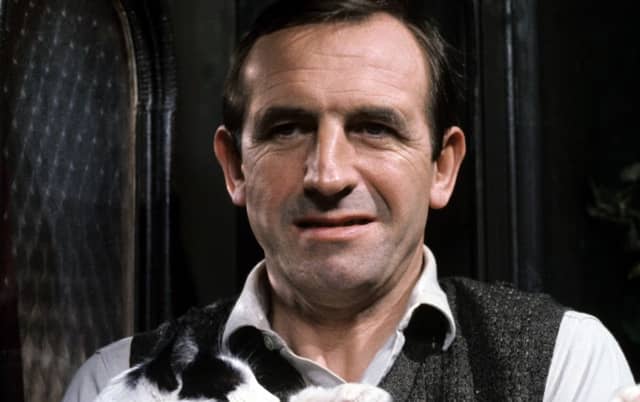
Meanwhile in Rising Damp, the world's worst landlord Rigsby (Leonard Rossiter) is busy lecturing his black tenant Philip (Don Warrington) on the great benefits of the British Empire and the racial superiority of the white man. I'm not sure why this horrific legacy of the 1970s is still allowed but so far, the skies have not fallen in. Not even in Wales.
Meanwhile, another landmark of British education takes a battering. As every school kid knows, Lord Nelson's last words at the Battle of Trafalgar, addressed to his flag captain, were: “Kiss me, Hardy.”
Not so, according to a letter unearthed recently. Written by an officer a few days after the battle, it claims that Nelson passed away with the words: “I have but lived this day and now I die content.” Stirring stuff but that's an awful lot of words to wring out of one final breath.
I much prefer the account I was told some years ago. In this version, before the battle Hardy and Nelson had been discussing fate, luck, destiny, fortune, providence and all that stuff. At the end, Nelson simply uttered a couple of words.
Given the cacophony of cannons and muskets, it would be hardly surprising if someone mis-heard Nelson's adieu which was, allegedly: “Kismet, Hardy.”
Comment Guidelines
Iconic Media encourages reader discussion on our stories. User feedback, insights and back-and-forth exchanges add a rich layer of context to reporting. Please review our Community Guidelines before commenting.