
'There is a delicate line between patriotism and exclusionary nationalism' - Your Letters: September 23
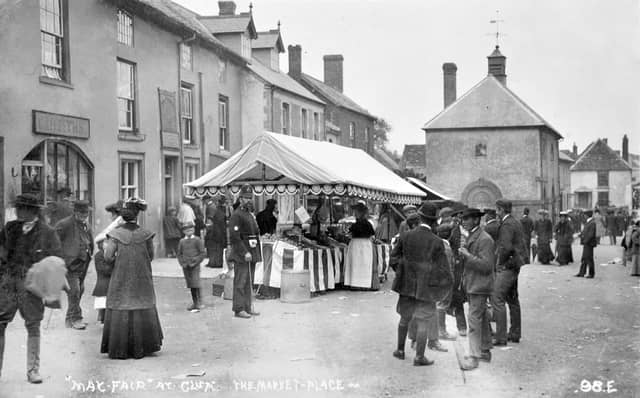
PICTURE FROM THE ARCHIVE: “'May Fair’ at Clun. The Market Place” is printed on the front of this postcard, from the collection of Ray Farlow. The postcard was franked at Bishop’s Castle on August 17, 1906, although the image itself presumably dates from May 1906 with it being a May Fair.

DELICATE LINE ON FLYING OF FLAGS
Whilst no one can reasonably deny the right to fly the St George’s Cross or the Union Jack on private property, the matter becomes more complex when it comes to affixing flags or notices to public street furniture.
If individuals who choose to install such flags were also committed to maintaining them – much like our local councils or highways departments do – there would be little cause for concern. However, the initial surge of nationalist enthusiasm may prove short-lived, leaving flags neglected and deteriorating. This, in turn, risks shifting the burden of clean-up and maintenance onto already stretched council budgets.
Comparisons to flag displays in the USA or other nations are not entirely appropriate. The sight of streets lined with flags can evoke uncomfortable parallels with imagery from 1930s fascist regimes, where symbolism was often used to assert dominance and conformity.
There are also practical safety concerns. Flags affixed to lampposts or other street fixtures could interfere with vehicles or overhead cables, potentially causing serious accidents.
Ultimately, there is a delicate line between patriotism and exclusionary nationalism. When public displays of identity begin to overshadow civic responsibility and inclusivity, we must pause and consider the broader implications.
Ian Davies, Shrewsbury
HELP HOSPICE IN YOUR WILL
Hospices are experiencing a surge in demand, which will continue to grow. With Government funding only covering around 40 per cent of the care that hospices provide, charitable donations such as Gifts in Wills are absolutely crucial to making sure hospices can provide dedicated, specialist care to everyone who needs it.
Our data shows almost 6,000 hospice nurses are paid for by legacy gifts in Wills per year across the UK.
Worryingly, whilst legacy giving is growing across the charity sector, hospices' share of the legacy market is declining. Despite over a third of the public saying that they'd like to donate to their local hospice, only 27 per cent have considered gifting to a charity in their Will.
A coalition of 143 British hospices is uniting to highlight the impact that hospices have on the people they help and their families. We’re encouraging more people to consider leaving a gift in their will to their chosen hospice, helping to secure the future of Britain's hospices.
Catherine Bosworth, Director of Income Generation and Grants at Hospice UK
Send us your letters for publication to [email protected]
Comment Guidelines
Iconic Media encourages reader discussion on our stories. User feedback, insights and back-and-forth exchanges add a rich layer of context to reporting. Please review our Community Guidelines before commenting.