
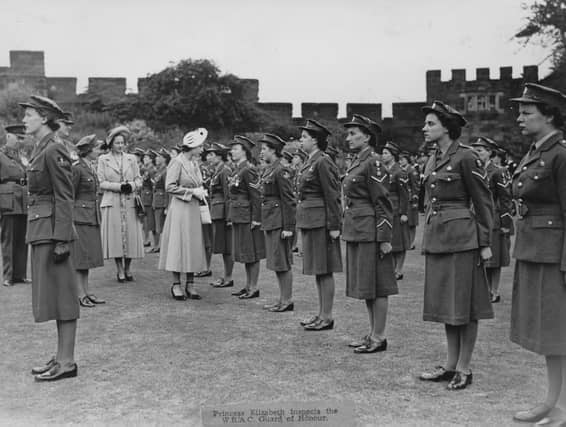
'Residents are right to be concerned about emissions from the proposed Hixon incinerator' - Your Letters and a royal visit to Shrewsbury in a 1949 picture from the archives
Health concerns over incinerators, talk of better times in 2026 - or maybe not, and considering life's oddities...

Health concerns over incinerator
Hixon resident Amelia Garner and others are right to be concerned about emissions from the proposed Hixon incinerator harming health.
ONS data show a consistent link between exposure to incinerator emissions and higher rates of infant mortality and yet the Environment Agency continues to issue permits for incinerators whilst their expert advisers fail to check relevant health and mortality data around incinerators.
After the SELCHP incinerator started operating in Lewisham in 1993, the previously falling infant death rate in Lewisham suddenly rose, just like the rates of stillbirths, percentages of low birthweight babies and the asthma death rate at all ages.
The Inside Croydon article of 15 October 2024 reported how two doctors with responsibility for public health declined to follow-up the link between incinerators and infant mortality – just like the Environment Agency today, according to the letter they sent Stuart Anderson MP dated 25 September 2025, which he kindly forwarded to me.
Michael Ryan, Clee Hill
Why 2026 may be a bit tricky
Aunt Dolly is the great optimist within the family, her glass is always half full.
In contrast Uncle Norbert and I are a glass three quarters empty kind of chaps, who at times cannot even see a glass!
Surely the year 2026 will bring us better times for all says Aunt Dolly.
But Uncle Norbert and I are not so sure looking at previous centuries.
1926 saw a General Strike across the UK. Let us hope that all Network Rail employees, Underground workers, NHS staff and the Peoples Liberation Army, otherwise known as the Unite Union, are not planning to celebrate the centenary in their own unique fashions.
1826, James Sharp of Northampton installs the first domestic gas cooker in his home. Just 2 days later he starts nipping out for takeaways.
1726, London, and Margaret Clap (honest guv that was her name) is prosecuted for keeping a "Molly House," a house of male prostitutes. This just goes to prove that female enterprise was flourishing even in the 18th century.
1626, King Charles dissolves Parliament. Has his namesake and distant successor had any thoughts along the same lines? It would be very popular with many and save a lot of hot air and paper.
1526, Bartholomew Barnaby Steggles flees from Shropshire to deepest Norfolk when the Sherriff starts investigating his business of arranging for people to go to The Americas for a cut rate price that would only take 4 weeks. Once out of sight of land his ship just sailed around in circles for four weeks then landed the passengers in the dark next to Bexhill-on-Sea.
Peter Steggles, Rushbury
Time to consider life’s oddities
Now in my latter years and not working for a living, I have time to consider many things. Many of these things are news items; which one either believes or doesn’t. After the two English Civil Wars this country was theoretically ruled by the people who live in it, not just the rich who had inherited monarchy. However ‘proper’ elections did not exist until 1928 when all mature adults were allowed to vote.
Fast forward 97 years and our elected representatives seem to concentrate on some things which seem a little trivial to me: drive your car at two miles per hour above the speed limit and you can gat a fine. Park your car on the pavement (outside London) forcing people in wheelchairs, pushing buggies or pushchairs or people with macular degeneration; to venture onto the highway and nothing is done. But pour the dregs of a vending machine drink down a drain and you leave yourself open to a fine. Farmers frequently pollute waterways and nothing is done.
Andy Chetwood, Dawley
Hate speech is not acceptable
Martin Bristow argues for greater freedom of speech, or so it would seem.
What J D Vance, Elon Musk and Tommy Robinson are pressing for is not freedom of speech, but rather the freedom to indulge in hate speech without consequence.
A civilised and cohesive country needs guardrails to prevent racial and religious intolerance and incitement to political violence.
There are people who believe that it should be perfectly acceptable to indulge in racial and religious slurs and bigotry and that hate speech should be decriminalised. Freedom of speech cannot be an absolute.
If it involves the ability to unfettered inciting of hatred of minority groups it becomes a platform for extremists.
If you wish to determine where you stand on this issue, consider the abuse Jess Carter received. If hate speech was made acceptable her abuser would not be held accountable for such vile actions.
Dr T Wynne-Jones, South Staffs
Remaining silent needs redress
The right to remain silent in police interrogations is considered a fundamental principle to a fair trial.
However the recent murder at Bescot station where the accused remained silent in police interview raises questions on whether there should be a law change and consequential penalties brought in on that specific issue in the event of a guilty verdict.
If the solicitor advises their client to play the no comment card throughout the interview they are both jointly responsible for a policy of non cooperation and blanking the police in their duty to investigate a murder. Therefore both parties concerned should be brought to task at the end of the trial.
So let them keep their fair trial and remain silent in non self-incriminating police interviews, but on their heads be it in the event of a murder guilty verdict.
May I suggest an extra three years jail on top of the judges life in prison minimum term recommendations for blanking the police in their line of enquiries for the accused.
The defence legal eagles who go whistling all the way to the bank for representing the accused should have 10 per cent retention on legal aid fees imposed as a state redress for the cost of wasting police interview time.
To talk or not to talk that is the question to govern police interviews. An opening statement of the latter's penalties would concentrate the minds a little of the accused and their brief's in regards of their collective choice to remain silent.
In the event of a not guilty verdict on the accused we would have to accept the jury's decision. However it's reasonable to ask the question do jury's have the complete story of events with the right to remain silent being activated?
Not convinced it would work? Seems a little harsh? The legal profession would be up in arms?
What alternatives are there?
The status quo is where the law is an ass and Joe Public Finance Limited is being taken for a ride up the swanny.
Unfortunately the silent treatment and repetitive no comment answers are now enshrined in the criminal contumacious mindset as there is no redress on the issue. It is being used to stick two fingers up to law enforcement and the irony is they are getting state funded advice to enable them to do so.
The whole legal aid and sentencing system needs a radical shake up to restore the nations collective faith and to deliver justice to the UK taxpayer.
England gave the accused right to remain silent in the 17th century with good intentions.
After 300 years is it now time for a revaluation?
I rest my case my milord.
Stephen Aston, Midlands
Have an opinion? Want to be heard? We want to hear your voice!
Write to Readers' letters at [email protected]
Letters to the editor must include the writer’s name and address and will only be published anonymously in exceptional circumstances. The editor reserves the right to condense or amend letters.
Do you have any pictures from the past you would like to share with us?
Do need help recognising an old street, old faces? If so, send them to [email protected] including your name, where you are from, and as much information as you can about the photo(s) and we will publish as many as we can online and in print.
Comment Guidelines
Iconic Media encourages reader discussion on our stories. User feedback, insights and back-and-forth exchanges add a rich layer of context to reporting. Please review our Community Guidelines before commenting.