
Help us fight breast cancer - Letters for May 19
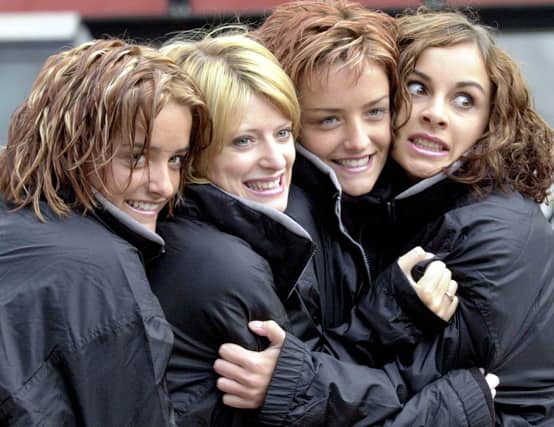
A publicity shot that dates from May 6, 2000 at Drayton Manor Park in Staffordshire. Hugely successful pop girl band B*Witched huddle in fear before braving the new Apocalypse free fall ride at its launch. The ride was a major new development at the popular theme park and zoo.

Help us fight breast cancer
Since 1999, researchers at the Breast Cancer Now Toby Robins Research Centre at The Institute of Cancer Research have been delivering life-changing breakthroughs in breast cancer treatment and prevention.
From uncovering new ways to treat breast cancer that are transforming thousands of people’s lives a year, to revealing that a blood test can detect breast cancer coming back months earlier than hospital scans, our scientists have been at the forefront of breast cancer research breakthroughs for 25 years.
These extraordinary advances are only possible due to the generosity and commitment of our supporters, and I want to give a heartfelt thank you to all of you for your continued support.
In the 1990s, three in 20 women diagnosed with early invasive breast cancer would die from the disease within five years. Thanks to improvements in diagnosis and treatment, it’s now one in 20.
Yet despite this incredible progress, too many people are diagnosed too late and are enduring side effects of treatment that can be gruelling. And those with incurable secondary breast cancer still face the frightening reality of limited treatment options.
The stark reality is that 11,500 women and 90 men still die from this devastating disease each year in the UK. Identifying through research how we better diagnose and treat breast cancer is vital to us changing this.
We’re on the brink of discoveries that will further transform how we understand and treat breast cancer. New developments that harness the power of the immune system to kill cancer cells, and artificial intelligence (AI) could help us discover new ways to treat the disease. But none of this is possible without continued investment.
Please continue to support Breast Cancer Now and help us to carry out our world-class breast cancer research. Together we can accelerate progress towards fewer cases, fewer deaths and a better quality of life for everyone affected by breast cancer.
For more information visit breastcancernow.org/research
Claire Rowney, Breast Cancer Now
Mental health an issue at work
As we conclude Mental Health Awareness Week, we are reminded of how crucial human connection is to our mental health and wellbeing, especially at work. This year’s theme, ‘Community’, highlighted the need for workplaces to build stronger, more supportive environments. Most adults spend at least a third of their lives at work. Feeling connected, valued, and supported not only improves mental health, but also strengthens business resilience and performance, and productivity.
Around 16.4 million working days were lost due to work-related stress, depression, or anxiety in 2023/24. Research shows that only 10 per cent of UK employees are actively engaged at work. This places the UK among the lowest in employee engagement across the EMEA (Europe, Middle East and Asia) region. That’s why creating supportive workplaces is crucial. At Mental Health First Aid England, our vision is of a nation where everyone’s mental health matters. Through our evidence-based training, consultancy, and campaigning, we help organisations create mentally healthy workplaces where people and businesses thrive. Let’s work together to create mentally healthy workplaces where every connection counts.
Sarah McIntosh, Mental Health First Aid England
I’ve had enough of dogooders
Well done to all you dogooders and the Human Rights Act.
Children in school must be treated like snowflakes, however they behave, ie attacking teachers.
But they can't tell them off or touch them in anyway even to push them off, so in a word they know they can do want they like.
However, if we speak to a call handler, bank assistant and so on we have the phone put down on us or turned away from places. How is this right?
Now still on teachers, I hear they’re talking about striking again - why?
Where else do you get approximately three months holiday a year with pay?
Oh I hear you say, but we stay behind after school to mark paper.
So what? They have a good job with a very good pension.
Name and address supplied
Is Reform more than slogans?
Perhaps Reform's success in the elections reflect the rejection of Tory sleaze coupled with the incompetent leadership of Johnson and Truss; and a perception Starmer's Labour government have yet to gain the confidence of the electorate.
If the electorate are showing their disaffection to the main political parties then voting for a inexperienced populist party without political philosophy is not reform. The influence of Farage is significant. Farage's skill is as a strategic communicator identifying emotional undercurrents and amplifying them into movements that function to disrupt; not govern. Take for example UKIP, Brexit and now Reform.
A few slogans; "Take Back Control", "We Want Our Country Back" and "People Before Politicians" have wooed millions of voters and made convincing statistics for the 'wonks'.
Without any cohesive policies, or the required patience needed to bring about incremental political change; will Farage become prime minister, and Reform gain the affection of those who elected them? I doubt it.
Roger Norton, West Mids
Comment Guidelines
Iconic Media encourages reader discussion on our stories. User feedback, insights and back-and-forth exchanges add a rich layer of context to reporting. Please review our Community Guidelines before commenting.