
GCSEs matter, but there’s so much more than just exams
Educationalist Roshan Doug on why we should widen our perspective on learning
Whilst the country awaits tomorrow’s GCSE results, perhaps we should ask a fundamental question: what is the purpose of education?
We all know that, historically, the foundations of our education system were set up in 1944 Education Act.
But somewhere along the way, O-levels – and then from 1988 GCSEs – have become the prized trophy of secondary schooling.
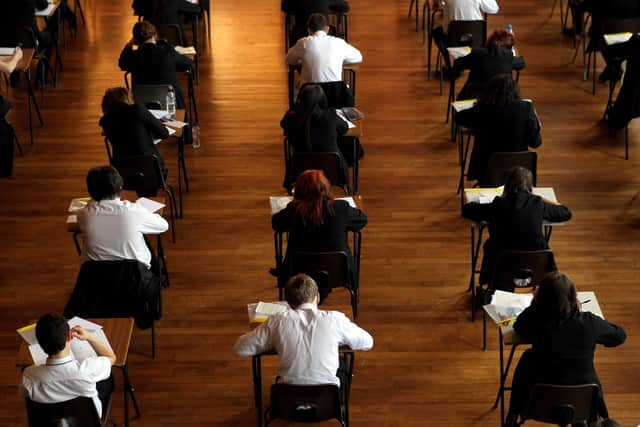
We have created an examination culture in which a teenager’s worth can appear to be reduced to a collection of numbers and letters.
A grade 9 is celebrated almost like an Olympic gold medal. And a disappointing result can feel like a personal failure.
But a GCSE is simply a qualification. Nothing more.
It does not tell us whether a young person is imaginative, resilient, curious, practical, entrepreneurial, kind, courageous or capable of thinking independently. And, frankly, neither does a degree.
For years, we have encouraged young people to follow the same conveyor belt: GCSEs, A-levels, and university degree.
But do we really need every young person to go to university? And just how many universities and degree courses do we actually need
Undoubtedly there are some excellent universities, doing a worthwhile job, and Britain should be proud of them.
But we have also created a vast higher-education sector in which university has become the default destination for young people, rather than one of several legitimate educational routes.
At the same time, Britain desperately needs builders, electricians, and plumbers.

The government’s own research identifies significant shortages in sectors including construction, manufacturing and education, alongside continuing demand for engineering, digital technology and science.
So why do we still behave as though the academic route is somehow superior?
I believe we have created a hierarchy in which the young person spending three years writing essays about Marxism, feminism or cultural theory can be regarded as following a more prestigious educational path than the young person spending three years learning how to design, build, and repair machines.
That is not just snobbery – it is economically dangerous.
We need to restore respect – and provide more funding – to vocational education and training courses. And we also need to ask some uncomfortable questions about what happens in Higher Education.
Universities should be places where young people encounter competing ideas, challenge assumptions and learn to think for themselves. A teacher’s job is to teach students how to think, not what to think.
That is why debates about the nature of political activism, DEI and academic appointments matter.
Education has placed political fads at the forefront – Black Lives Matter, Me Too Movement, PRIDE, and multiculturalism not to mention self-identity and pronouns.
This is particularly apt in the tragic wake of Jason Arday death’s – the professor who faced allegations of fabricating his qualifications, experience and background. It makes you wonder, who are teaching our youngsters and what exactly are they being taught?
Representation of BAME – including people like Professor Arday – is important. But it cannot be allowed to replace merit, just as political fashion cannot replace intellectual rigour.
If universities are going to receive billions of pounds of public money and educate the next generation, taxpayers are entitled to ask a simple question: what are we getting for our money?
Perhaps we should have fewer universities and degree courses, but make them of excellent quality.
That way we wouldn’t need so many lecturers. And we could get rid of useless academics who have very little passion for the job or their subject.
In addition, we should stop using universities as enormous holding bays for young people who have been told that vocational education is somehow beneath them.
Because the young person who can wire a house, build a wall, fix a roof, or install a heating system is not less intelligent than someone who can write a 10,000-word dissertation.
So tomorrow, when those GCSE results arrive, yes, let’s congratulate the youngsters who have done well. Why not? But let’s also tell the teenager who has not achieved the grades he/she hoped for that their life has not been decided at 16. And let’s tell the youngster who does not want university that they are not a failure. They may be exactly what Britain needs.
Because education should not be about producing the maximum number of graduates.
It should be about producing the maximum number of capable human beings who can contribute meaningfully to society with skills that would benefit us as a society.
To this end, there is a very simple test we could all apply.
How many times have you desperately needed a plumber, carpenter or mechanic?
Now ask yourself how many times you have been in desperate need of somebody with a degree in media studies — or has completed a 70,000-word thesis on Coronation Street or the evils of the British empire?
Says it all, doesn’t it?
Dr Roshan Dog is a educationalist, social commentator and a former Birmingham poet laureate.
Comment Guidelines
Iconic Media encourages reader discussion on our stories. User feedback, insights and back-and-forth exchanges add a rich layer of context to reporting. Please review our Community Guidelines before commenting.