
The surprising Shropshire link hidden in a New Zealand mining village
The parallel universe in New Zealand where there was a Coalbrookdale, an Iron Bridge, and an Incline
There's a small museum celebrating the heritage of the Coalbrookdale area, but they got rid of the Iron Bridge as they no longer had use for it.
This is not the Coalbrookdale in Shropshire which is now celebrated as a World Heritage Site, the cradle of the Industrial Revolution, but a parallel universe the other side of the world.
Coalbrookdale in New Zealand was at the heart of a mining area which was a hive of activity for generations.
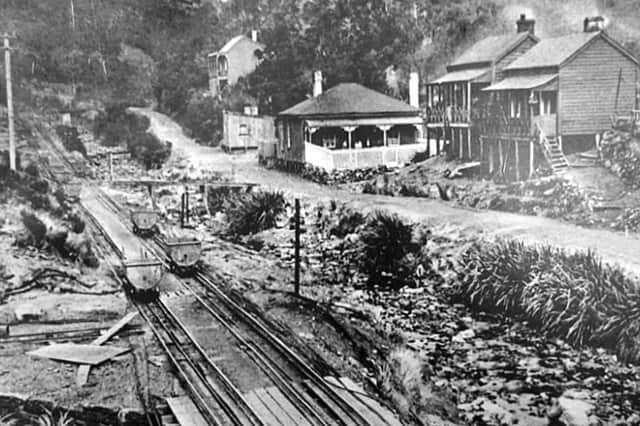

Those illustrious names, Coalbrookdale and Iron Bridge, were not a coincidence. They were named directly after their Shropshire counterparts many thousands of miles away. That small community near Westport on the South Island even had an Incline.
In another echo, after its heyday passed it became a post-industrial area populated by a few relics, attracting school parties and other visitors, a small-scale reflection of what has happened at the "real" Coalbrookdale and Ironbridge, which as we all know are now a mecca for tourists.
The geologist and minerologist Julius Haast discovered coal on this inhospitable 2,000ft plateau in 1860 and it was Haast who chose the name Coalbrookdale associated with the drift mine and settlement which grew up in a gully.
In 1880 the first consignment of coal went down the Denniston Incline, described by locals as the Eighth Wonder of the World. It was a tramway for coal, with a drop of 1,800ft and a precipitous gradient as steep as 1 in 2.2.
Coalbrookdale was a township of 190 people, with boarding houses and a hotel, and what passed for a shop.
The Denniston Plateau had 1,500 people living up there. The people at Coalbrookdale were keen to keep their identity, as were the people of Denniston, a town of 900 people.
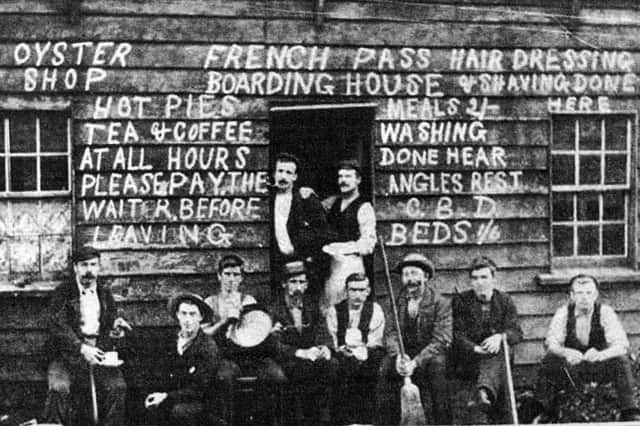
There was rivalry. If you lived at Burnett's Face, which was very close to Coalbrookdale, you were known as a Burnett's Face gully rat or mud rat, and if you lived on Denniston - it was always referred to as "on" Denniston - you were a Denniston dunny can diver. Dunny cans were useful anyway, because there was no sewerage, and the ground was rocky.
Part of the Coalbrookdale settlement was known as Poverty Point, where single men lived in canvas shelters.
Denniston Incline, which worked in much the same way as Coalport's Hay Inclined Plane, operated until 1967.
In modern New Zealand Denniston is better known than Coalbrookdale because it was the staging post to get the coal down and supplies up. If ever there was a strike the company would shut the Incline down to starve the strikers out. Today Denniston's significance is reflected by its status as a Category 1 Historic Place.
Because of the altitude there were no vegetable gardens and no livestock, so people on the plateau were very dependent on the Incline to bring supplies.
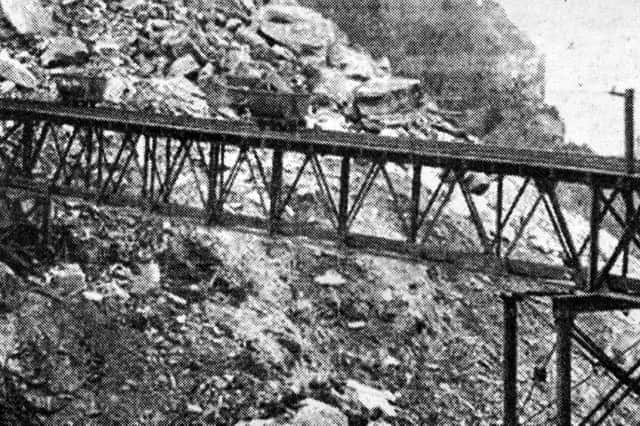
An iron bridge leading into a mine was built over a gorge to take away the coal along a "rope road" which worked in a similar way to a ski tow. The bridge and mine took the name Iron Bridge in homage to Abraham Darby's famous creation in Shropshire.
Mining on the plateau declined in the 1930s and Coalbrookdale died in the 1940s. With the houses being of timber and corrugated iron, they were not built to last, and the last time people lived there was the mid-1940s. They basically just walked away from their houses, which then fell down, leaving a bleak valley with a few piles of bricks and chimneys, and twisted corrugated iron, all that remained of the community.
At the turn of the new millennium there were only three permanently inhabited houses on the whole plateau. The Iron Bridge also disappeared. A new mine entrance was opened and as the Iron Bridge was no longer needed they pulled it down.
Mining on the plateau ended completely in 1997-98.
While Coalbrookdale and Iron Bridge have disappeared into history in New Zealand, they are not forgotten, and there is a preservation and heritage group called Friends of the Hill which celebrates the history of the plateau and those who worked there.
Nor has the Iron Bridge mine faded away quietly. In the 1940s it spontaneously combusted and from time to time plumes of smoke can still be seen coming from the mine today.
Comment Guidelines
Iconic Media encourages reader discussion on our stories. User feedback, insights and back-and-forth exchanges add a rich layer of context to reporting. Please review our Community Guidelines before commenting.