
I remember when Rackhams meant something. The rise and fall of Birmingham’s beloved department store
Another ‘old friend’ disappears into history, writes Dr Steve McCabe.
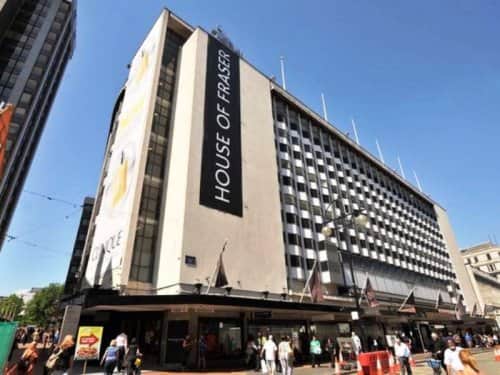
News that the iconic ‘Rackhams’ building on Corporation Street, currently trading as House of Fraser, will close in late June 2026 brings to an end department store retailing that’s occurred on that site since 1960.
Those who’ve visited the store in recent years will not be surprised.
The ‘posh shop’ so many people in Birmingham and the West Midlands came to know and love over the last sixty-plus years has been in a precarious state for the last eight years.
Rackhams, which had been purchased by Harrods in 1955 and became part of House of Fraser in 1959 when it bought Harrods, following ownership by Mohamed Al-Fayed between 1985 and 1994, was hived off and floated on the London Stock Exchange.
House of Fraser was taken over by a consortium of investors (Highland Group Holdings) in 2006 and majority purchased by Chinese conglomerate Sanpower Group in 2014 and entered into a ‘temporary arrangement’ in May 2018.

A ‘temporary arrangement’ provides any business with a way to temporarily deal with its affairs which avoids liquidation and therefore avoids creditors or legal proceedings and enables it to develop a plan to save as much of the operational capacity as possible.
Publicly, this was a warning sign that the former Rackhams in Corporation Street – it had been rebranded House of Fraser in 2003 – was in danger.
However, a restructuring plan in June 2018 by House of Fraser Group offered hope in that though 31 stores would be closed, which would result in 6,000 job losses, Birmingham would survive.
Unfortunately, the plan was not successful in achieving the short-term investment of cash urgently needed, and on 10th August, House of Fraser formally went into administration, which put all stores, including Birmingham, back in danger.
The same day, House of Fraser, a group that had been bought by Sanpower Group only four years previously for £450 million, was saved from administration by Mike Ashley's Sports Direct chain, which attained control for £90 million.
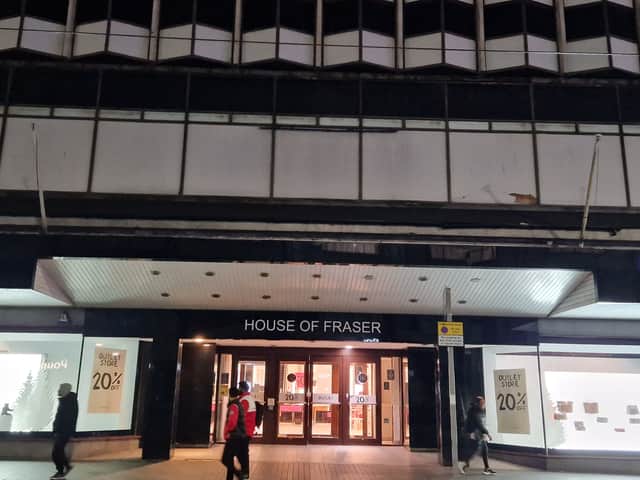
What we’ve seen since then is the Birmingham store being used as a means to sell off stock from the rest of Ashley’s portfolio and, more significantly, an alarming reduction in the range of goods sold.
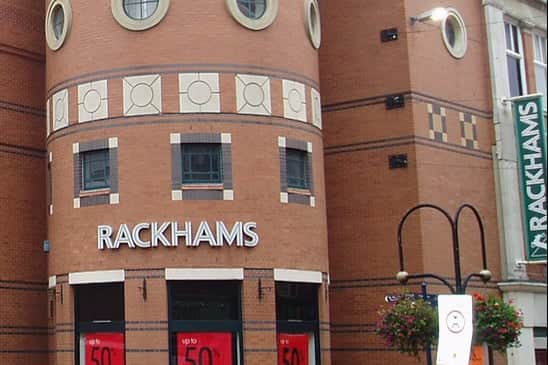
For those who’ve visited on regular occasions, a trip to the store I recall with a sense of wonderment as a child was visibly being transformed into something very different from the shop which so many visited but probably discovered to be far too pricey for their budgets.
As far as House of Fraser was concerned, Ashely was clearly a purveyor of the stated philosophy of the founder of Tesco, Jack ‘Slasher’ Cohen’, of ‘pile it high, sell it cheap’.
Though offering salvation from closure, shopping is a much-diminished experience and lacks the aspiration that was so much a part of any visit to Rackhams in order to buy expensive treats for special occasions such as a birthday, a wedding and, of course, Christmas.
Regardless of the sentimentality I’m attaching to the upmarket store that’s been a major part of the retail offer on Corporation Street for the last sixty years, the name Rackhams has an older provenance.
As the House of Fraser Archive explains, Rackham’s origins go back to 1861, when William Winter Riddell and Henry Wilkinson, who in 1851 had opened a retail drapery shop at 78 Bull Street, recruited two apprentices, John Rackham and William Matthews.
Following their promotion to ‘floor walkers’, a senior role which has responsibility for sales staff, customers and managing customer service issues, Rackham became a dress buyer in 1878 (Matthews being appointed as a linen buyer).
Significantly, in 1881, the management of the retail side of the drapery business was transferred to Rackham and Matthews, which was then sold to them and became Rackham & Company.
A number of changes occurred over the next 80 years, including the company being acquired by Charles Richards, a trader in Snowhill in 1890 who managed the store, which had been extended in 1898 into the North Western Arcade.
Richards, who in 1913 formed Charles Richards Ltd, by then included Rackham & Co and the discount store, The Beehive in Albert Street, a ‘Warehouse for the People’, which closed in 1972.
Richards and his two daughters each owned a third of the company, and the Rackham and Co. offered products to Birmingham’s citizens in its shops on Temple Row and Bull Street and in the Windsor and North Western Arcades.
The death in 1927 of Charles Richards led to Maurice Clutterbuck taking over at a time when economic uncertainty caused by unemployment and deflation following the First World War meant that trading was extremely challenging.
Various options, including selling of Rackham & Co, were considered, especially as the stores were in need of modernisation.
Despite offers being made for the company, the board having declared in 1928 that 'only a fancy price should be accepted', continued trading throughout the 1930s and 40s with the existing stores, which lacked vital refurbishment and suffered bomb damage which destroyed a third of its premises.
The purchase of Rackham and Co. in 1955 by Harrods Ltd., seen then and still as the posh people’s shop, created the definite promise of an exciting new phase in the life of a store that had been an everyday feature of shopping in Birmingham since the 1880s.
The fact that a site had been acquired on Corporation Street, on what had stood the magnificently gothic Cobden Hotel built as part of Joseph Chamberlain’s slum clearance to create a ‘great street, as broad as a Parisian boulevard', indicated an ambition to have a store which would demonstrate Birmingham’s position as a city with aspirations of pre-eminence as a result of economic prosperity achieved through manufacturing output.
Built by Taylor Woodrow Construction Ltd. between 1955 and 1966 – the store opened in phases – in accordance with designs by T. P. Bennett & Son and in conjunction with consulting engineers Ove Arup & Partners, Rackham’s consists of eight storeys characterised by fine Portland stone cladding combined with ‘zig-zag’ glazing, as well as the ground floor shopfronts being clad in granite.
Notably, the Rackham building is included in The Pevsner Architectural Guides to architecture of the British Isles.
However, though notable by its exterior, what the vast majority of people who visited Rackham’s/House of Fraser from its opening until its decline under Mike Ashley’s ownership would have been the luxurious interior and to admire the upmarket products on sale.
Accessed from various entrances, your first sense to be triggered was likely to be the smell of scents and perfumes located on the ground floor, managed by staff who could give the impression of being somewhat haughty and a bit terrifying to a teenage boy merely killing time on a Saturday afternoon in the mid-1970s whilst waiting for my mom to finish work in the Co-op restaurant on High Street.
What I was always intrigued by was the food department, which was located in the basement.
To my mind, who could afford the high-end produce sold there and would they take the trouble to carry bags across the city centre to catch the bus or train?
However, like all other departments in the store, the food was meant to denote luxury and a sense of affluence most Brummies could only aspire to.
Those who bought clothes, furniture, household gifts or any of the other products available in Rackhams tended to purchase occasionally to mark a special event, believing they were investing in prestige and elegance.
It was notable for the fact that when the store opened in the 1960s, toilets were of an extremely high standard and had a member of dedicated staff whose purpose was to attend to the needs of patrons.
The facilities for trying on clothes were regarded as superior and included a 'Model Room' on the second floor demonstrating bridalwear.
As such, Rackhams could charge more than the other department stores in the city, which were, back in the 1960s, 70s and 80s, very much seen as pretenders to the throne of being the posh people’s shop.
Rackhams, in my childhood, like all the other large stores in Birmingham, made great effort to mark the Christmas season, and its window displays, which demonstrated the range of superior goods all year, were especially impressive in the lead-up to Christmas Eve.
Like all other stores did in waiting until Christmas, Rackhams commenced its sales on Boxing Day, which led to a queue forming on the evening of 25th December to be sure to get the best discounted bargains.
Occasionally, Rackhams allowed an event to occur which would draw the crowds in.
I recall pestering my parents to take me to see Jon Pertwee in 1973, then playing Dr. Who in the long-running BBC series, who appeared at Rackhams and whose autograph I obtained and rediscovered when clearing out my parents’ house after they died.
Rackhams was remembered for having a hairdressing salon and, as well as a cafeteria, a restaurant called the Lilac Tree located on the sixth floor where you’d occasionally ‘rub shoulders’ with those who were rich and famous.
One person who frequented Rackhams in his youth in the 1970s to meet for coffee with his friends Nigel (John) Taylor, whom he’d met whilst attending Birmingham Polytechnic Art School, and Taylor’s younger friend Nick Bates (Rhodes) who lived close to him in Hollywood, was Stephen Duffy who grew up in Alum Rock.
Together they formed Duran Duran in 1978, though Duffy, an aspirant poet, and feeling Duran Duran was not his thing, left the following year and subsequently found fame as Stephen ‘Tin Tin’ Duffy with his 1982 hit ‘Kiss Me’.
Fascinatingly, Duffy, who became disillusioned with being a pop star, left the 1980s pop scene to live in the Malvern Hills and formed a folk-pop group with his brother Nick, the name of which was surely influenced by his teenage visits to Rackhams and the exquisiteness he experienced in its sixth-floor restaurant, the Lilac Time.
Intriguingly, amongst Brummies there’s an expression, ‘The Back of Rackhams’.
Usually understood to be a euphemism meaning a ‘red light’ area which once existed.
Like all myths, there’s no certainty as to when it existed.
Some contend the reference may be to prostitution, which was prevalent in the city in the Edwardian era and may have been at the rear of the Bull Street store.
Ultimately, Rackhams experienced competition from other, newer stores and probably started to seem a little dated by the 1990s and 2000s.
Fashions changed and, for many, Rackhams no longer enjoyed the cache it once had for being a place you visited to buy premier brands.
Sadly, similar to many other established names, Rackhams/House of Fraser suffered from the impact of online shopping, which allowed shoppers to buy goods without the need to travel into Birmingham.
Declining sales is something no business can sustain in the long-term, and, as described above, changes in ownership inevitably didn't save the store.
What the future holds for the iconic building is unclear.
It’s been mooted the former Rackhams building may be turned into offices or a hotel with, potentially, shop units on the ground floor for retail outlets and restaurants.
However, in the current market there’s a marked decline in certainty and business confidence, meaning any decision on the outcome of the building may be delayed.
What can be said is that many people who grew up in the 1970s and 80s and visited Rackhams will be tempted to reminisce about a shop we knew well and recalled as a place where we could dream about what we’d be able to purchase if we became rich.
When the doors finally shut on the store which once proudly claimed to be Birmingham’s version of Harrods, we can collectively engage in the end of a longstanding ‘love’ for the posh shop on Corporation Street.
Dr Steve McCabe
Steve is Professor and Pro Vice Chancellor, DoctorateHub.
Previously, having worked for Birmingham City Council, he spent the last 35 years as an academic at Birmingham City University teaching and researching economics, management and business. Additionally, he has written extensively for edited texts examining economics and politics.
He regularly writes and comments regularly in the national and international media on politics and the economy and has published texts on quality management, benchmarking, ‘Brexit’ and its economic and social impact, the green economy and manufacturing, house prices and India’s progress since independence.
Comment Guidelines
Iconic Media encourages reader discussion on our stories. User feedback, insights and back-and-forth exchanges add a rich layer of context to reporting. Please review our Community Guidelines before commenting.