
The final humiliation in death not mentioned in the blockbuster film for Napoleon
It is one episode that never made the final cut (pun intended), a mutilation inflicted on the corpse of once powerful emperor.
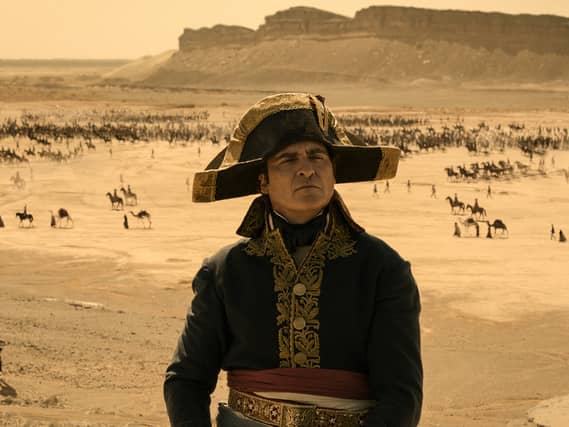


A rather delicate subject is not touched upon by Ridley Scott’s epic Napoleon, currently drawing huge crowds to cinemas across the West Midlands.
It is also a rather delicate subject that flies in the face of Britain’s stiff upper-lip code of gentlemanly conduct and dignity towards its prisoners of war.
The blockbuster’s star Joaquin Phoenix may wince if he reads this, but when the French emperor died we took from his body a very intimate trophy.
It’s hard to put into words, but those tasked with guarding him on the remote volcanic island of Saint Helena removed his manhood. Napoleon’s boney part, if I may be so bold.
Thankfully the moment was not re-enacted for the big screen: the final cut, if you like.
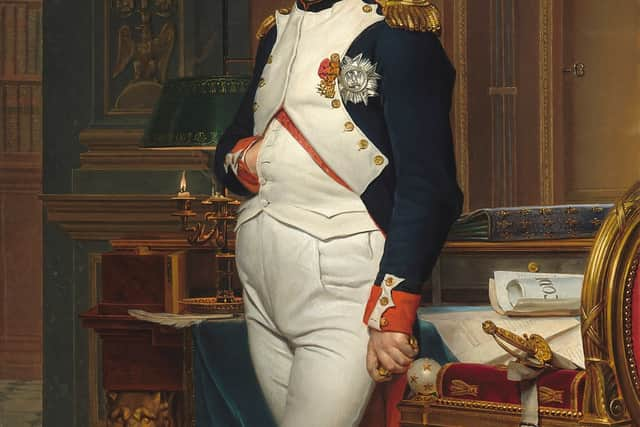
The macabre piece of memorabilia had something of a chequered existence following Napoleon’s passing, from stomach cancer, on May 5, 1821, aged 51.
It was initially owned by the priest who administered last rites, was acquired by a New York museum and in 1977 sold at auction. An American urologist purchased it for a snip at £3,000.
He had bagged quite an ice-breaker at dinner parties, but, hopefully, did not display his Napoleonic trophy on the mantlepiece or use it as a doorstop.
That piece of post mortem mutilation appears to drip spite – and Napoleon was certainly disliked by his jailers.
The man was difficult, moody and acted as if he ruled the world, which is understandable: global domination had been an all-consuming quest. He came pretty close to it.
As the films publicity slogan screams: “He came from nothing. He conquered everything.”
That’s someone who’d be mightily insulted if even ordered to carry out community work by a court.
He infuriated the powers-that-be with endless demands. He insisted on strutting around the five-mile landmass in full Field Marshal regalia, including spurs and even died wearing them. He made endless complaints about sleeping arrangements. He hated the food.
You can almost hear the guards shouting: “Who the hell do you think you are, Napoleon? Oh, sorry…”
Saint Helena’s governor Sir Hudson Lowe, a strict disciplinarian, appears to have responded to the stream of grumbles and gripes by antagonising his guest even further. He poked the bear.
He pleaded with the British government to charge Napoleon board and reduced his firewood ration.
The prisoner refused to buckle, he refused to be compliant. Throughout his stay, which began in October, 1815, Napoleon was far from a model prisoner. Frankly, we were glad to see the back of him.
It was costing Britain a fortune to keep the despot banged up – a staggering “half-a-million sterling” a year, according to one newspaper death notice.
It seems strange in these days of instant news that the demise of possibly the most infamous individual on the planet was not revealed by the press until two months after the event. July 4, to be precise.
One daily paper told its readers: “Captain Hendry, of the Rosario sloop of war, arrived at the Admiralty from Saint Helena at half past eleven o’clock this forenoon.
“His dispatches, which were reported to be of the utmost importance, were instantly sent off to His Majesty.”
The bombshell news was that Napoleon had died with his boots on – and spurs. And probably that trademark pointy hat, too.
He had, the paper reported, a “ruling passion” even when close to the end:
“As he found his end approach, he was habited, at his own request, in his uniform of Field Marshal, with the boots and spurs, and placed on a camp bed on which he was accustomed to sleep when in health and preferred to every other. In this dress he is said to have expired. The death of this extraordinary man will relieve the finances of this country of a huge sum.
“A letter from Sir Hudson Lowe to the Court of Directors was read this forenoon in the general court, dated the 6th May last, stating that General Bonaparte expired at ten minutes before six on the 5th of May last at his new residence of Longwood. He had been confined since the 17th of March last.”
In truth, it had been all downhill for Napoleon since the June 18, 1815, Battle of Waterloo.
He didn’t officially surrender until July 15, but Waterloo was his Waterloo, a set-to that pitted a multi-national force of 68,000 men, commanded by the Duke of Wellington, against a 73,000 strong French army.
In the carnage, chaos and mud of a battlefield stretching no more than two-and-a-half miles, more than 50,000 men were killed, wounded or simply lost in 10 hours.
That makes the terrible first day of the Somme seem like a stroll.
And many West Midlands soldiers waded through the bloodbath. The Marquess of Anglesey, whose name still adorns streets and buildings around Cannock Chase where the aristocrat’s country seat, Beaudesert, was located, lost a leg.
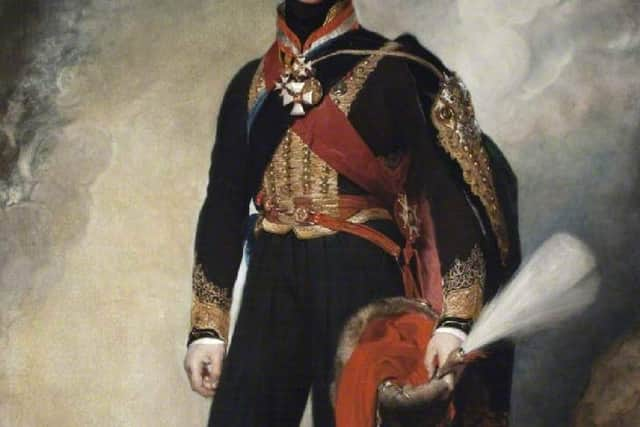
Then plain Henry Paget, 2nd Earl of Uxbridge and in command of 13,000 cavalry and 44 guns, he displayed remarkable upper-class coolness during the emergency.
Staring down at the shattered stump, he informed Wellington matter-of-factly: “By God, Sir, I’ve lost my leg.”
Wellington briefly examined the mangled right limb and remarked: “By God, Sir, so you have.”
The earl remained unruffled during surgery performed without the luxury of anaesthetic. Somewhat testily, he told surgeons performing the operation: “The knives appear somewhat blunt.”
He survived the ordeal, dying in 1854 at the grand age of 85.
Our region provided plenty of cannon fodder, too, and James Robinson’s Waterloo story is truly remarkable.
The Coldstream Guardsman, from Chasetown, was believed to have died while defending Hougomont Farm.
But the young man was found groaning under an oak tree the following morning, head buried in his mud-caked hands. James had been shot through the eye, the musket ball becoming lodged in his jaw.
There it remained until his death, aged 89.
The Rev J Montague Seaton paid a tribute to those gathered at his funeral at St Anne’s Church, Chasetown
He said: “The only inconvenience, besides the loss of his eye, was, as he used to say, a perpetual noise in his head, as of a water mill.
“He never tired of dwelling on incidents of the battlefield, the whole of which, to the very last, were pictured before him in a vivid outline.”
Without being disparaging to one of our war heroes, I sense diplomacy in the vicar’s words. Perhaps fellow drinker in James’ local whispered: “He’s not on about bloody Waterloo again!”
The cleric’s eulogy added: “Such a true and noble specimen was he of a British soldier that it was his proud boast of never having had an extra drill, of never having been in the awkward squad or having a black mark against his name.
“For many years in the enjoyment of excellent health, he kept to his own corner by the fireside, till, the other day on this bleak Cannock Chase, he took his last cold and died, as a good, weather-beaten soldier should die.”
Edward Price, from Yenton, Birmingham, was 23 when plunged into the hell of Waterloo. He suffered terrible injuries when a French lance was driven through his left arm, but recovered sufficiently to eventually return to the 1st Dragoon Guards.
Edward was medically discharged from the army in 1837. He had been ruled simply “worn out”.
The discharge papers state that, by then, he was battling chronic rheumatism and “torpor of the liver”.
They add: “He had also received a severe lance wound through the left arm when on duty at Waterloo in 1815. He has been a most excellent soldier.”
Waterloo was piled high with the corpses of excellent soldiers. Many survivors were haunted by the horror for the rest of their lives.
And there were those who evidently wanted Napoleon to pay for that – even after death.