
The dubious links between Dickens, Shakespeare and landmark West Midlands church
It is a grandiose, historic and haunting structure strangely out of character with the fumes and fast roars of traffic that passes through its shadow.


Commuters travelling the busy highway that bleeds from Shropshire to the nearby Staffordshire border are oblivious, as they soak in the verbal candyfloss of breakfast radio DJs, to the literary significance of St Bartholomew’s Church.
Let’s be bold and make that “alleged literary significance”.
Cleanse your senses of the automobile aromas and driver’s din and savour a mesmerising, 15th century building dubbed “the West Midlands’ Westminster Abbey” which dominates the 12 square mile parish of Tong.
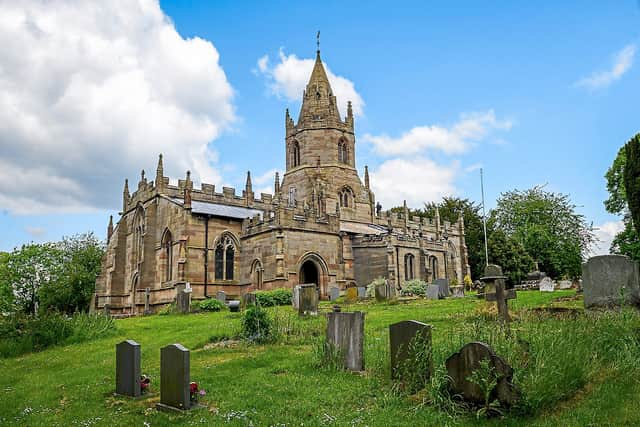
Honeycombed with tombs that provide the last resting places for truly powerful families, St Bartholomew’s has links to this country’s two most powerful literary figures, Dickens and Shakespeare.
The former described the church as “a very aged, ghostly place”. Architectural historian Nikolaus Pevsner wrote: “The interior can scarcely be taken in.”
It is a “treasure house of alabaster tombs, medieval carving, history and scandal”, states The National Churches Trust
It is also the setting for Britain’s longest-running “wind-up”, a practical joke that simply keeps giving.
Long before fake news came the fake grave – and St Bartholomew’s led the way in bogus burial sites.
Close to the south door can be found a plot – it’s been moved a number of times – that is the Loch Ness Monster of memorials, an RIP myth that still attracts tourists.
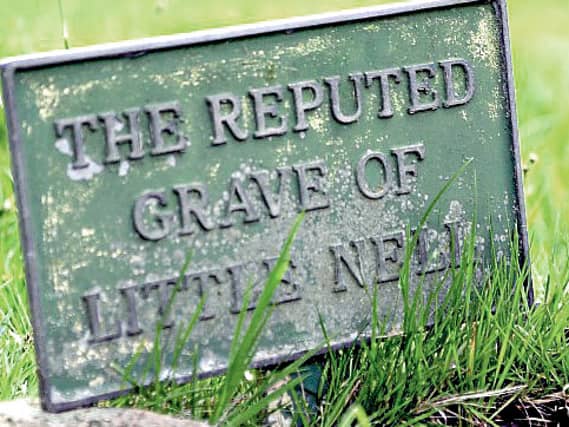
I spent a childhood believing Little Nell – Nell Trent, the persecuted waif in Charles Dickens’ classic The Old Curiosity Shop – lay beneath St Bart’s soil. The plaque’s ambiguous wording, “The reputed grave of Little Nell”, didn’t shake that resolve.
It was a belief that long outlived my hopes in Santa and the Tooth Fairy, but died before my dreams of seeing Wolves lift the FA Cup before qualifying for free slippers.
I now know the unassuming spot is a glorious folly, the setting for an elaborate practical joke that would’ve drawn a belly-laugh from Dickens himself.
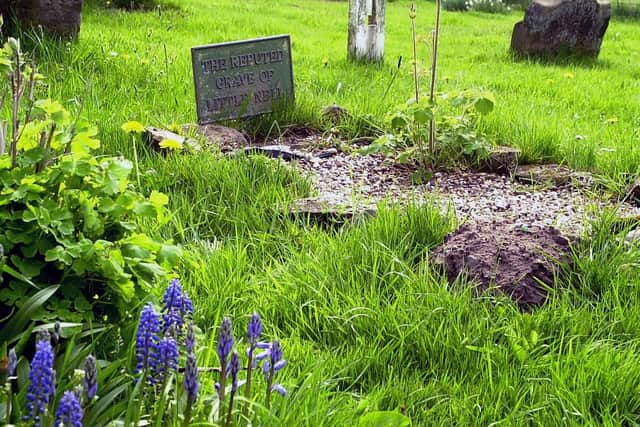
Of course, it was a nonsense. Little Nell, who died fleeing from her cruel pursuers, is entirely fictitious.
It’s akin to laying flowers at the base of Clark Kent’s headstone.
But I applaud George H Boden – a man who possibly had a sideline selling chequered paint and Scotch mist – for instigating a ruse that hoodwinked the world. If not the world, certainly a steady stream of American tourists and Yours Truly: Japanese holidaymakers had yet to arrive here when Boden hatched his plot.
He has ensured every day is April Fools’ Day at St Bartholomew’s.
Like all great, time-defying japes, the Little Nell fable has been supported over the years by a thin foundation of fact.
Dickens knew the area well. His grandmother was housekeeper at Tong Castle and the author is believed to have penned the last pages of The Old Curiosity Shop while staying in nearby Albrighton or Shifnal.
From there, the rural legend began to grow legs. They would learn to run thanks to Boden.
Published in instalments from 1840 to 1841, The Old Curiosity Shop quickly became an American bestseller and, over there, readers railed against the fate Dickens had decreed for poor Nell.
Americans wanted a happy ending, one which saw the teenager triumph and prosper, but the writer refused to sugar-coat his work. Nell remained dead.
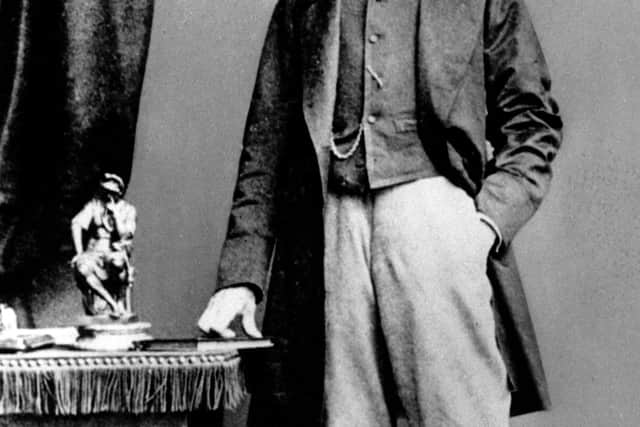
Dickens steadfastly declined to name the West Midlands village where she slipped this mortal coil, although fans who pored over the geographical references concluded it was Tong. They were probably correct.
The grave where her heartbroken grandfather grieved was at St Bartholomew’s.
All elements needed for a tourism publicity stunt possibly only bettered by Nessie were present. The stars had aligned. Church verger and village postmaster Boden, who today would fit the description of “chancer”, had his lightbulb moment, and the rest, as they say, is hysterical history.
In 1910, at the age of 54, he forged an entry for Nell’s death in the church burial register – and made a very botched job of it. Boden evidently hadn’t researched Dickens’ masterpiece and scrawled the name Nell Gwyn, Charles II’s well publicised mistress.
Why he didn’t cross it out and start again, we don’t know.
The forgery was beyond sloppy. It was also written in 1910 Post Office ink.
Somehow, Boden got away with the clanger and launched a successful campaign to purchase a headstone for the forgotten orphan.
Boden had adapted the principle, “build it and they will come”.
He pretended to build it and they still came, a torrent of US Dickens devotees swamping Tong and paying Boden to see the landmark.
They still come, the majority admittedly now “in” on Boden’s joke, but it’s a joke worthy of witnessing over 100 years later.
Oscar Wilde once said: “One must have a heart of stone to read the death of Little Nell without laughing”, a reference to what he considered over-sentimental prose.
One must certainly have a heart of stone to visit her grave without smirking.
Boden has, at the very least, given me an idea for making a fast buck in retirement. Know that Lord Lucan? Well, I’ve just discovered a very small headstone…
I’m in danger of trampling on Tong’s proud association with this country’s top writers, but things may go from Bard to verse when scrutinising the Shakespeare claims.
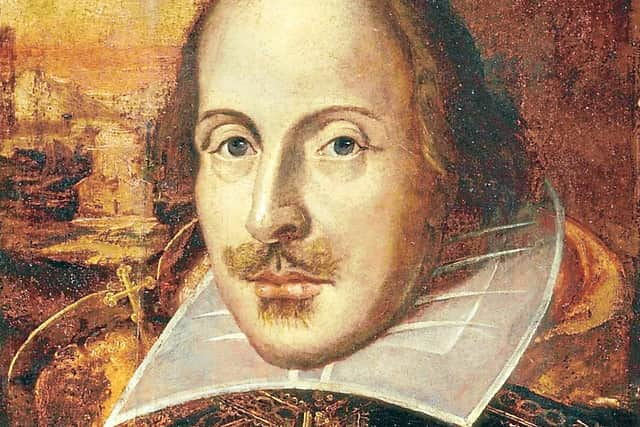
He is said to have provided two epitaphs for the church’s Stanley Monument, an imposing legacy of the Stanley family who owned Tong Castle.
Within the tombs are Sir Thomas Stanley, who died in 1576, his wife Margaret Vernon and their son Sir Edward, who died in 1632.
If Shakespeare did write the epitaphs, then the church has a unique, and hugely significant, claim to fame.
The only other know epitaph by the Bard is on his own grave.
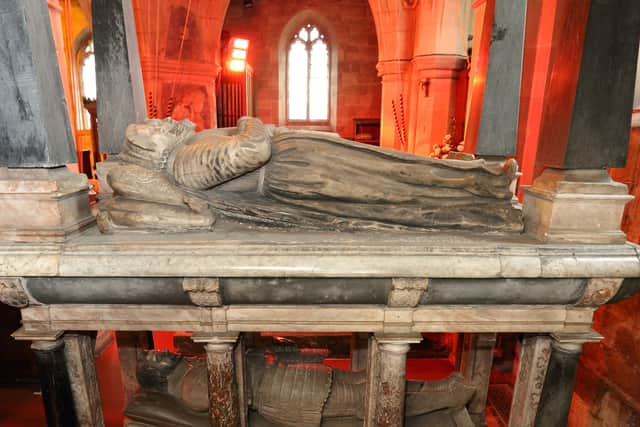
And, unlike the tall Little Nell tale, there is compelling evidence. Shakespeare knew the Stanleys and even including one of them in Richard III. They were among his many patrons and it is claimed Sir Edward commissioned the playwright to pen the words for his parents around 1601.
Shakespeare wasn’t above taking cash for bespoke verses.
But historian Sylvia Morris, in her “The Shakespeare Blog, has cast some doubt over authenticity.
She says: “Shakespeare might have written the words on his own grave and there’s an old tradition he wrote an epitaph for a Stratford neighbour, John Combe, so it seems possible.
“The story is made more complicated because the exact date of the tomb is unknown, though there is apparently a reference to the poem in a document dated 1620.
“Sir Thomas Stanley died when Shakespeare was only 12, so if Shakespeare wrote them to him they can only have been written years later and Sir Edward Stanley died 16 years after Shakespeare’s death.
“As so often with anything relating to Shakespeare, the rumours far outnumber the certainties and the monuments in Tong Church remain a magnificent mystery.”
An apt description for the Shakespeare puzzle.
But the Litte Nell memorial is definitely just Tong in cheek.
Comment Guidelines
Iconic Media encourages reader discussion on our stories. User feedback, insights and back-and-forth exchanges add a rich layer of context to reporting. Please review our Community Guidelines before commenting.