
Strikes, power cuts, rampant inflation: A look back on Shropshire in the 1970s
The Shropshire Star is celebrating 60 years. Toby Neal looks back at the news dominating each decade over the years. Today, the 1970s.

Strikes, power cuts, rampant inflation... And, oh yes, politically incorrect jokes and beauty contests, although back then people weren’t as troubled about such matters as they are now.
Welcome to the 1970s, a decade not to be remembered with much fondness, although to be fair there was that one cracking summer.There was a lot of grim news for the newspaper new boy on the block to report on as the decade unfolded.
Having been launched in 1964, as the Shropshire Star approached its 10th birthday it had cemented itself as a local newspaper which had truly found its feet and had been taken to heart by a loyal and ever-growing readership.
While modern offices tend to be quiet places with workers stuck behind computer screens which cut them off from colleagues, the 1970s newsroom at the Star was a place of clatter and chatter, with journalists hammering away at their typewriters amid a background of regular Tannoy announcements and phones ringing.
Industrial strife was a theme of the decade and one of the biggest local news stories was a strike at GKN Sankey at Hadley which underlined just how important the Sankey’s plant was to the national motor industry in those days.In August 1970 over 5,000 workers at Hadley went on unofficial strike.
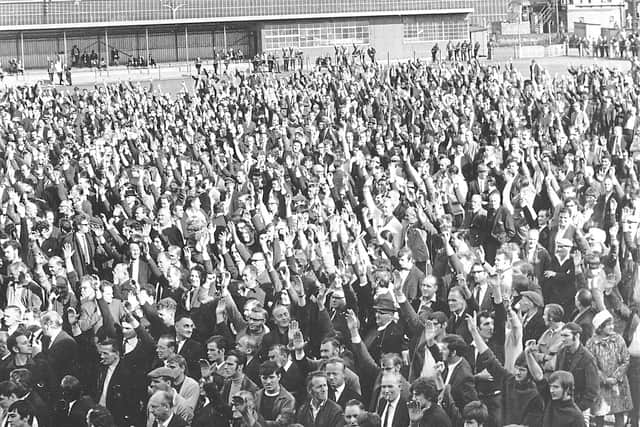
As Sankey’s was one of Shropshire’s biggest employers, it must have been one of the biggest, if not the biggest, industrial dispute at a company in Shropshire history.The effects were far reaching, as it led to over 25,000 workers being made idle throughout the motor industry.
By the time the strike ended on September 18 it had cost Sankey’s £6 million in lost production. Losses in the rest of the industry were reckoned to be in the order of £50 million.
But if you ask an old ‘un about the 1970s what they are perhaps more likely to talk about is shaving by candlelight, cleaning their teeth in the dark, or boiling the kettle on a camping stove.
For this was an era of power cuts and the imposition of a three day working week to save precious energy.
Coal was king. It was the fossil fuel – nobody used such terms then – which powered the power stations, including the new power station at Ironbridge, which had begun generating in 1969.
So when the coal miners went on strike it precipitated an energy crisis together with a political crisis, pitting the National Union of Mineworkers into a direct confrontation with the Conservative government of Ted Heath.As 1972 dawned many schools remained shut due to a coal strike.
On February 8 the government declared a state of emergency, with a three day working week introduced shortly afterwards.Among other measures to save energy, floodlighting on public buildings and street advertising were banned.
Homes and businesses were hit by phased power cuts and thousands of Shropshire workers were laid off.
On February 18 the Wilberforce inquiry recommended pay rises and the NUM recommended acceptance.
Miners voted to return to work on February 28.Fast forward to the autumn of 1973 and there was another crisis, this time caused by an oil embargo by oil-producing Arab nations to punish Western nations which had backed Israel in the Yom Kippur War.
As if that wasn’t bad enough, it was like a starting gun for industrial action in Britain by power engineers and the miners.
In Shropshire, as elsewhere, there was panic buying of candles. Petrol coupon ration books were issued, although in the event were never used. Garages started rationing fuel and a new universal 50mph limit was introduced. Lights were switched off.
The Shropshire Star published disconnection rotas, listing those areas where consumers were at high risk of power cuts.
From January 1, 1974, industry was again put on a three day week. When miners ramped up their work-to-rule to an all-out strike in pursuit of a pay claim, Prime Minister Ted Heath had had enough and called a general election with the theme: Who governs the country?
It backfired, as Labour got the greatest number of seats.
But it was not enough for an overall majority, so Heath did not immediately concede defeat, leading to several days of high drama in which things hung in the balance. Heath tried to reach an agreement with the Liberals which would have allowed him to continue to govern, but the talks broke down, and Labour’s Harold Wilson entered Number 10 as head of a minority government.
On the weather front, Britain saw something remarkable for the time of year in June 1975 – snow. There was snowfall in East Anglia and the Midlands and even as far south as London area, the first time since 1888 that snow and sleet had been reported as widely so far south during the summer, according to the Met Office. Shropshire shivered, but seems to have missed out on the actual snow. Better remembered is the gloriously long, hot summer of 1976.
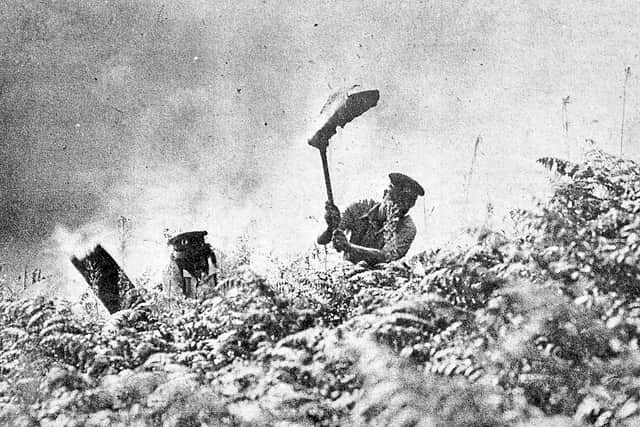
Believe it or not, people got tired of it and ended up praying for rain.As the drought deepened, Shropshire and Mid Wales were slapped with a hosepipe ban.For 11 straight days Shropshire saw temperatures of 30C (86F) or more. On June 29 Lilleshall weatherman John Warner recorded a temperature of 31C, which set a new June record, and on July 3 it hit 33C (91F). For peak heat the county has since beaten those top figures, but in terms of consistently high temperatures and sunny days, it has never seen the like of 1976.
With the county’s firefighters having their busiest time ever tackling blazes, which included a conflagration which destroyed 150,000 trees on a tinder dry Haughmond Hill, Green Goddess fire engines were made available to the fire service to help them cope.
In popular imagination the turning point came when Denis Howell, the sports minister, was appointed drought minister. Shropshire finally had rain at the end of August and September was particularly wet.
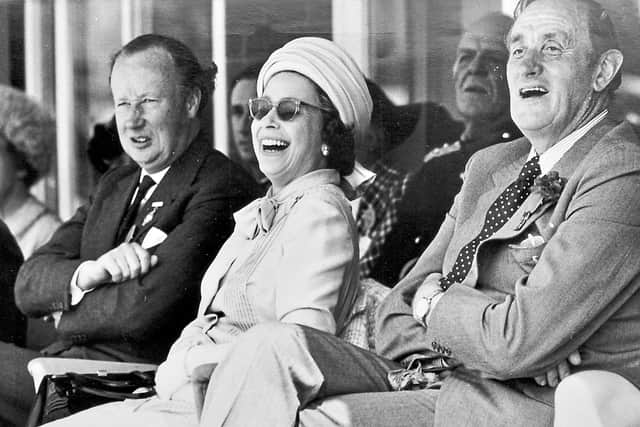
Keeping with the good news, the Queen came along to the West Mid Show at Shrewsbury in its centenary year of 1975, and when the Iron Bridge celebrated its bicentenary in 1979, Prince Charles was there for the celebrations.
Some locals were also getting better reception on the telly – the television mast on The Wrekin started transmitting in December 1975.
There was some sparkling local success on the sporting front. In August 1973 Shropshire won the Minor Counties cricket championship for the first time in its history.
Having been losing finalists at Wembley in the first ever FA Challenge Trophy competition in 1970, Telford United – as Wellington Town had been renamed – made it to the final again in 1971, and lifted the trophy after beating Hillingdon 3-2 after a comeback in which they had been 2-0 down.One of the most remarkable matches at the Bucks Head came on October 11, 1976.
For Telford United’s centenary the club arranged a match with the legendary 1966 England World Cup-winning side. It drew a gate of 8,032 to the Bucks Head, the biggest for many years. All the 1966 side, except Ray Wilson, turned up for the game.
Telford United’s manager at the time was England’s 1966 hat-trick hero Geoff Hurst.England won 4-0, by the way.Shrewsbury Town were heading for another golden era. In March 1979 they reached the Sixth Round of the FA Cup and drew 1-1 against First Division Wolves at Molineux, but lost the replay at the Gay Meadow 3-1.
Their disappointment was washed away on May 17 when they were promoted to the Second Division for the first time, overcoming Exeter City 4-1 at the Gay Meadow to clinch the Third Division title. Jubilant manager Graham Turner was memorably pictured with a cigar, although he was in fact a non-smoker.
As we’re celebrating the diamond anniversary of the Shropshire Star, let’s digress and take a look at some of the things we as a newspaper were doing.A long-running initiative which saved an incalculable number of lives was the Star Swimmers scheme.
Children who swam their first length were rewarded with a Star Swimmer badge and we published the names of all those who won them.The Star also ran the Miss Shropshire competition, publishing pictures of all the entrants culminating in the final which was often, but not always, held at a major Shrewsbury venue.
Occasionally the Star found itself in the spotlight. The new town of Telford was taking shape in the early 1970s and the housing estates which were growing up came in for criticism from some quarters.A particular story in January 1974 hit a nerve with its headline “Sin City... That’s Woodside, says a resident.”
Our then editor Keith Parker faced the fury of over 200 Woodside residents at a public meeting which followed.Meanwhile a case at Shrewsbury Crown Court in April 1975 will surely have passed into legal folklore. After retiring for an hour to consider its verdict in a case in which three men were up for stealing, the jury returned – and asked how they had pleaded.The economy? In 1975 the inflation rate hit an eye-watering 24 per cent.The decade closed in 1979 still riven with industrial strife, with industrial action in the public services leading to the so-called “Winter of Discontent.”
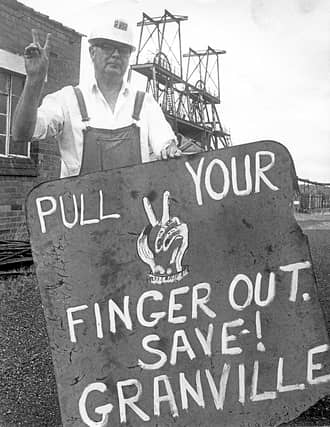
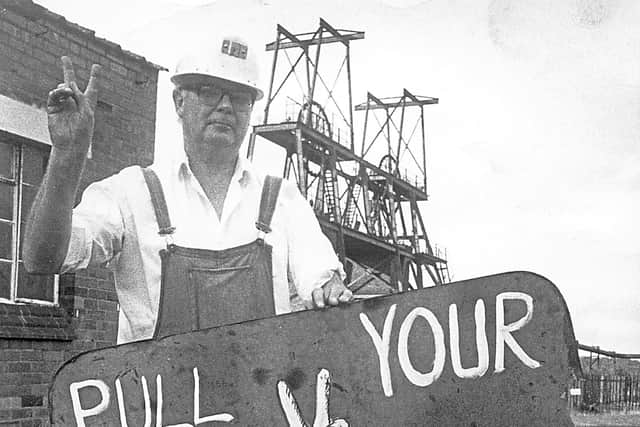
This year also saw the closure of the county’s last coal mine, the Granville Colliery just east of Telford, which ended production because of a geological fault on the remaining coal face.Now, we can’t let the 1970s go without one of those politically incorrect jokes. There was an Englishman, a Scotsman, and an Irishman. And we’d better stop it there.
Comment Guidelines
Iconic Media encourages reader discussion on our stories. User feedback, insights and back-and-forth exchanges add a rich layer of context to reporting. Please review our Community Guidelines before commenting.