
The remarkable story of the Shrewsbury banker accused of faking his own death
Rumours swirled Victorian Shrewsbury that crooked banker faked his own death and fled abroad
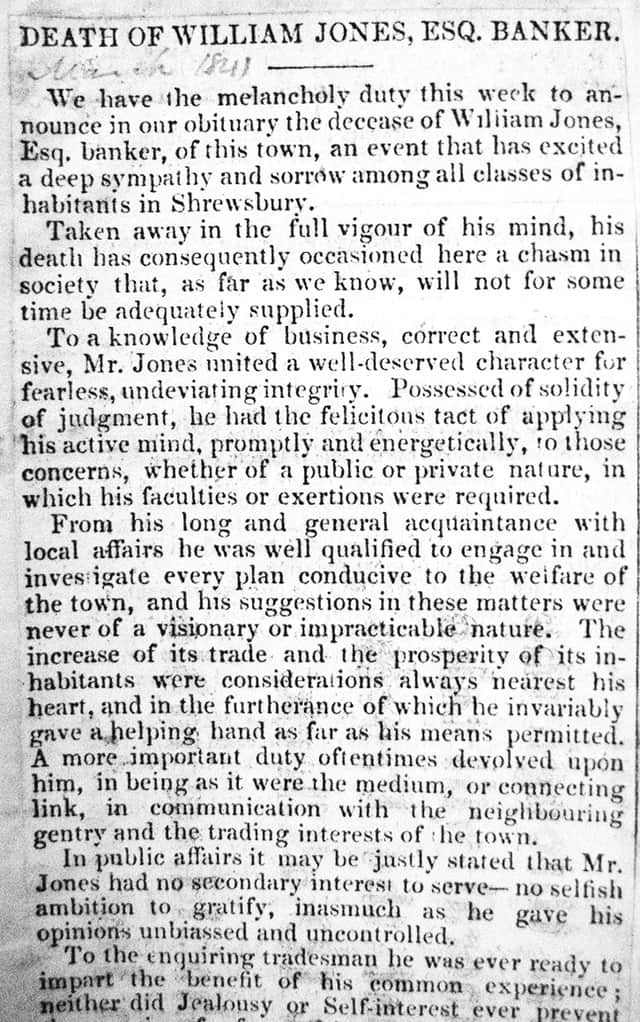
When Shrewsbury banker William Jones died the town mourned the loss of an upstanding citizen.
A short time later the bank collapsed amid massive debts and there was a radical reassessment.
It turned out that this pillar of public rectitude, whose home was at Shrewsbury Castle, was a crook with his hand in the till.
Rumours swirled the county town. People began to wonder whether the coffin had been empty. Before long it was generally believed that Jones had faked his own death and fled abroad.

A story circulated that he had been seen in New York. It was alleged that people connected with Jones' family began making arrangements to emigrate long before his supposed death.
Jones died in March 1841, according to the bank's bankruptcy notices, although it is interesting that the Shrewsbury Chronicle of February 26, 1841, reported the death the previous day of one William Heighway, the "eldest son of William Jones" of Shrewsbury Castle, who was in his 34th year.
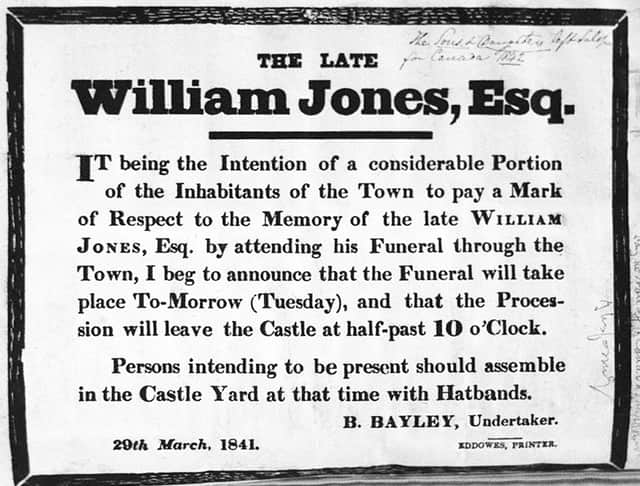
In any event, the funeral of our rogue banker friend was on March 30, 1841, when houses and shops were closed along the line of the funeral procession. The cortege started from Shrewsbury and went to Pontesbury where he was, his obituary said, interred in the family vault.
According to the obituary Jones' death had caused deep sympathy and sorrow among inhabitants of the town and he had "a well-deserved character for fearless, undeviating integrity."
Then Price, Jones and Edwards, otherwise called the Salop and North Wales Bank at which William Jones was managing partner, crashed with debts of at least £71,000, an astronomical sum for the time. It closed in May 1841 and stopped making payments. Jones had been cooking the books and systematically stealing cash. He had, for example, drawn out £14,000 in his wife's name, the greater part after she died in 1837.
He had "purchased a considerable quantity of property in various places, and expended the amount of £3,900 of the partnership money... for his own benefit."
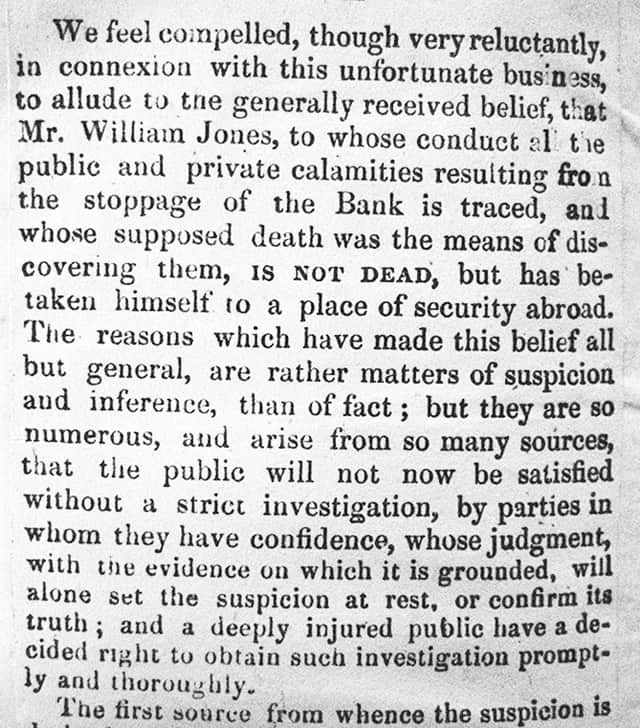
The Shrewsbury Chronicle reported that it was generally believed in the town that Jones was not dead but had "betaken himself to a place of security abroad."
A rival publication, probably the Salopian Journal, mocked the Chronicle's reporting of the rumours, which were so prevalent that worthies in the town felt compelled to try to quash them.
W J Clement - a contemporary surgeon to whom a memorial was later erected in Shrewsbury - came forward with a statement that he had attended Jones from the time of his illness until the time of his death; there was testimony from the people who put him in the coffin; and a Mrs Tanswell was ready to swear on oath that she attended Jones during his illness, saw him die, and laid out the corpse.
In addition a Mr Parry, a modeller from Claremont Hill, said he was called in to make a cast of the dead man's face, and had no doubt that the man was Jones.
It seemed to settle the matter, although the legal ramifications of the affair would last for years.
Comment Guidelines
Iconic Media encourages reader discussion on our stories. User feedback, insights and back-and-forth exchanges add a rich layer of context to reporting. Please review our Community Guidelines before commenting.