
Leeches and goose fat – a delve into the weird and wonderful history of medicine
In the last months of my grandfather’s long life, the former miner implored us to put our faith in ancient, traditional therapies.


The octogenarian we unkindly dubbed Spider-Man – not because he possessed superhero powers, but because he struggled badly to get out of the bath – implored us to rub goose grease on his chest and back.
My, the old man went downhill fast after that.
An old chestnut, but one that illustrates the remedies, potions and bizarre panaceas ailing individuals in this region turned to before the National Health Service banished madness from medicine.
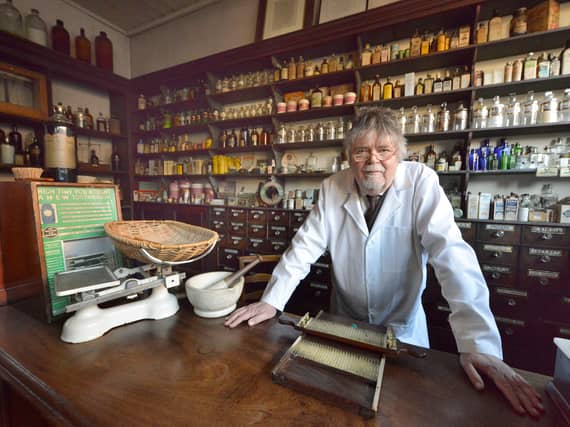
Many old fashioned cures are celebrated at the like of the Black Country Museum, where visitors can browse an array of baffling medicines and powders.
Sometimes old-fashioned quackery tripped on a legitimate cure: Leeches are used today in hospitals.
But often, the chemists’ “cure-alls” were deadlier than the disease.
And such a catalogue of now banned Class A narcotics were available over-the-counter in powders, lozenges and syrups that Victorian Britain had no need for backstreet drug dealers.
The prescriptions may not have cured hacking coughs, pounding headaches, throbbing toothaches or angry rashes, but those who took them were lost in such a poppy impregnated stupor they no longer cared.
Back then, the pharmaceutical industry was built on strange decisions, and, in 2024, I’m still baffled by the marketing strategies.
Take 'Nurofen Express', which pledges speedier relief than the brand previously provided. On the basis all customers want their pain to subside as quickly as possible, the product surely makes Nurofen original redundant. I do not believe individuals tell their chemist: “I’ve got this headache, but I’m fine with it at present.
“Got something that will remove it in a couple of days?”
Yet the two products sit shoulder-to-shoulder on shelves.
It is a weird science. At the turn of the 20th century, it was a downright wacky science that peddled cigarettes to ease bronchitis. In fairness to those who manufactured Dr Batty’s Asthma Cigarettes, sold under the slogan “for your health”, packaging carried the warning: “Not recommended for children under six.”
Before it became a highly addictive party drug for the champagne set, working class families ensured there was always cocaine in the medicine cabinet.
Admittedly an American product, Lloyd Manufacturing Company’s Cocaine Toothache Drops carried a picture of two children playing blissfully in the garden, a white picket-fence shielding their innocent antics.
After the drops, they were possibly a tad hyper-active.
Cocaine infused wine – a snarling Sanatogen tonic of its day – was, according to makers, guaranteed to “stimulate our lethargy and console our grief”.
One glass and sparks would fly from gran’s knitting needles.
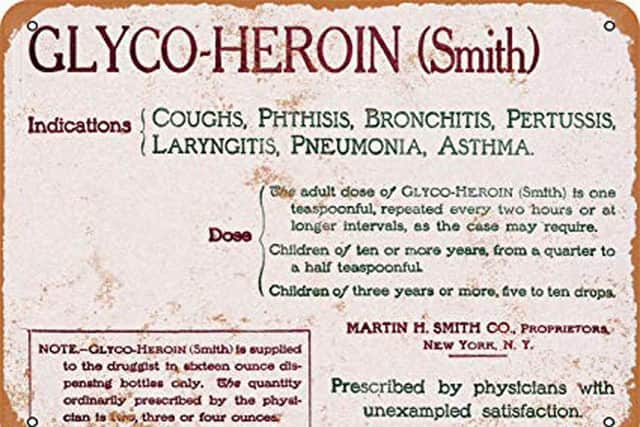
Smith’s 'Heroin Cough' may have been purchased to open blocked airwaves, but no doubt helped West Midlands men endure back-breaking factory graft and poverty with a vacant smile.
A mix of glycerine and heroin, makers boasted: “No other preparation has had its therapeutic value more highly defined or better established.”
Understandably, workers craved the opium-based substance. Children slept well – and deeply – after taking it.
Before the fakery came the myths, the outlandish rituals that often bordered on the macabre.
Warts could be removed by rubbing the afflicted areas with the severed hand of a hanged criminal or the tail of a tortoiseshell cat.
Black Country folk favoured painting the growth with fresh pig’s blood.
After the myths, came the home-made preventatives, handed down from mother to daughter. Late summer would see legions of families strip hedgerows of berries, which would form the foundation for cordials, syrups and vinegars to combat cold month illnesses.
Goose fat was a popular – if not proven – cure-all. To beat baldness, men mixed it with chicken droppings and applied the foul-smelling gunk every morning for a year.
The remedy was floored. Women prefer bald pates to the stench of chicken poo. And a year is a very long time.
Then came the quacks, the term a derivative of the Dutch word “kwaksalver” – “hawker of salves”. Their bottled miracles were snapped-up by a desperate and impoverished public.
North Lanarkshire Council Museums, which has a section on the shady profession, believes a deep distrust of the fledgling medical profession helped the bogus business to flourish.
It states: “Behind the development of quackery lay the primitive and potentially lethal state of mainstream medicine. In the 18th and 19th century, doctors routinely prescribed bloodletting to patients whether they were sick or healthy, either by applying leeches or actually opening a vein.”
Medical pioneer Francois-Joseph Broussais subjected patients to at least 50 leeches and one individual endured 90.
That’s a lot of leeches and even more blood.
The museum adds: “With mainstream medicine as likely to finish patients off as restore them to health, it is perhaps unsurprising disciples of homeopathy advertised their methods as a safer alternative.
“Quacks claimed to supply cheap relief from the many illnesses that troubled the overcrowded workers in the cities. Because of the unscientific nature of quack medicine, customers naively attributed their natural recovery to the fraudulent treatments they took and ended up recommending the treatments to others.”
Not all early tonics were bad news, bad medicine. Fennings’ range of pick-me-ups – Fennings’ Fever Cure, Fennings’ Adult Cooling Powders, Fennings’ Little Healers – were very popular in the Midlands and innocent in ingredients.
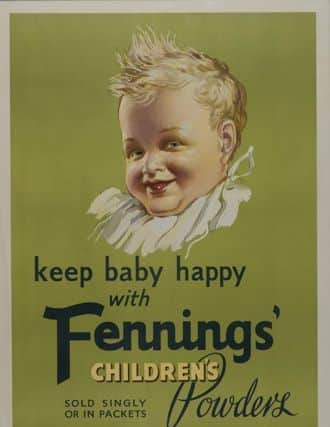
Fennings’ Mixture did contain nitric acid, however.
On nostalgia website Remembering the Past, one contributor recalled: “Fennings’ Fever Cure was like drinking poison. Fortunately, it was not a favourite of my family, but my best friend’s father swore by it and used to dose anyone who was poorly. I only got it once, never again. I used to be given a cough linctus called Liquafruita, which was laced with garlic and none of my friends would come near me when I was taking this. Used to work, though.”
Scientific breakthroughs only heightened the quackery risks.
Radium, discovered by Marie and Pierre Curie in 1898, soon became a sought after panacea, a magical substance guaranteed to make users glow. That glow was seen as a sign of heath, not radioactivity.
By 1913, the Radium Chemical Company was providing a range of medicines and boasted: “The value of radium is unquestionably established in chronic arthritis of all kinds, acute and chronic joint and muscular rheumatism, gout, sciatica, neuralgia and lumbago.”
It failed to warn of dramatic and lasting side effects.
The company sold a radium solution for drinking and a compress – “a means of applying radium locally for the relief of pain”.
American industrialist Eben Byers swore by the stuff and started each day with a cup of “Radithor”. He died, aged 51, from multiple cancers and was buried in a lead-lined coffin.
By the early 20th century, the well-heeled could purchase portable electric shock therapy kits, purported to be particularly efficacious in curbing women’s hysteria. The “violet ray machines” would also blitz pimples and piles.
The plug-in treatments found a voice and pioneer in Dr Walford Bodie whose Bodie Electric Drug Company sold Electric Life Pills and Electric Liniment.
After being exposed as a medical fraud – Bodie later claimed the MD after his name stood for Merry Devil – the man was pelted with rotten food by Glaswegian medical students in 1909.
The dark days of heroin cough sweets have thankfully gone. Teething troubles are no longer tackled with cocaine.
But the internet is still awash with outlandish medical claims from those with no medical background.
And the fact some desperate people grasp such quackery is a very bitter pill to swallow.
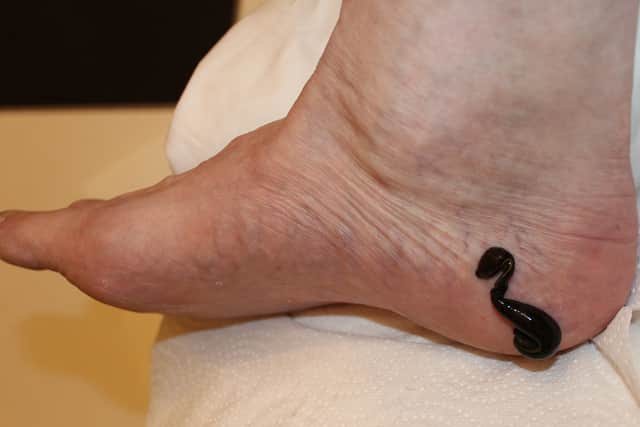
Leeches. Used in the medical profession’s dark, sometimes barbaric, early days and still used today.
Their benefits have been proven and well documented.
And the blood-suckers are making a comeback.
Away from the NHS, more and more people are indulging in leech therapy for a spa-like body boost.
The skin crawling sessions do the immune system a power of good, says Bridget Croft, boss of Sedgley’s Birmingham Leech Clinic.
“Sometimes people contact me for the well being side,” said Bridget, who believes she is the country’s only registered nurse to carry out private hirudotherapy – that’s leech therapy, to the layman. “In some areas of Eastern Europe, it’s looked on in the same way as going to a spa.”
The clinic is not linked to the NHS and Bridget, who learned her leech skills in Germany, is not claiming the ancient art is a cure-all.
She opened her business six years ago, predominately provides pain relief for those suffering osteoarthritis. The clinic website claims leeches can also help a range of conditions, including gout, skin disease, localised infections and even baldness.
Those using the clinic’s service range from mid-20s to old age.
“I would say 96 per cent of my clients come from other parts of the world originally or their ancestors did,” said Bridget. “Those that come to me really look forward to it, they like it very much.
“Some people who come through my door for the first time are apprehensive and for that reason I only have one client a day. I’m here to help people, I hope I do help people.”
An initial three hour session cost £195, although leeches are on the skin for only just over an hour. A follow-up visit is two-and-a-half hours.
Bridget, who trained as a nurse in New Zealand, has knocked back five requests for TV interviews – and that because she’s tired of the media turning hirudotherapy into a horror story or weird science.
“If people go on youtube they will probably find gory stories. That’s something I’ve never known or experienced,” she said.
“Leeches are very good for a whole range of things. They suck a bit of blood – it’s not pints – and will be injecting you with all the goodness in their saliva.
“It’s a bit like a mosquito bite, like getting a needle and tapping your leg with it. After a minute that finishes and you don’t feel anything.”
In nine out of 10 cases it works, Bridget stressed. The leeches, provided by a bio-farm in Wales, do their job.
Her growing number of satisfied clients add weight to the claim that those who dismiss the therapy out-of-hand are the real suckers.