
How the Black Death turned the West Midlands a vision of hell on earth –Mike Lockley
When death came to our door, it came swiftly, its intensity hidden by innocent symptoms.
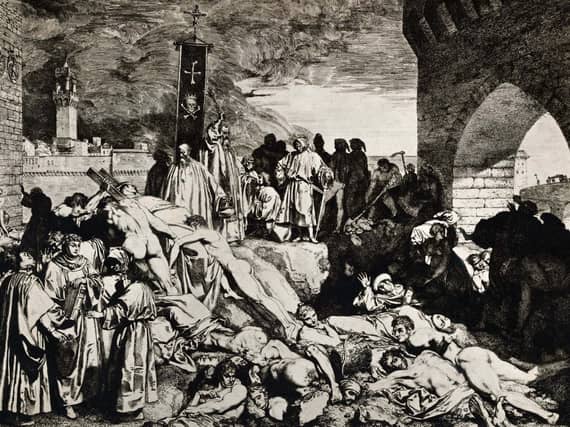


Death announced itself with a mere sneeze, a hacking cough. Then came raging fever before death revealed its true might by scattering buboes – hideous, oozing swellings – on skin.
From snuffles to sores, death did its duty in under a week.
“Ring-a-ring o; roses, a pocket full of posies. A-tishoo! A tishoo! We all fall down.”
The nursery rhyme is a childish and macabre summary of the way Black Death ravaged its victims.
When the fleas feasted on you, a losing fight for life soon began.
And between 40 to 60 per cent of England’s population, estimated to be a mere seven million, fell.
Covid, the most recent pandemic to sweep these shores, was a global disaster, it showed even modern mankind can be rendered powerless by pathogens.
Black Death made the 14th century vision of hell a reality on earth. Other outbreaks followed until the 1700s. None had such virus violence.
The West Midlands lived under the shadow of Black Death – the most destructive pandemic in global history – for three horrific years, although the Doomsday disease lingered for much longer. From 1348, thousands succumbed, although exact figures are unknown.
A squalid, festering, mud hut mound of impoverished humanity known as Lye Waste was wasted by the plague.
In a time before motorised transport, it took a mere eight months for the disease to spread from London to Halesowen. And there it hit with hurricane force, claiming 40 per cent of the population.
In Shropshire’s tight-knit rural communities, where Black Death arrived in spring, 1349, families worked the soil together and piled bodies on carts together. The sickening cycle continued until there was no one left to work the soil or carry the bodies.
Hamlets simply disappeared.
In Shrewsbury a “strange sickness” took hold. Those who lost their lives to it were bundled in three plague pits, one under what is now Grope Lane.
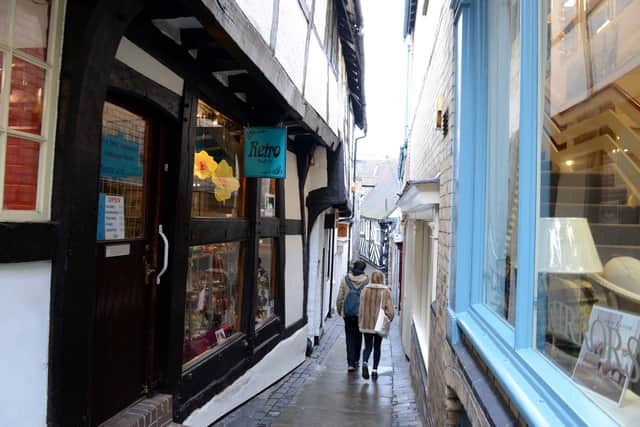
Other undetected mass graves, crammed with victims, remain dotted around the region, historians believe.
A landscape yet to be smothered by the fumes and fog of industrialisation, where people lived within inches of livestock and, therefore, rats, was levelled.
In his book “The World Upside Down, Black Death In England”, Professor Jim Bolton wrote: “It is very difficult for us to imagine the impact of plague on these small rural communities where a village might have no more than 400 or 500 inhabitants.
“Few settlements were totally depopulated, but in most others whole families must have been wiped out and few can have been spared some loss, since the plague killed indiscriminately, striking both rich and poor alike.”
The rich, however, could afford to flee hotspots. The poor could not.
But has this catastrophic contagion been correctly diagnosed by history? Was this “Great Mortality” really the work of bubonic plague, the crippling Yersinia pestis bacteria passed from rats to humans by fleas?
Many medical detectives now believe not. Yes, the plague was definitely among us, but it was not capable of such untold carnage, they say.
Bubonic plague crawls from one community to another, it is a “slow burn” disease, yet this pestilence sprinted. From the first chronicled victim – a seaman at Weymouth, Dorset – it took a mere 500 days for England to be infected in its entirety.
Bubonic plague is not a sure-fire killer. A 1907 outbreak in India took six months to travel a mere 300 feet and claimed only two per cent of the population in that zone.
Epidemiologist Susan Scott, co-author of “Biology of Plagues”, said: “If you look at how the Black Death spread, one of the least likely diseases to cause it is bubonic plague.”
Those who took their last, agonising, blood-flecked gasps in Halesowen and surrounding Black Country villages may have been struck down by a darker, more destructive disease.
Ebola, christened “the flesh eating bug” by tabloid newspapers. If not, some monstrous mutation of the plague.
Whatever its identity, residents of Halesowen dropped like flies. Manorial rolls from Halesowen Abbey reveal two to three people died on its land during the spring months of 1349. By June and July the figure was 30.
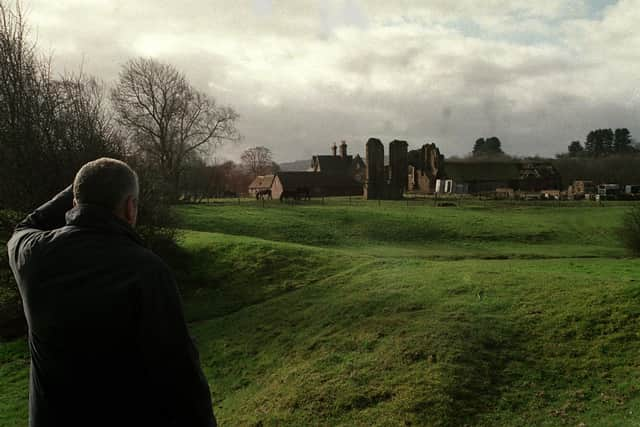
Some employees at the manor court were given a new job description. Their days consisted of recording and reading out the ever-growing death notices and attempting to find new tenants to work vacant plots.
Whole families had been wiped out. There were no new tenants.
When those grotesque swellings, known as “God’s Tokens”, emerged, rural folk tackled them with pigeons.
A feather was taken from the bird’s leg, its quill used to lance the angry welt and then placed on the wound to draw “venom”.
When that remedy inevitably failed, the bird was sliced from breast to tail-feathers and placed, still living, on the treated area.
The grisly country custom only increased discomfort and brought the inevitable end closer.
New science argues such mass disease destruction cannot be spread by flea-riddled rats – a theory first unveiled in the 19th century by French bacteriologist Alexandre Yersin.
It had to be the work of something that relies on close human contact, such as measles, Covid…and Ebola.
The argument is powerful and means “quacks” – Middle Ages medics who wore bill shaped masks – had it right all along. Humans carried the plague.
And as proof maverick scientists point to Eyam, Derbyshire, where, in 1665, villages famously cut themselves off from the outside world to prevent it spreading locally.
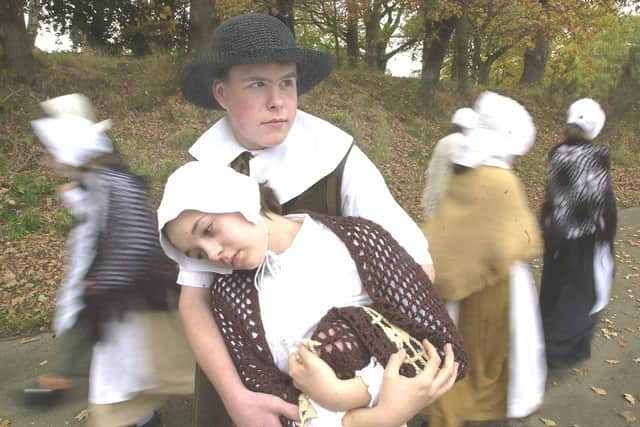
If rats were responsible, the brave gesture would’ve been less than useless. People may decide to stay put, but rodents will invariably roam.
The doubters point out Black Death raced across the Alps and Northern Europe at breakneck pace when it was far too cold for fleas to hatch. Iceland, declared a rat-free country, was hit by the plague.
It then moved at a rate of two-and-a-half miles a day from Marseilles to Paris, far faster than even today’s strain of super-rats can travel.
If rats were the root cause, a map of the virus’ rise would be chaotic, showing outbreaks in scattered locations at roughly the same time.
Instead, there was an unstoppable tide, a regimented flow from family member to family member, neighbour to neighbour, village to village…
Yes, the speed with which this illness struck is the sticking point.
An 1899 outbreak in South Africa travelled at snail’s pace, taking one year to journey just 12-and-a-half miles inland.
Susan Scott and fellow author of “Biology of Plagues” Christopher Duncan are also puzzled by the very progress of the plague in its victims.
They have trawled burial records and concluded it had to be spread person-to-person, with an average of 37 days between contact and an individual meeting his or her maker. That’s also the time Ebola takes to run its terrible course. Ebola symptoms include buboes, too.
For the first 10 to 12 days a Black Death sufferer was not infectious. For the next 22, they were highly infectious but only fell ill five days before death.
Yet a bubonic plague victim falls ill within two to six days of contact.
An American study of mortality rates among English clergymen from 1349 to 1350 further erodes the established facts.
Those clerics were on the frontline, providing spiritual support to their stricken flock – and they paid with their lives.
Dr James Wood, professor of anthropology and demography at Penn State, said: “These records indicate the spread of Black Death was more rapid than we formerly believed.
“This disease appears to spread too rapidly among humans to be something that must first be established in wild rodent populations, like bubonic plague.
“An analysis of the priests’ monthly mortality rates during the epidemic shows a 45-fold greater risk of death than during normal times, a level of mortality far higher than usually associated with bubonic plague.
“There are no reports of dead rats in the streets in the 1300s of the sort common in more recent epidemics when we know bubonic plague was the causative agent.
“It is possible that the Black Death was caused by any number of infectious organisms, but we are not ready to pinpoint the causative agent. It was too quickly identified with bubonic plague in the past.
“Indeed, historians took what was known about the bubonic plague and used it erroneously to fill in the many gaps in our picture of the Black Death. We do not want to make the same mistake by identifying some other possible cause prematurely.”
In a nutshell, that is why the research matters. The layman may consider finding the true nature of a disease that brought Europe to its knees many centuries ago akin to shutting the stable door after it has bolted.
What is the point?
But it may one day return. And Covid has shown the dire consequences of facing a pandemic unarmed.
Brian Bossak, an environmental health scientist at Georgia Southern University, warned: “There is a lot of evidence to suggest Yersinia pestis may not have been the causative agent for Black Death and it was likely something else and something else that is out there right now.
“Who knows if it won’t happen again. It seems like every so often some disease comes from out of nowhere.”
They are coming out of nowhere more often than ever before.
Perhaps an apology to this country’s most detested wild animal is in order. The rat has been painted as the plague’s true villain. It has endured terrible PR ever since.
We just might have got it wrong.